
While tear gas drifted through downtown Nairobi and crowds demanded justice, one voice in Parliament chose a different path—one that has drawn praise from police but outrage from the public.
Esther Muthoni Passaris, Nairobi’s Women Representative, has found herself at the centre of a fierce political storm after defending senior police officers linked to the death of teacher and blogger Albert Ojwang’. The 31-year-old died in police custody under still-murky circumstances, sparking days of protests and nationwide anger over police brutality.
But even as outrage built, Passaris doubled down—insisting that the Deputy Inspector General of Police, Eliud Lagat, bore no responsibility. “He was completely out of the loop,” she said on social media. “His composure reflected genuine surprise.”
The comment, meant to clear Lagat’s name, has instead fuelled accusations that Passaris is now more of a police spokesperson than a public watchdog. Many Kenyans, including those who voted her in, are asking: who exactly is she representing?
Defender in Uniform
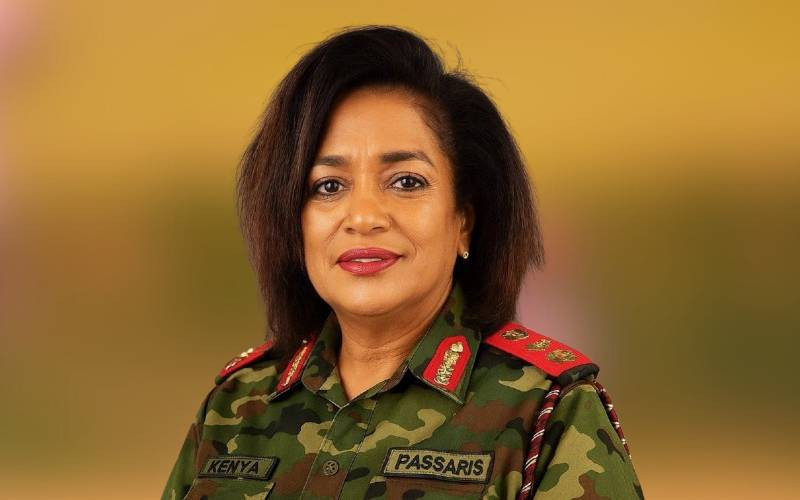
On Thursday, Passaris posted an image of herself dressed in ceremonial military-style attire—complete with medals—declaring she wore it “as a symbol of dignity, duty and determination.”
Online, critics called the image tone-deaf, comparing it to state pageantry in authoritarian regimes. The photo went viral, but not for reasons she might have hoped.
Her latest intervention came as footage emerged showing officers appearing to loot electronics during Ojwang’-linked protests. Police initially denied wrongdoing. Then Passaris stepped in, claiming the laptops seen being carried away were not stolen, but “recovered” for safekeeping.
“I spoke to the Nairobi Police Commander,” she wrote. “The laptops were taken to Central Police Station. The owners will be invited to identify them.”
The comment was met with widespread scepticism.
“Is this the same police who routinely lose case files?” asked one Nairobi resident online. “Now they’re digital custodians?”
Loyalty or Misjudgement?
The National Police Service backed Passaris’ version of events, a rare move that has prompted further debate. Was it coordination—or damage control?
Analysts say Passaris’s increasingly visible support for law enforcement comes at a delicate moment in Kenya’s political life, as trust in security agencies hits a fresh low.
“She has aligned herself with an institution many Kenyans fear,” said Dr Lydia Mwangi, a political scientist at the University of Nairobi. “That’s a political gamble—and one that distances her from many of the women and youth who elected her.”
A Shift in Priorities?
Passaris once styled herself as a fighter for women and marginalised communities. In 2017, she was elected on promises to advocate for girls' education, safe transport, and reproductive health. She spoke often about sexual violence and the need to protect Nairobi’s women.
But that message has faded.
In the last year, she has drawn criticism for staying silent on incidents involving abuse of women traders by city enforcement officers and failing to push back on policy proposals affecting reproductive rights. Her critics argue she is now more comfortable defending power than challenging it.
“She’s tweeting about laptops while families are burying their sons,” said Achieng Ouma, a gender justice advocate based in Nairobi. “It’s heartbreaking.”
Proximity to Power
Observers say Passaris is not alone. Many Kenyan lawmakers, once fiery and defiant, have grown quieter with time—and with proximity to state power.
“In Kenya, when you get close to government, you often lose your critical voice,” said Boniface Mwangi, a prominent activist. “That’s what’s happened to Passaris. She’s traded the people for the podium.”
For now, she shows no sign of retreating. Her social media remains active, frequently retweeting police statements and posting updates about meetings with top security officials.
But on the ground, protests continue. More are planned for 25 June, exactly a year after demonstrators broke through Parliament gates, demanding justice and reform. Many of those who plan to march again this year say they no longer see Passaris as an ally.
“I voted for her,” said Irene Atieno, a 27-year-old student who joined the Ojwang’ vigil. “But I don’t recognise her anymore. She doesn’t speak for us.”
As Nairobi counts the cost of another week of tension, one thing is clear: Passaris has chosen her side. Whether her constituents stand with her remains to be seen.