
For much of the second day of the Global Landscapes Forum Africa summit in Nairobi, the conversation kept returning to one question: who is actually holding African communities together as climate pressures intensify?
Again and again, the answer was women.
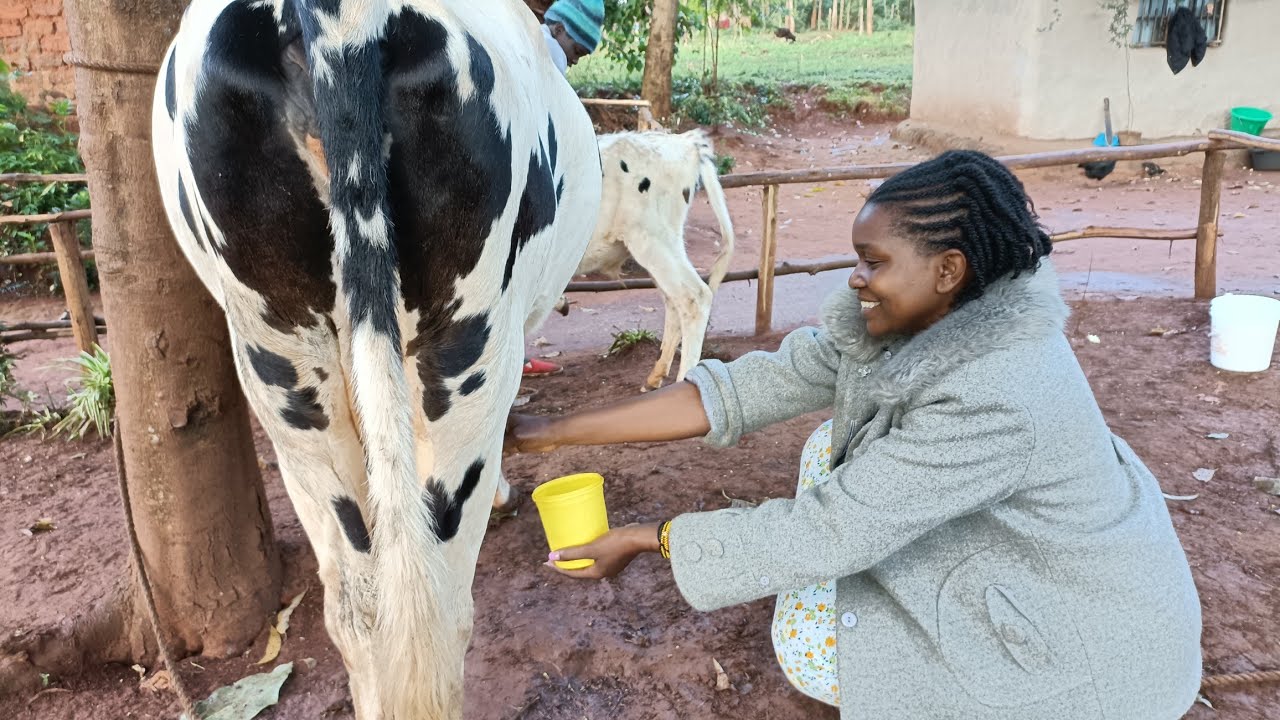
Not necessarily ministers, executives or international campaigners. Instead, speakers pointed to women working in villages, rangelands and farming communities who continue to manage food systems, water supplies, livestock, forests and family survival despite receiving little formal recognition.
The issue came into sharp focus when Dr Éliane Ubalijoro, chief executive of CIFOR-ICRAF and director general of ICRAF, shared a personal story that silenced the room.
“My mother was an excellent student,” she said. “She was offered a scholarship to go to university, but her father asked, ‘Why would I send a girl to university?’”
Her mother never attended university. Yet she ensured all her children did.
“Education was the most important legacy she wanted to leave us,” Dr Ubalijoro told delegates.
The story resonated because it reflected a broader African reality. Across generations, women denied opportunities themselves often became the force enabling educational and economic mobility for their children.
But speakers at GLF Africa argued that the same pattern persists in environmental governance. Women remain central to climate adaptation while often remaining absent from leadership structures, financing systems and policy design.
The summit brought together scientists, policymakers, Indigenous leaders and youth activists to discuss the future of African landscapes and rangelands amid worsening droughts, biodiversity loss and food insecurity.
Throughout the discussions, there was repeated frustration that climate policy still tends to treat local women as beneficiaries rather than experts.
Maimuna, one of the panellists from a pastoralist background, described how women frequently understand ecological systems in practical and interconnected ways that institutions overlook.
“When women see a cow, they see milk, manure and soil fertility,” she said. “If men see a cow, all they see is bride price.”
The audience laughed, but the point landed sharply. Women’s environmental knowledge is often treated as informal labour instead of technical expertise.
That concern is supported by research. According to the UN Food and Agriculture Organization, women account for a substantial share of agricultural labour across Africa, yet own far less land than men and often struggle to access financing, agricultural extension services and climate adaptation funding.
At the same time, climate shocks are increasing the burden placed on women in rural communities. Longer droughts often mean travelling greater distances for water and fuel while managing household food security under increasingly difficult conditions.
Several speakers argued that climate governance continues to replicate colonial power structures where expertise is assumed to come from outside affected communities.
Anita, a Maasai advocate, criticised the way Indigenous knowledge is often absorbed into scientific frameworks without acknowledgment.
“Science has continued to borrow from Indigenous knowledge even though they do not acknowledge it,” she said.
That tension is becoming increasingly visible globally as international institutions promote nature based solutions and regenerative land management techniques long practised by Indigenous communities.
Delegates repeatedly returned to the idea that African environmental leadership cannot simply mean adding more women into existing systems. Instead, they argued for redefining leadership itself.
Dr Ubalijoro described being criticised for being too collaborative and too consultative as a leader.
“Some people say I listen to too many people before making decisions,” she said. “Some people say I am too collaborative to be a leader.”
Rather than reject those traits, she defended them.
Her understanding of leadership drew heavily on Ubuntu, the African philosophy emphasising interconnectedness, dignity and collective humanity.
For her, stewardship of land and stewardship of people are inseparable.
“It’s about this relationship of service,” she said. “This relationship of how land gives us so much abundance and how we should live in awe of what the Earth gives us.”
That idea ran through many of the summit’s discussions. Environmental restoration was framed not only as a technical issue but also as a moral and cultural one involving respect, reciprocity and community memory.
There was also a growing recognition that climate resilience depends on preserving social systems alongside ecological systems.
Several speakers warned that environmental degradation and economic stress are accelerating social fragmentation in vulnerable regions. Women often absorb the consequences first.
Yet despite the challenges, there was little fatalism in the discussions.
Instead, speakers described an Africa already producing solutions, often quietly and without international attention.
The concern was not a lack of innovation but a lack of recognition and investment.
As delegates left the conference hall in Nairobi, the message from many discussions was unmistakable: Africa’s climate future may depend less on discovering new answers and more on listening to the people who have been sustaining communities all along.