
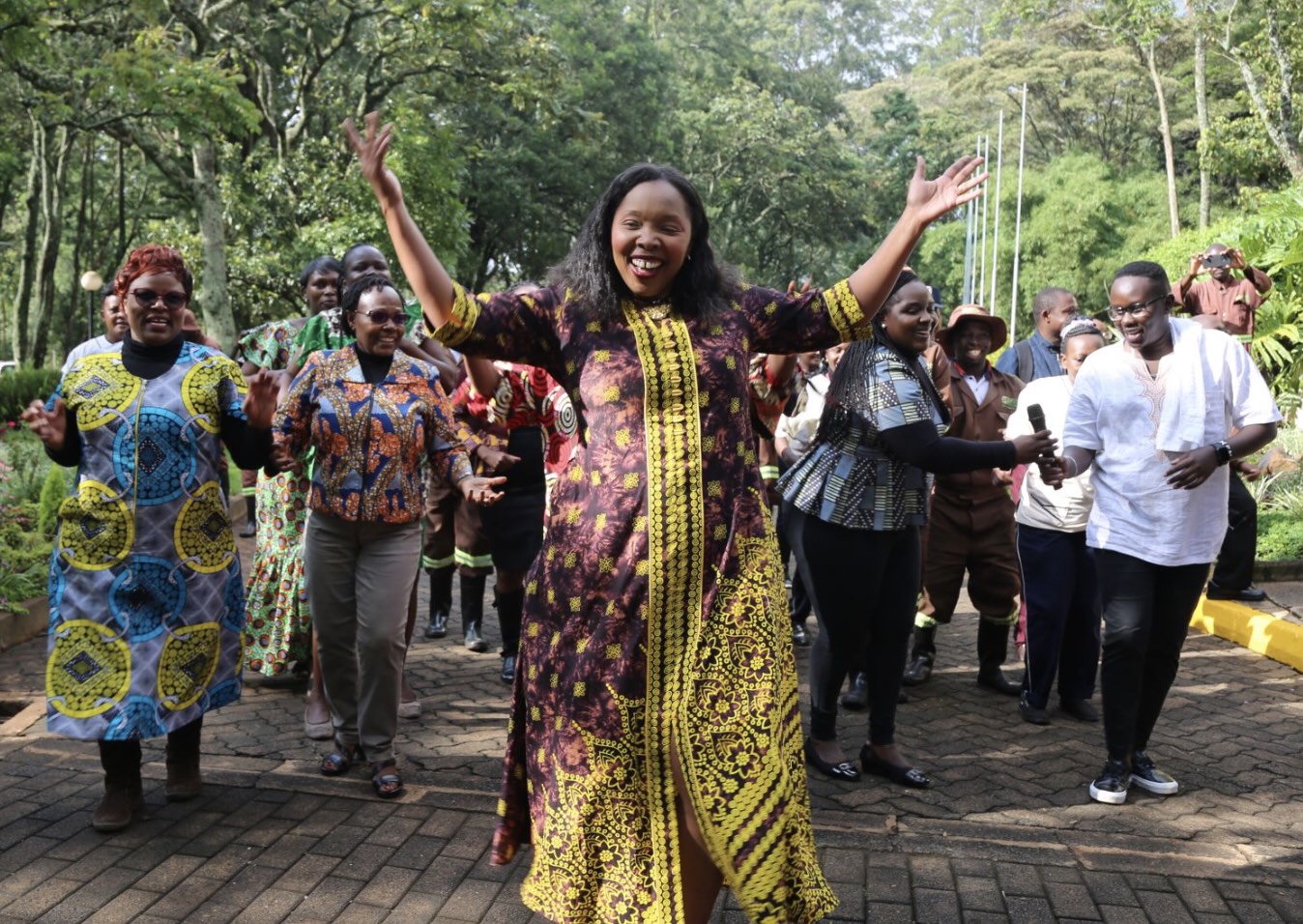
“My own mother, when she was an excellent student, was offered a scholarship to go to university,” Dr. Éliane Ubalijoro told the audience at GLF Africa 2026 in Nairobi. “But in her time, her father was like, ‘Why am I gonna send a girl to university?’”
The room fell quiet as she reflected on a story that resonates across generations of African families, brilliant women denied opportunity, yet determined to ensure their children would never face the same barriers.

“So my mother didn't get to go to university,” she continued, “but she raised children who all went to university. Today, I have a PhD, several of my brothers have master’s degrees, and we all have very prominent jobs.”
It was one of the most powerful moments at the Global Landscapes Forum (GLF) Africa Summit, where policymakers, scientists, environmentalists, Indigenous leaders, and youth advocates gathered in Nairobi to discuss the future of Africa’s landscapes, food systems, and climate resilience.

Dr. Ubalijoro now serves as Chief Executive Officer of the Centre for International Forestry Research and World Agroforestry (CIFOR-ICRAF) and Director General of ICRAF, one of the world’s leading research institutions focused on forestry, agroforestry, and sustainable development. A molecular geneticist by training, she has spent decades working at the intersection of science, agriculture, innovation, and African development.
But in Nairobi, her message went beyond policy and science. It became deeply personal.
“I always think back to how somebody could think my mother didn’t deserve to get this scholarship,” she said. “But I think about the level of ambition she had for all of her children and how education was the most important legacy that she wanted to leave us.”
Her words captured something larger than individual achievement. They spoke to sacrifice, inherited ambition, and the quiet determination of a generation of African mothers who invested in futures they themselves were denied.
“And so in that sense,” she continued, “I think about community and where are you in a community that sees your potential before you even see it yourself.”
She described the importance of surrounding oneself with people “who, when you look in their eyes, you see a better version of yourself than you can ever imagine.”
“And that life is about striving to be that person,” she said, “and getting to your last breath and saying: ‘I gave it all. I did it all.’”
The emotional testimony also connected directly to the summit’s wider themes of stewardship, sustainability, and humanity’s relationship with nature.
“It’s about this relationship of service,” Dr. Ubalijoro said. “This relationship of how land gives us so much abundance and how we should live in awe of what the Earth gives us.”
She argued that Africa’s innovation systems, science, policies, and economies should reflect “that reverence.”
“That’s where true power is,” she concluded, “in reverence for the Earth and for all the gifts that the Earth gives us.”
At a summit focused on landscapes and climate futures, it was ultimately a story about people, about mothers, dignity, education, community, and the generations shaped by both exclusion and resilience.