
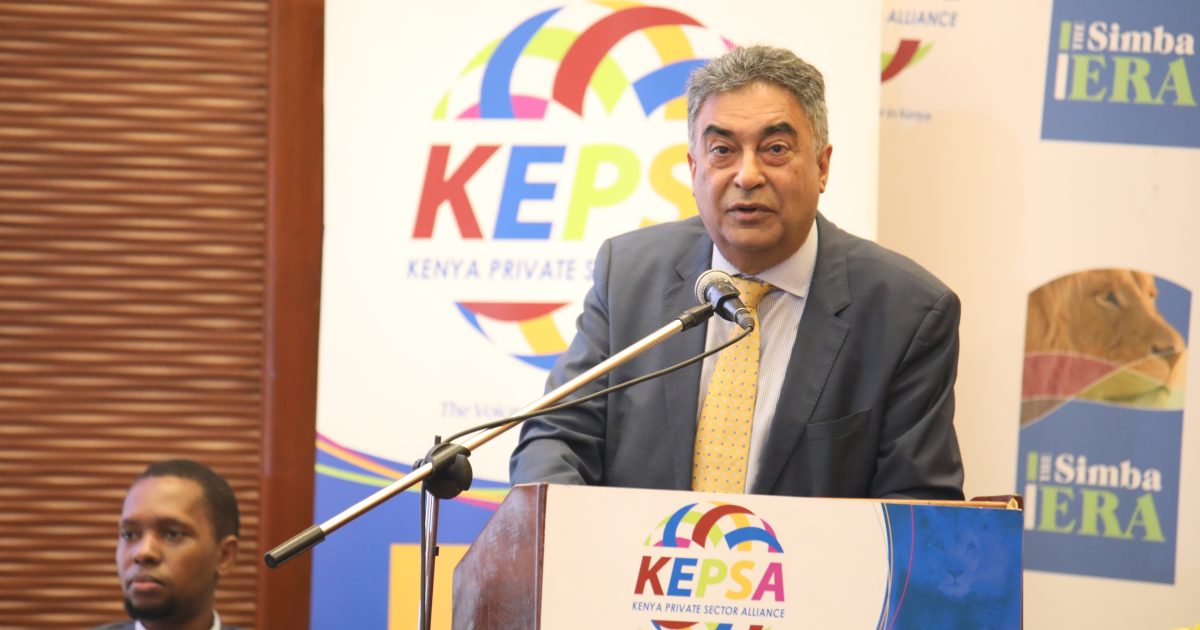
Kenya’s private sector has stepped up pressure on lawmakers over the Finance Bill 2026, warning that parts of the proposed tax changes could raise the cost of doing business, slow job creation and weaken the country’s appeal to investors.
The Kenya Private Sector Alliance (KEPSA) told Parliament on Monday that while it supports the government’s economic agenda, tax policy must not place additional strain on an already stretched formal sector.
“We support the direction of government policy,” KEPSA chair Jaswinder Bedi said. “But there has to be a careful balance between raising revenue and keeping businesses competitive.”
His remarks came after submissions to the National Assembly’s Finance and Planning Committee, where business groups laid out concerns over several proposals in the Bill.
At the heart of the pushback is a broader fear: that Kenya’s shrinking formal sector is carrying too much of the tax burden. KEPSA estimates that formal employment accounts for just over 16 per cent of jobs, while the informal economy supports the majority of workers.
“True revenue growth comes when the economy expands,” Bedi said. “Not when pressure is increased on a small group of compliant taxpayers.”
One of the most contested proposals is a change to personal income tax. Business groups, including the Kenya Bankers Association, are advocating for a cut in the top PAYE rate from 35 per cent to 30 per cent, alongside higher personal tax relief.
Bankers Association chief executive Raimond Molenje said lowering PAYE could leave workers with more disposable income, which in turn could stimulate spending.
“That extra money in people’s pockets tends to circulate in the economy,” he said. “That is what drives growth and employment.”
He estimated that the change could free up tens of billions of shillings for households and businesses and potentially support tens of thousands of new jobs over time, though such projections depend on wider economic conditions.
But government officials have defended parts of the Bill as necessary to stabilise public finances at a time of rising global uncertainty and pressure on revenue collection. They argue that reforms are aimed at broadening the tax base and improving efficiency, not just increasing rates.
The private sector, however, is also worried about proposed VAT changes that would affect digital payments, financial services and green technology imports such as electric motorcycles and batteries.
KEPSA warned that taxing digital transaction systems could raise the cost of everyday payments and reverse gains in financial inclusion.
“Once you add costs at the processing stage, it ripples through the entire transaction chain,” Bedi said.
Exporters and manufacturers also raised concerns about higher input costs, saying this could make Kenyan goods less competitive in regional and global markets.
The pharmaceutical industry joined the debate, urging lawmakers to retain tax relief on medical inputs. Industry representatives warned that higher costs could feed into medicine prices.
“We are trying to build local manufacturing capacity,” said Wairimu Mbogo of the Pharmaceutical Society of Kenya. “Higher costs work against that goal.”
Some proposals in the Bill also touch on tax administration, including provisions that would give the Kenya Revenue Authority broader powers in debt collection. Business groups argue that this could undermine ongoing legal disputes between taxpayers and the state.
“Freezing accounts while a case is still in court raises serious fairness concerns,” Bedi said.
Parliament is expected to review the submissions before the Bill proceeds further. Lawmakers face competing pressures: raising enough revenue to fund government programmes while keeping businesses stable enough to sustain growth.
For now, the debate has sharpened a familiar question in Kenya’s economic policy — how to expand the tax base without slowing the economy that sustains it.

 Facebook
 Twitter / X
 WhatsApp
 LinkedIn
 Telegram
 Reddit