
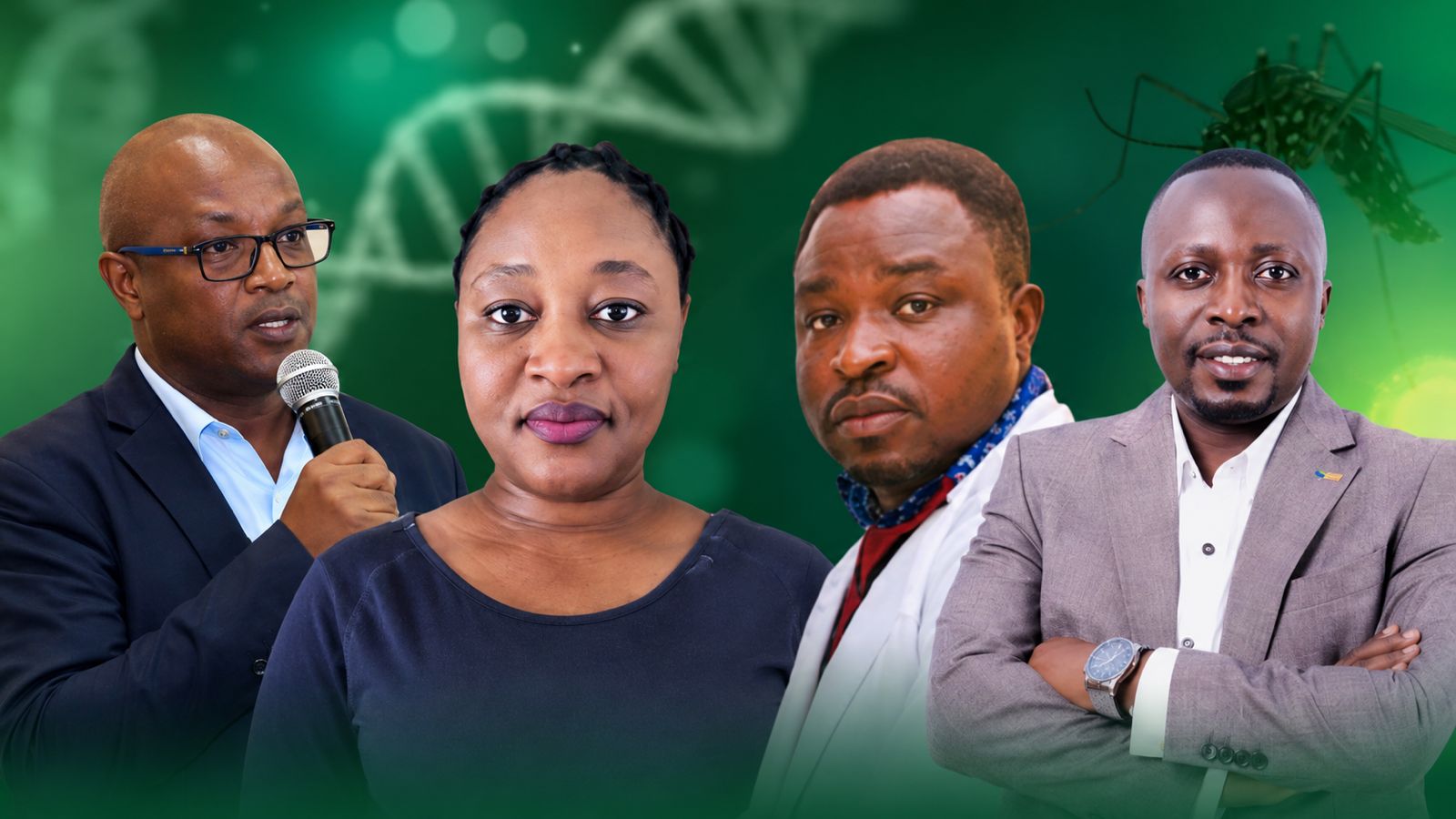
How can emerging science and technologies be communicated accurately, responsibly and in ways that build public trust? This question took centre stage during the fourth webinar of the Africa Genetic Biocontrol Consortium (AGBC) webinar series, which brought together journalists, researchers and biosafety experts to examine the opportunities and challenges of reporting emerging technologies in Africa.
Held under the theme “Truth Under the Microscope: Reporting the Science Right — Covering Emerging Technologies Responsibly,” the webinar highlighted the need for stronger collaboration between scientists, journalists, regulators, policymakers and communities to ensure that emerging technologies are understood, responsibly communicated and safely governed.
Speaking during the webinar, Alex B. Atuhaire, a Ugandan journalist and editor, emphasised the importance of evidence-based reporting, urging journalists to verify scientific claims before publication and distinguish evidence from hype. He stressed that responsible science journalism should communicate not only what is known, but also what remains uncertain.
Atuhaire also highlighted the growing role of artificial intelligence in journalism. While AI can support news gathering, content production, verification and distribution, he noted that it does not replace journalistic responsibility. AI-assisted reporting still requires verification, transparency, editorial independence and accountability.

He also encouraged journalists covering emerging technologies to look beyond technical claims and consider their wider implications, including ethics, ecology, regulation, equity and community concerns. “Responsible technology journalism is pro-evidence,” was a central message emerging from his presentation.
Putting communities at the centre
Dr. Lina Finda, a public health researcher and Managing Director of African Conversations, focused on the importance of meaningful stakeholder engagement in the development and consideration of emerging malaria-control technologies.
She highlighted the need to understand different audiences and their concerns rather than treating communities as a single, homogenous group. Scientists, regulators, policymakers, health practitioners, communities, youth, civil society, media and other stakeholders may have different questions and priorities.
For Finda, engagement should be a two-way process. Communities should have opportunities to ask questions, challenge assumptions, contribute local knowledge and influence decisions. She also stressed the importance of communicating both the potential benefits and risks of emerging technologies, while being transparent about what is known and what remains uncertain.
Her presentation reinforced the message that lived experience and community knowledge can provide important context that scientific evidence alone may not capture.
Biosafety and evidence-based decision-making
The webinar also examined the regulatory and governance dimensions of emerging technologies. Mr. Eric Korir, Principal Biosafety Officer at Kenya’s National Biosafety Authority, highlighted the importance of biosafety oversight, risk assessment and accountability when technologies move from research into field trials.
Korir noted that regulatory approval should not be the end of the conversation. Responsible governance requires evidence, transparent decision-making, meaningful public participation and appropriate safeguards throughout the research and implementation process.
He also urged journalists to look beyond the word “approved” and ask what exactly has been approved, at what stage, under what conditions, which institutions were involved and how compliance and potential risks will be monitored.
Community engagement, he stressed, should not be reduced to a one-off consultation. It should continue throughout the research process, giving affected communities opportunities to understand the intervention, raise concerns and contribute to decisions.
Korir further highlighted the importance of privacy and responsible data management, particularly where field trials involve health, household or geospatial information.
What does the evidence say about Wolbachia?
The science behind innovative vector-control approaches was explored by Dr. Etienne Bilgo, Associate Research Professor at the Joint Parasitology and Medical Entomology Laboratory at the Institut de Recherche en Sciences de la Santé (IRSS) and Centre Muraz in Burkina Faso.
Bilgo discussed Wolbachia, a naturally occurring bacterium found in many arthropod species, and its potential role in mosquito-borne disease control. Wolbachia-based approaches can include population suppression as well as population replacement strategies aimed at reducing mosquitoes’ ability to transmit disease.
He pointed to growing evidence from countries including Indonesia, Brazil and Malaysia. In Indonesia, a randomized trial reported a 77% reduction in dengue and an 86% reduction in hospitalizations following Wolbachia deployment.
However, Bilgo stressed that promising evidence does not eliminate the need for continued research. Important questions remain around how factors such as temperature, mosquito genetics and possible mosquito, bacterial or viral evolution could influence the effectiveness of Wolbachia-based interventions.
These questions are particularly relevant for African settings, where researchers are examining how different ecological and epidemiological contexts may affect deployment strategies.
Research in Burkina Faso is contributing to this evidence base, including work examining Wolbachia in African Aedes aegypti mosquitoes and questions around maternal inheritance, cytoplasmic incompatibility and dengue susceptibility.
Bridging science, media and society
Across the four presentations, a common message emerged: emerging technologies require more than scientific innovation—they require responsible communication, strong governance and meaningful public engagement.
The speakers underscored the responsibility of journalists to question claims, verify evidence, communicate uncertainty and seek diverse perspectives. At the same time, researchers and regulators have a responsibility to communicate clearly, engage communities and make evidence accessible.
As emerging technologies increasingly influence public health and development decisions across Africa, the webinar highlighted the need to move beyond simplistic narratives of technological breakthroughs or risks.
The challenge, speakers agreed, is to report the evidence without hype, communicate uncertainty without creating confusion, listen to affected communities and ensure that decisions are grounded in science, safety, transparency and public interest.
The webinar therefore reinforced the central principle of “Truth Under the Microscope”: responsible reporting is not about being for or against emerging technologies—it is about asking the right questions, examining the evidence and helping the public understand what is known, what is uncertain and what is at stake.
Related Stories
- OpenAI tightens ChatGPT for teens with new study tools and parental controls
- Can You Still Trust What You See Online? Africa’s AI Misinformation Crisis Takes Centre Stage
- Truth Under the Microscope: How AI, WhatsApp and biotech misinformation are putting public trust at risk in Africa
Category: Technology
Related Explainer: Fact Check: Did elephants save people during Nepal’s floods?
 Facebook
 Twitter / X
 WhatsApp
 LinkedIn
 Telegram
 Reddit