
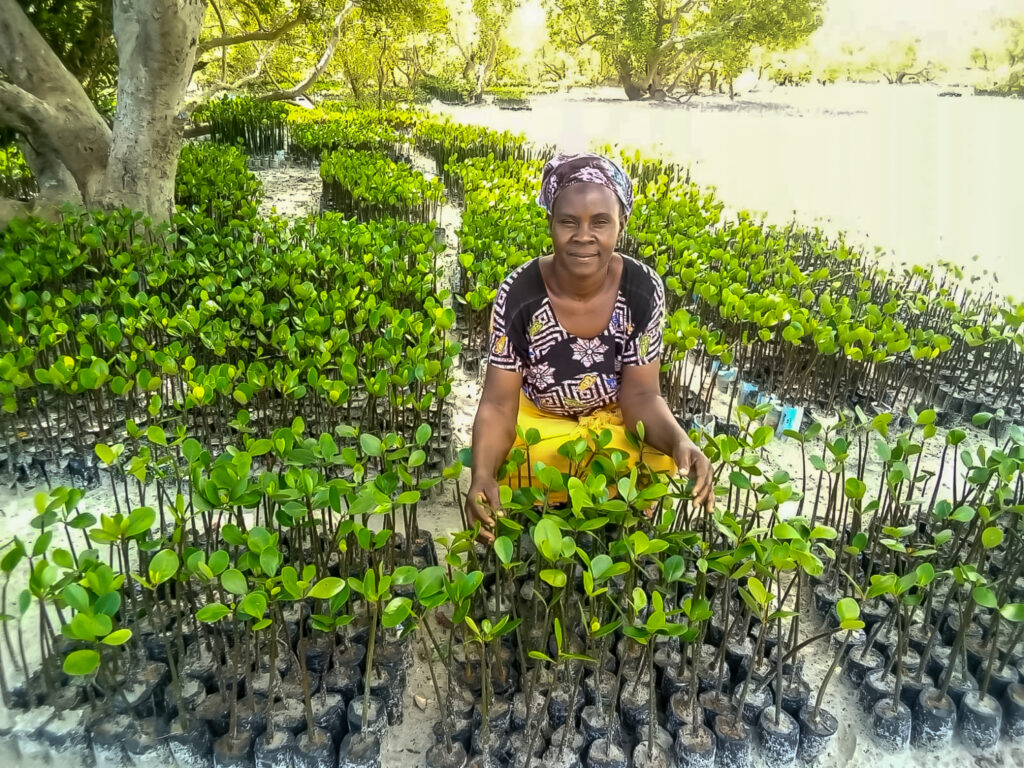
At low tide in Kenya's coastal creeks, mangrove roots emerge from the mud like a maze of wooden fingers reaching toward the sky.
For generations, coastal communities have viewed these forests as part of the natural landscape. Fishers know them as breeding grounds for fish. Villagers have relied on them for timber, medicine and protection from storms.
Scientists now see something more.

They see one of the world's most powerful natural weapons against climate change.
As Kenya develops its Marine Spatial Plan (MSP) 2025-2045, mangrove ecosystems have emerged as a central pillar of the country's strategy for balancing conservation, climate resilience and economic development.
During stakeholder validation forums in Kilifi and Mombasa, conservationists, scientists, government agencies and community groups repeatedly highlighted the critical role of mangroves in protecting coastal livelihoods and supporting the Blue Economy.
What was once considered a muddy coastal forest is increasingly being viewed as a national asset worth millions of dollars in environmental and economic benefits.
Nature's climate technology

Mangroves occupy a unique position in the climate conversation.
Unlike many terrestrial forests, mangroves store extraordinary amounts of carbon both above and below ground.
Their dense root systems trap sediment and organic matter, locking away carbon for centuries.
Scientists refer to this as "blue carbon" — carbon captured and stored by coastal and marine ecosystems.
Globally, mangroves are among the most effective carbon sinks on Earth.
Despite covering a relatively small area, they can store several times more carbon per hectare than many tropical forests.
This ability has attracted growing international attention as countries search for cost-effective climate solutions.
For Kenya, the opportunity is particularly significant.
The country possesses extensive mangrove forests stretching across Lamu, Tana River, Kilifi, Mombasa and Kwale counties.
These ecosystems are increasingly being recognised not only as environmental resources but also as economic assets capable of attracting climate finance and carbon market investments.
More than carbon

Yet reducing mangroves to carbon storage alone would miss their true value.
Mangroves function as living infrastructure.
Their roots reduce coastal erosion.
Their forests absorb wave energy during storms.
They filter pollutants before they reach coral reefs and seagrass beds.
They provide nursery habitats for fish, crabs and prawns that support coastal fisheries.
Without healthy mangroves, entire marine ecosystems begin to unravel.
This interconnectedness was reflected throughout discussions during the Marine Spatial Plan validation process.
Stakeholders consistently emphasized the need to protect critical coastal ecosystems, including mangroves, coral reefs, wetlands and river-mouth systems that support fisheries and biodiversity.
The plan recognises these ecosystems as essential components of sustainable ocean management.
The Tana Delta challenge

Few places illustrate the importance of mangroves more dramatically than the Tana Delta.
The delta represents one of East Africa's most ecologically significant landscapes.
It is a complex network of rivers, wetlands, floodplains, mangroves and coastal habitats supporting extraordinary biodiversity.
The area also supports thousands of people through fishing, farming and livestock production.
Yet it faces mounting pressure.
Changes in upstream land use, sedimentation, river diversions and environmental degradation threaten the ecological processes that sustain the delta.
During stakeholder consultations, participants specifically called for stronger protection of river-mouth systems, wetlands and mangrove ecosystems from these growing pressures. The recommendation was accepted into the planning framework, recognising delta regions as critical land-ocean interaction hotspots requiring coordinated management.
The message from scientists was clear.
Protecting coastal ecosystems cannot be separated from managing activities occurring hundreds of kilometres inland.
Climate change arrives at the coast
For communities living along Kenya's coastline, climate change is no longer a future threat.
It is already here.
Rising sea levels, coastal erosion, saltwater intrusion and more frequent extreme weather events are affecting livelihoods and infrastructure.
Many beaches are retreating.
Saltwater is contaminating freshwater sources.
Storm surges are becoming increasingly destructive.
In this context, mangroves provide a form of natural climate adaptation.
Their roots stabilize shorelines.
Their forests reduce flooding risks.
Their ecosystems improve resilience for both communities and wildlife.
The Marine Spatial Plan integrates ecosystem restoration and conservation into broader climate resilience strategies, recognising that healthy ecosystems are often the most effective and affordable defence against climate impacts.
The economics of restoration
One of the most interesting discussions emerging from the MSP process concerns financing.
Conservation has historically depended heavily on donor funding.
Today, a new financial landscape is emerging.
Stakeholders highlighted opportunities to leverage blue carbon credits, biodiversity financing, public-private partnerships and environmental investment mechanisms to support restoration and conservation initiatives.
Blue carbon markets are attracting particular attention.
Under these systems, organisations can generate carbon credits by protecting or restoring mangrove ecosystems that remove carbon from the atmosphere.
The credits can then be sold to companies or institutions seeking to offset emissions.
Several pilot projects along Kenya's coast have already demonstrated the potential of this approach.
If implemented responsibly, such initiatives could generate income for local communities while simultaneously supporting conservation objectives.
The challenge will be ensuring that benefits reach those living closest to the ecosystems being protected.
Community conservation
Perhaps the most encouraging aspect of the MSP discussions was the recognition that conservation cannot succeed without communities.
Stakeholders repeatedly emphasised participatory approaches, local knowledge and community involvement in ecosystem management.
The planning process itself reflects this philosophy.
Fishers, community groups, conservation organisations, researchers and government agencies have all contributed to shaping the draft plan.
Participants also called for greater incorporation of traditional ecological knowledge and community-based information into decision-making processes, provided appropriate safeguards are applied.
This shift represents a broader evolution in conservation thinking.
Rather than treating communities as threats to ecosystems, many practitioners increasingly see them as essential partners in protecting them.
A natural solution hiding in plain sight
For decades, mangrove forests were often viewed as wastelands to be cleared for development.
Today, science tells a very different story.
These ecosystems help fight climate change.
They protect coastlines.
They support fisheries.
They preserve biodiversity.
They provide economic opportunities through tourism, fisheries and emerging carbon markets.
In short, they deliver services that would cost billions to replace through artificial infrastructure.
As Kenya moves closer to adopting its Marine Spatial Plan, the future of these ecosystems will become increasingly important.
The success of the country's Blue Economy may depend not only on what is built along the coast, but also on what is protected.
The tangled roots emerging from the mud may not look like a climate solution.
But hidden beneath the surface lies one of the most valuable natural assets Kenya possesses.
And perhaps one of its best hopes for a more resilient future.