
Mombasa
As the Orange Democratic Movement (ODM) marks its 20th anniversary in Mombasa, celebrating two decades of political struggle and legacy, few Kenyans know the name Jane Wangui — yet her quiet decision nearly twenty years ago helped shape the country’s modern political landscape.
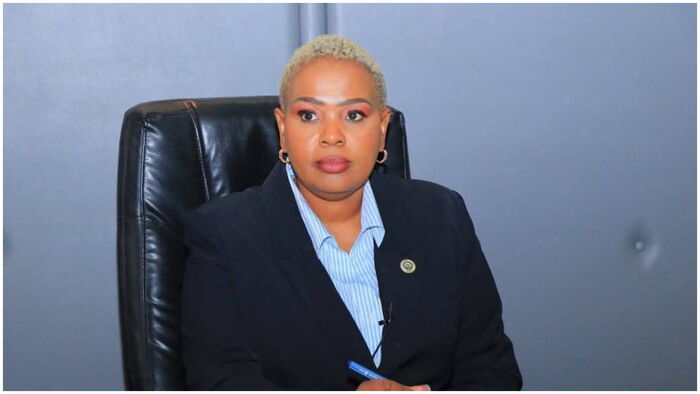
Now Nairobi County’s Chief Officer for Markets and Trade, Wangui played a pivotal but little-known role in legally registering ODM in 2005, at a time when Kenya’s political scene was undergoing seismic change.
In an interview this week, Wangui spoke with calm pride about that moment. “I joined hands with lawyer Mugambi Imanyara to register ODM,” she said, describing how the process unfolded during the tense months of the 2005 constitutional referendum.
A Party Born from a Movement
At the time, Kenya was split between two camps — orange for “No” and banana for “Yes” — in a referendum that would define the nation’s political future. The Orange side, led by Raila Odinga, quickly transformed from a campaign symbol into a full-blown political movement.
Raila needed a legally registered vehicle to carry that momentum forward. Wangui and Imanyara had quietly done just that.
Wangui recalled the moment that changed everything:
“One evening, an acquaintance called and told me he (Raila) was outside my door and wanted to see me,” she said. “When I got to the car, I found H.E. Raila Odinga waiting. He told me I had something he needed — the ODM Party.”
It was a moment that would alter the course of her life — and Kenya’s politics.
Passing the Torch
Although she had registered ODM and initially served as its Secretary-General, Wangui said she had no hesitation in stepping aside for Raila and his allies to take the reins.
“I didn’t think twice,” she said. “Raila’s influence was enormous, and his courage inspired me. I knew ODM would go further under his leadership.”
She allowed Professor Anyang’ Nyong’o to assume the role of Secretary-General and accepted the position of Secretary for Special Programmes instead.
That act of faith — surrendering control of a registered party — became the foundation for what would soon be Kenya’s largest opposition movement, leading the charge for the 2007–2010 constitutional reforms, devolution, and expanded civil liberties.
Unwavering Loyalty
Two decades later, Wangui remains loyal to the party — and to Raila Odinga.
“I have never betrayed Baba,” she said firmly. “Even when it became politically costly to be associated with him because I come from Mt. Kenya, I remained proud to stand with him. To me, he is the greatest man to have walked on Kenyan soil.”
Wangui later served as Raila’s Youth Affairs Advisor when he was Prime Minister and even contested for the Embakasi North parliamentary seat on an ODM ticket, though unsuccessfully.
Her story, however, remains woven into the party’s very beginnings — a quiet testament to the unseen figures who shaped its journey.
ODM at 20: A Legacy Remembered
As the party’s celebrations continue at Mama Ngina Waterfront in Mombasa, the tone is both celebratory and reflective.
ODM’s Executive Director, Oduor Ong’wen, said the event has been reframed “from a jubilee to a commemoration” — a tribute not only to ODM’s endurance but to the life and legacy of Raila Amolo Odinga, who passed earlier this year.
The three-day gathering, which runs from November 14 to 16, will feature tributes from leaders including Kalonzo Musyoka, Anyang’ Nyong’o, and former President Uhuru Kenyatta.
For Wangui, watching the party she helped register reach its 20-year mark is deeply emotional. “It’s been a long journey,” she said quietly. “ODM changed the way we think about democracy in Kenya. I’m proud to have been part of that story.”

 Facebook
 Twitter / X
 WhatsApp
 LinkedIn
 Telegram
 Reddit