
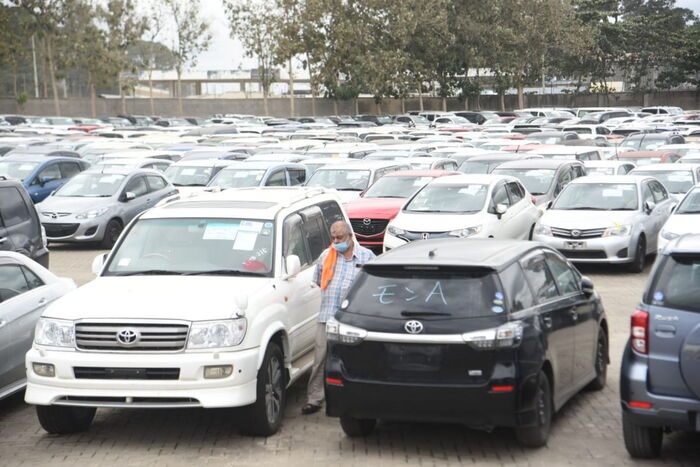
Kenya will ban the importation of used cars registered before 2019 beginning January 2026 — a move that could reshape the country’s multibillion-shilling second-hand vehicle market.
In a notice issued on Thursday, November 13, the Kenya Bureau of Standards (KEBS) said only right-hand drive vehicles first registered in 2019 or later will be allowed into the country from next year.
“Only Right Hand Drive (RHD) motor vehicles whose year of first registration is from 1st January 2019 and later shall be allowed into the country effective 1st January 2026,” KEBS said in the official statement.
The restriction follows Kenya’s eight-year vehicle age limit rule under the Kenya Standard Code of Practice for Inspection of Road Vehicles (KS 1515:2000), which governs the importation of used cars.
Deadline for Older Vehicles
For cars registered before 2019, KEBS has set a final deadline of December 31, 2025, for arrival at Kenyan ports. These vehicles must be accompanied by a valid Certificate of Roadworthiness (COR) to gain entry.
Any unit registered in 2018 or earlier arriving after that date will be rejected at the importer’s expense, the bureau warned.
The rule applies to all importers, including returning residents and diplomatic staff.
Why the Ban?
Officials say the measure is aimed at improving road safety and reducing environmental pollution caused by older, less efficient cars.
“Older vehicles tend to produce higher emissions and often fail to meet safety and mechanical standards,” a KEBS official explained.
Kenya has for years been one of Africa’s largest importers of used cars — mostly from Japan, the UK, Singapore, and the UAE. Many of these vehicles are affordable but aged, leading to concerns over carbon emissions and roadworthiness.
Under the new rules, vehicles from countries where KEBS has inspection partners — such as Quality Inspection Services Japan (QISJ) — must carry a Certificate of Roadworthiness before being shipped.
The inspection process checks everything from the brakes, suspension, and steering to engine condition and documentation, ensuring compliance with Kenya’s safety code.
Impact on Car Dealers and Buyers
The decision is expected to hit second-hand car importers, who dominate Kenya’s vehicle market, where over 80% of cars are used imports. Dealers say the rule will make it harder for middle-class buyers to afford cars.
However, the government argues that the move will benefit local car assembly plants, which have struggled to compete with the influx of cheaper imports.
“Importation of newer units not only improves safety but also encourages investment in local manufacturing,” the statement read.
Kenya has been trying to revive local assembly operations for brands like Isuzu, Toyota, Volkswagen, and Peugeot, with an eye on creating jobs and boosting industrial growth.
The Road Ahead
This is not the first time the government has tightened vehicle import rules. Earlier this year, KEBS barred the import of cars manufactured before 2018.
Industry analysts say the new directive signals a long-term policy shift — one that prioritises safety, environmental protection, and industrial development over short-term affordability.
For car buyers, however, it could mean higher prices in the short run as supply of older, cheaper units dwindles.
As the 2026 deadline approaches, importers are expected to rush to clear pre-2019 cars before the window closes — a potential final boom for second-hand dealers before the ban kicks in.