
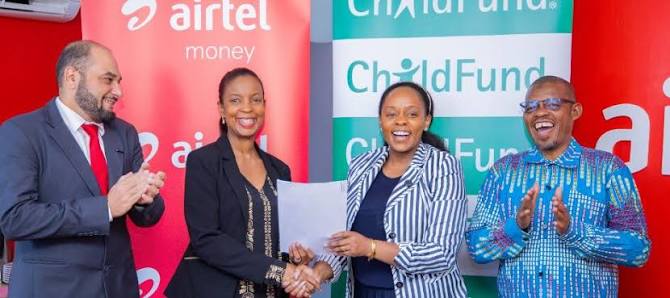
NAIROBI, Kenya — More than 2,000 learners in some of Kenya's most underserved regions are set to benefit from a new education initiative aimed at improving learning conditions for children with disabilities.
A partnership between Airtel Money Kenya and ChildFund Kenya will support schools in Baringo, Garissa and Wajir counties, focusing on learners with visual and hearing impairments who often face significant barriers to accessing quality education.
The programme comes at a time when Kenya continues to grapple with inequalities in education, particularly in arid and semi-arid regions where schools frequently struggle with inadequate infrastructure, limited access to clean water and shortages of learning resources.
The investment will target critical needs in four schools: Marigat Integrated Day and Boarding Primary School and Marigat Special School for the Visually Impaired in Baringo County, Garissa School for the Deaf in Garissa County, and Catholic Integrated Primary and Junior School in Wajir County.
Together, the institutions serve more than 2,000 learners.
The initiative seeks to create learning environments that are safer, healthier and more accessible. Planned improvements include new classrooms, upgraded sanitation facilities, handwashing stations, enhanced water systems and the establishment of information and communication technology centres equipped with digital learning tools.
Special attention will be given to learners with disabilities through improved dormitories, accessible sanitation facilities and expanded access to water.
Speaking during the partnership launch, Airtel Money Kenya Managing Director Anne Kinuthia-Otieno said the project is intended to remove practical obstacles that prevent many children from reaching their potential.
"Education is a powerful force for transforming lives, yet many children still face obstacles such as inadequate facilities, poor sanitation, and limited digital access," she said.
"Through our partnership with ChildFund Kenya, we are investing in practical and sustainable solutions to create more inclusive learning environments, especially for children with disabilities. Our mission is to ensure every child can access quality education and reach their full potential."
For many families in remote communities, children with disabilities face additional challenges beyond those experienced by their peers. Long distances to school, inadequate facilities and social stigma can all affect attendance and academic performance.
ChildFund Kenya Country Director Sankara Gitau said the initiative recognises those overlapping challenges and seeks to address them directly.
"In Kenya, inequality is often layered," he said. "Even within underserved communities, children living with disabilities frequently face additional barriers to accessing quality education and miss opportunities to reach their full potential."
He added that the partnership is designed to create environments where learners can participate fully in school life.
"For the learners who will benefit from this initiative, these improvements will help create safer, healthier and more inclusive schools where every child with disabilities will learn, participate and succeed," Gitau said.
The programme will also invest in water infrastructure, including pipeline extensions, solar-powered pumping systems and additional storage facilities. Organisers say these improvements will benefit not only students but also teachers and surrounding school communities.
Education advocates have long argued that improving infrastructure is essential to achieving meaningful inclusion in schools. While Kenya has made progress in expanding access to education, many institutions that serve children with disabilities continue to face resource constraints.
Supporters of the initiative say the partnership demonstrates how collaboration between private sector organisations and development agencies can help bridge some of those gaps.
As construction and upgrades begin, the project's success will ultimately be measured not just by new buildings or equipment, but by whether more children are able to attend school, remain in class and thrive in environments designed to meet their needs.
 Facebook
 Twitter / X
 WhatsApp
 LinkedIn
 Telegram
 Reddit