
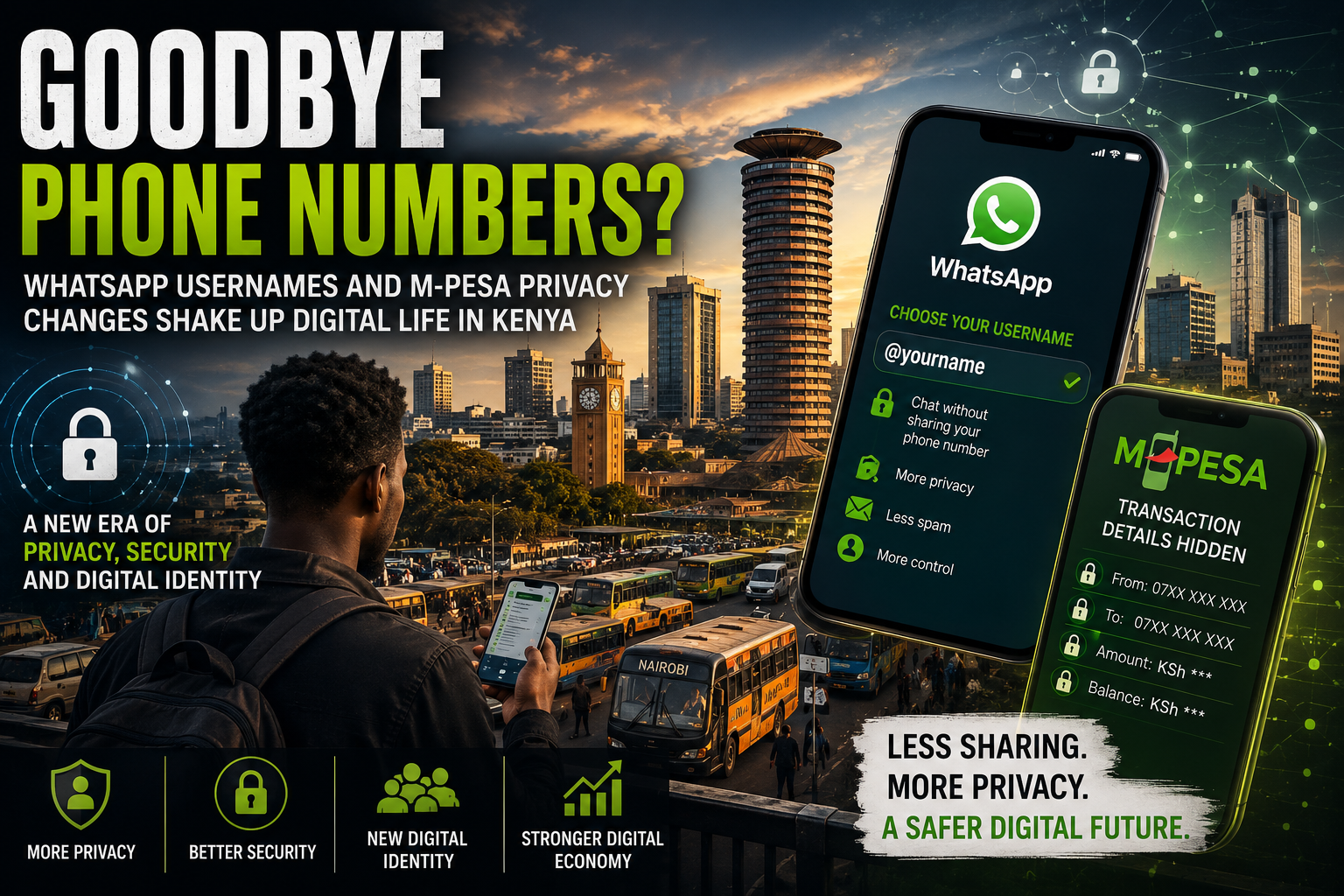
Goodbye Phone Numbers: Digital Life Changes Forever as WhatsApp Introduces Usernames and M-Pesa Hides Transaction Contacts
A major shift is quietly transforming the digital world.
WhatsApp is preparing to introduce usernames, allowing users to chat without sharing their phone numbers. At the same time, M-Pesa, mobile banking platforms, and digital payment systems are increasingly masking contact details in transactions.
For decades, the phone number has been the backbone of digital identity. It connected people, verified accounts, enabled payments, and powered online communication.
Now, that era is beginning to change.
The future is moving toward privacy-first digital identities.
WhatsApp Leads the Way
WhatsApp is rolling out a username system that will allow users to connect without revealing their personal phone numbers.
Instead of sharing a contact number, users will be able to share a unique username.
The feature follows a model already used by platforms such as Telegram, Instagram, and X.
The objective is simple:
- More privacy
- Better security
- Less spam
- Greater control over personal information
For millions of users, this could fundamentally change how people meet, communicate, network, and build online communities.
M-Pesa and Mobile Banking Are Making Similar Moves
While WhatsApp's update is attracting attention, a similar transition is already taking place in digital finance.
Users are increasingly noticing that transaction details are becoming less visible.
In many cases:
- Phone numbers are partially hidden.
- Sender and recipient details are masked.
- Personal transaction information is less accessible.
- Businesses may not immediately identify customers through transaction messages alone.
Whether through M-Pesa, mobile banking apps, PayBills, Till Numbers, or digital transfers, privacy is becoming a priority.
Unless users have integrated systems, verification tools, or specialized backend access, viewing complete transaction identities is becoming more difficult than before.
The days of openly exposing personal contact information are slowly coming to an end.
Why This Shift Is Happening
The answer is privacy.
For years, phone numbers have been exposed through:
- Mobile money transactions
- Messaging platforms
- Group chats
- Business registrations
- Delivery services
- Online marketplaces
That exposure created opportunities for fraud, spam, identity theft, unwanted marketing, and cybercrime.
Technology companies are now responding by giving users greater control over their personal information.
The goal is not to make communication harder.
The goal is to make digital life safer.
What This Means for Society
The impact goes far beyond messaging apps and mobile money.
This transition could reshape:
- How businesses identify customers.
- How people build trust online.
- How professionals network.
- How creators engage audiences.
- How governments regulate digital systems.
- How consumers protect their identities.
The phone number is gradually shifting from a public identifier to a private credential.
The Pros and Cons of the Privacy Revolution
|
Pros |
Cons |
|
Greater privacy for users. |
Harder for businesses to identify customers directly. |
|
Reduced spam calls and unwanted messages. |
Increased risk of fake usernames and impersonation. |
|
Better protection against identity theft and fraud. |
Verification may become more challenging. |
|
Safer online interactions with strangers. |
Small businesses may need new customer management systems. |
|
More control over personal information. |
Customer support and dispute resolution may become more complex. |
|
Stronger protection against data harvesting. |
Some users may struggle to adapt to new systems. |
|
Professional digital identities without exposing private contacts. |
Trust may take longer to establish in online interactions. |
|
Encourages innovation in digital identity and verification technologies. |
Businesses may face additional operational costs during the transition. |
Businesses Must Prepare
Many businesses across Africa still rely heavily on phone numbers.
A transaction notification often serves as a customer database, payment confirmation, and communication channel all at once.
That model is changing.
Forward-looking businesses will increasingly need:
- Customer accounts
- Digital receipts
- Verified usernames
- QR-based payments
- CRM systems
- Stronger digital identity solutions
Those who adapt early are likely to gain a competitive advantage.
The Future Beyond Phone Numbers
This is more than a WhatsApp update.
It is more than an M-Pesa privacy feature.
It is part of a larger global movement toward secure digital identities and stronger data protection.
As privacy becomes a central pillar of the digital economy, users will gain more control over who sees their information, how they are contacted, and how they interact online.
For Kenya, one of the world's leading mobile money economies, the impact could be profound.
Communication is changing.
Payments are changing.
Digital identity is changing.
And for the first time in decades, the phone number is no longer guaranteed to be the center of our digital lives.