
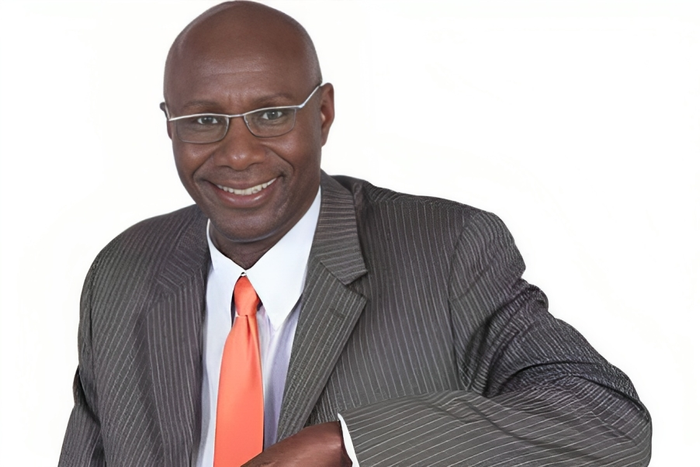
Veteran broadcaster and media personality Fred Machoka has told the court that social media posts allegedly published by blogger and politician Robert Alai falsely portrayed him as HIV positive and mentally unstable, causing significant damage to his reputation and personal brand.
Testifying before the court in the ongoing defamation suit, Machoka adopted his witness statement and supporting pleadings as part of his evidence in the case filed against Alai in 2025.
Machoka, a household name in Kenyan broadcasting, traced his professional journey from serving as a police officer in 1972 before joining the then Voice of Kenya, now the Kenya Broadcasting Corporation (KBC), and later Royal Media Services, where he currently hosts radio and television programmes on Radio Citizen and Citizen TV.
The veteran broadcaster told the court that he has received numerous national and international accolades, including a Head of State Commendation awarded by former President Mwai Kibaki and the Order of the Grand Warrior (OGW) conferred by former President Uhuru Kenyatta.
Explaining why he filed the suit, Machoka said he felt defamed by statements posted on a Facebook account allegedly belonging to Alai. He claimed the posts suggested that he was HIV positive and taking antiretroviral drugs (ARVs), which were allegedly affecting his judgment and mental stability.

"I felt defamed when he went on his Facebook account alleging that I'm HIV positive and I'm taking ARVs which are making me irrational in thinking," Machoka told the court.
He argued that the statements not only attacked his personal dignity but also threatened a brand he had spent decades building. Machoka said his career spans nearly 50 years in broadcasting and includes work as a master of ceremonies at major national and international events, advertising endorsements, and business ventures including his hospitality establishment, Fred's Ranch.
According to Machoka, his name and reputation are directly linked to his professional and business interests.
"When you go out there alleging that I'm HIV positive and that I'm on ARVs that are making me irrational in thinking, you are destroying me," he said.
Machoka estimated the value of his personal brand at between KSh150 million and KSh200 million.
During cross-examination, the court heard that Alai has denied ownership of the Facebook account in question. Machoka maintained that he believes the account belongs to Alai, citing documents and previous court proceedings that he said connect the account to the defendant.
He acknowledged that he had not directly sought confirmation from Facebook regarding the ownership of the account but said he relied on documents and evidence that he considers authentic.
Machoka also defended his assertion that the account was genuine, stating that its activity patterns and historical conduct pointed to it being an authentic account associated with Alai.
A key issue in the proceedings involved a social media post allegedly referring to Machoka by name and linking him to HIV treatment. The court heard excerpts from the disputed post, including remarks questioning whether HIV causes insanity and references to ARVs.
Machoka told the court that the statements clearly referred to him and denied being HIV positive. When asked whether he would be willing to undergo an HIV test if ordered by the court, he responded that he was ready to do so immediately.

The proceedings also touched on exchanges between the two men on social media, including references to comments in which Machoka allegedly described Alai using the term "mjinga" (fool). Machoka told the court that he viewed the term in the context of an ongoing online exchange and noted that Alai had never sued him over those remarks.
The hearing further examined posts concerning former Interior Cabinet Secretary Fred Matiang'i, with Machoka maintaining that the disputed statements were targeted at him because they specifically mentioned his name.
The case continues as the court considers evidence relating to the authorship of the social media account, the meaning and context of the disputed statements, and whether the publications amounted to defamation.