
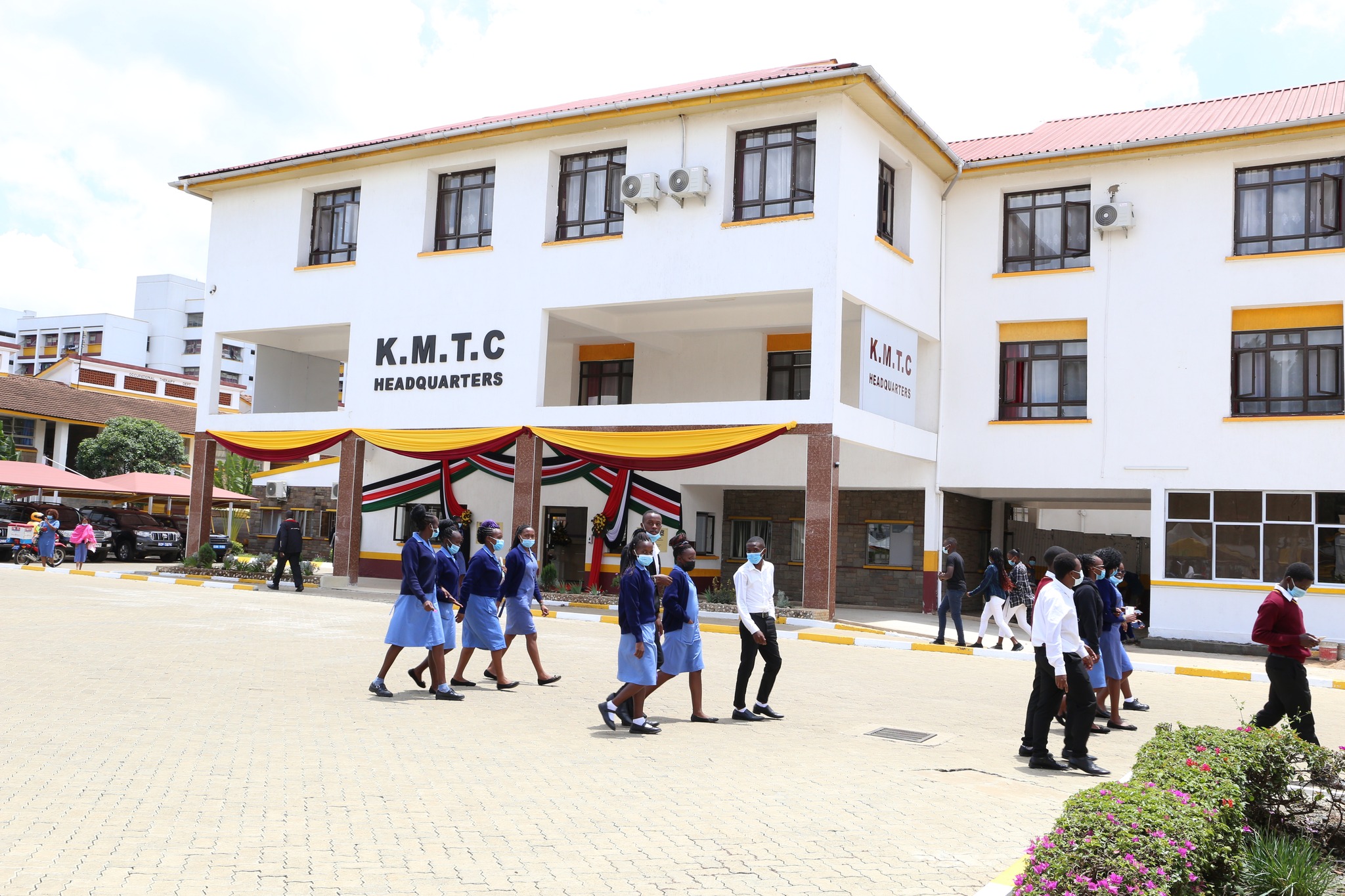
Kenya’s government is moving to bring thousands of medical trainees into a new state funding system, in a shift that could reshape how tertiary education is financed.
President William Ruto has directed officials to ensure students at the Kenya Medical Training College are included in a planned national funding framework expected to take effect from the next academic cycle.
The directive came during a public event at KMTC’s Nyamache campus, where the president tied the move to wider reforms in higher education financing.
“As you work around the Bill, ensure that KMTC students receive an allocation for the next semester,” Mr Ruto said.
A major shift in student funding
At the centre of the proposal is a new law currently before parliament, known as the Tertiary Education Placement and Funding Bill.
If passed, it would merge three existing bodies—the Higher Education Loans Board, the TVET Fund and the University Fund—into a single agency responsible for student support across universities and technical institutions.
Education Cabinet Secretary Julius Ogamba confirmed that KMTC students are expected to be part of the new system once the legislation is enacted.
He said the proposal is still under parliamentary review, and final inclusion will depend on the law being passed.
For KMTC students, the announcement marks a potential turning point. Unlike university students, many have historically relied on limited or indirect government support, despite training for critical roles in the public health system.
Pressure on training institutions
The president also announced plans to expand staffing at KMTC, saying the government wants to strengthen training capacity as demand for healthcare workers grows.
He further commissioned a student housing project at the Nyamache campus, aimed at accommodating more than 300 students and easing pressure on existing facilities.
Officials say such investments are part of a wider effort to improve conditions in public training institutions, particularly those linked to essential services like healthcare.
Why KMTC matters
Founded in 1927, KMTC is Kenya’s largest health training institution, with dozens of campuses across the country. It operates under the Ministry of Health and trains nurses, clinical officers, laboratory technicians and other frontline medical workers.
Government figures suggest that a large share of Kenya’s health workforce has passed through its classrooms.
That reach has made KMTC central to national healthcare planning, even as funding gaps have persisted for many of its students.
What happens next
The proposed funding model now rests with parliament. Lawmakers will decide whether to consolidate the existing education funds into a single structure and extend support to institutions like KMTC.
If approved, the changes could take effect as early as the next academic cycle.
For students and families, the outcome is closely watched. Medical training is expensive, and many learners have long called for more predictable financial support.
For now, the promise stands at the edge of policy and legislation—awaiting the final vote that will determine whether it becomes reality.
 Facebook
 Twitter / X
 WhatsApp
 LinkedIn
 Telegram
 Reddit