Nakuru is growing rapidly—but its sanitation systems are not keeping pace.
With a population now exceeding 2.1 million, only 3.4 percent of residents are connected to sewer infrastructure. The rest depend on decentralized waste systems, many of which are either inefficient or environmentally unsafe. County data suggests that more than 65 percent of human waste goes untreated, exposing households to health risks and placing mounting pressure on land, water, and urban planning systems.
It is against this backdrop that Bio Tank Africa is stepping into Nakuru.
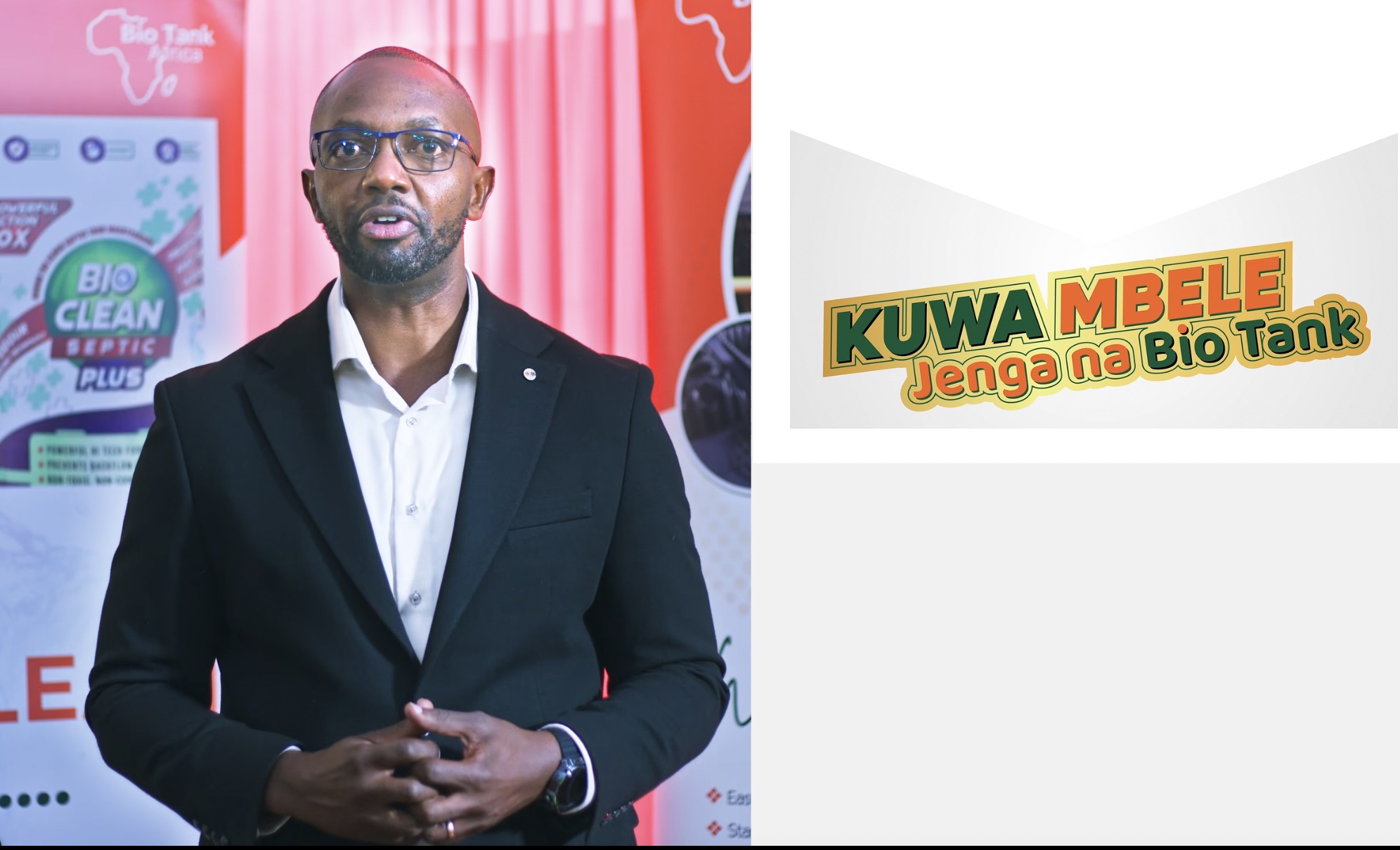
On Friday, April 10, 2026, the company will officially launch its Nakuru branch at Shayona Business Centre, marking a strategic expansion into one of Kenya’s fastest-growing urban regions. The launch will bring together founder and general manager Edwin Kirugo, alongside construction stakeholders, plumbing professionals, and officials from the Nakuru County Government.
But the story of Bio Tank Africa—and its entry into Nakuru—is inseparable from the personal journey of its founder.
From Personal Frustration to Scalable Solution

Visit Bio Tank Africa website www.biotankbiodigester.com
Kirugo did not set out to build a sanitation company. His entry point was far more practical—and common.
While constructing his own home, he encountered a challenge familiar to many Kenyan homeowners: the high cost and inefficiency of conventional septic tanks. Installation required significant excavation, materials, and labor, pushing costs beyond what many middle-income households could reasonably afford.
Rather than accept the limitation, he began exploring alternatives.
That process led to the development of a more affordable biodigester system—one that uses biological processes to break down waste, reducing the need for frequent emptying while minimizing environmental impact. What started as a personal workaround quickly revealed a broader market gap.
By 2018, Bio Tank Africa was formally established.
Today, the company manufactures plastic biodigesters and related sanitation solutions, positioning itself as a cost-effective alternative to traditional septic systems. Its products are designed to be easier to install, require fewer raw materials, and significantly reduce long-term maintenance costs compared to conventional systems.
A Growing Market Driven by Urban Pressure
Nakuru represents a microcosm of a wider national challenge.
As urban centres expand outward, many new developments fall outside the reach of centralized sewer systems. Developers are increasingly forced to integrate independent sanitation solutions into their building plans, often at significant cost.
This has created a growing demand for alternatives that are both affordable and scalable.
Bio Tank Africa’s biodigesters are positioned to meet this demand. Unlike traditional septic tanks, which require periodic exhaustion and are prone to overflow, biodigesters decompose waste continuously, reducing maintenance and environmental risk. They also occupy less space—an important factor in densely built peri-urban areas.
For contractors, this shift is not just technical—it is economic.
“In many projects today, sanitation is one of the most unpredictable costs,” says a Nakuru-based builder. “If you can reduce that cost without compromising quality, it changes how you design and price housing.”
Innovation as Infrastructure Substitute
Kenya’s sanitation challenge has long been framed as an infrastructure deficit—one that requires large-scale public investment in sewer networks. But companies like Bio Tank Africa are reframing the conversation.
Instead of waiting for centralized systems to expand, they are offering decentralized, technology-driven solutions that can be deployed immediately at household or development level.
This approach aligns with broader trends in urban development, where modular, off-grid solutions are increasingly used to bridge infrastructure gaps.
Bio Tank Africa’s product ecosystem extends beyond biodigesters. It includes grease management systems for commercial kitchens, septic tank treatment solutions, and eco-friendly cleaning products—an integrated approach to waste management that targets both residential and commercial users.
The Stakes for Nakuru
For Nakuru residents, the implications are tangible.
Poor sanitation systems contribute to water contamination, disease outbreaks, and rising household maintenance costs. In fast-growing estates, the absence of reliable waste management infrastructure can quickly erode the quality of life.
For county authorities, the challenge is equally pressing: how to manage urban growth sustainably without over-reliance on costly, slow-moving infrastructure projects.
Private sector innovation may offer part of the answer.
The launch of Bio Tank Africa’s Nakuru branch is not, on its own, a solution to the county’s sanitation crisis. But it represents a shift toward localized, scalable interventions—ones that respond directly to the realities on the ground.
As Kirugo prepares to officially open the new office, the underlying question remains: can decentralized innovation close the sanitation gap faster than traditional systems can expand?
For a county growing as quickly as Nakuru, the answer may determine not just how people live—but how safely they do so.
For any inquiries Visit Bio Tank Africa website www.biotankbiodigester.com