
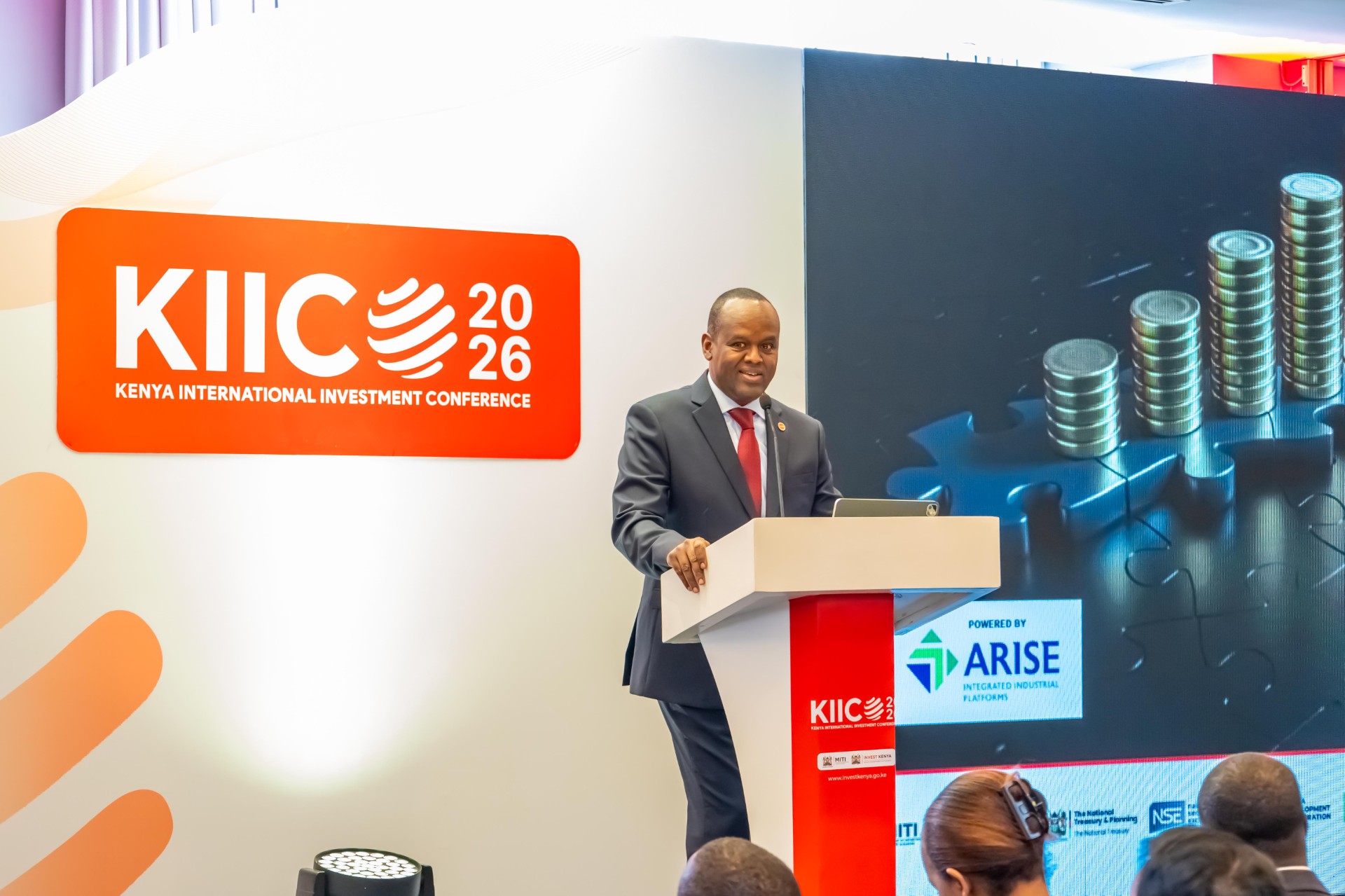
Kenya must urgently reform and better coordinate its financing ecosystem to unlock sustainable economic growth and attract large-scale investment, financial experts and policymakers said at the recently concluded Kenya International Investment Conference 2026.
The consensus emerged during a high-level “Financing Ecosystem” side event that brought together industry leaders, government officials, and global investors to examine how the country can more effectively mobilise and deploy capital.
Speaking at the forum, Abdi Mohamed, Managing Director and CEO of Absa Bank Kenya, called for a shift from fragmented financing approaches to more integrated, ecosystem-driven models. He noted that while capital is available, inefficiencies in coordination and structuring continue to limit its impact.
“Kenya stands at an important moment. The ambition to accelerate industrialisation, deepen inclusion, and build resilience in an increasingly complex global environment is clear. The question before us is not whether capital exists to support this ambition, but how effectively we can mobilise and deploy it,” Mohamed said.
He added that the central challenge facing the country is no longer access to funding, but rather the mechanisms used by both the public and private sectors to channel that capital into productive investments.
His remarks were echoed by Chris Kiptoo, Principal Secretary at the National Treasury Kenya, who underscored the fiscal urgency of reform. Kiptoo revealed that Kenya currently allocates about 40 percent of its ordinary revenue to debt servicing, a trend the government is seeking to reverse.
“To avert these trends, as Treasury we are pursuing reforms to bring this down. Continued borrowing is not a sustainable strategy for prosperity. We are implementing structural reforms across both revenue and expenditure to mobilise capital more effectively,” he said.
Kiptoo pointed to the recent signing of the National Infrastructure Bill Kenya as a key milestone in shifting toward an investment-led development model. The new framework is expected to reduce reliance on public debt while encouraging greater private sector participation in infrastructure financing.
Stakeholders at the conference emphasised that achieving Kenya’s development ambitions will require moving beyond traditional commercial banking models. Despite the presence of capital across government, development finance institutions, and private investors, large-scale project financing remains constrained by weak structuring and siloed operations.
Participants highlighted the untapped potential of domestic capital sources, including pension funds and institutional investors, which could provide long-term, stable financing for critical sectors if effectively mobilised.
Experts also stressed the importance of strengthening project preparation frameworks, improving policy clarity, and establishing robust risk-sharing mechanisms to attract a wider pool of investors. Well-structured public-private partnerships, they noted, can align national development priorities with private capital, increasing the likelihood of successful project execution.
If these reforms are implemented effectively, analysts say the benefits could extend beyond infrastructure development to enhance Kenya’s overall economic competitiveness, deepen capital markets, and drive more inclusive growth.
The conference concluded with a strong call for unprecedented collaboration between government, financial institutions, and development partners to unlock long-term capital flows essential for the country’s future.
The Kenya International Investment Conference 2026 brought together more than 500 global investors, policymakers, and industry leaders representing trillions of dollars in capital. The forum focused on positioning Kenya as a leading investment destination in Africa while fostering partnerships capable of creating millions of jobs.
 Facebook
 Twitter / X
 WhatsApp
 LinkedIn
 Telegram
 Reddit