
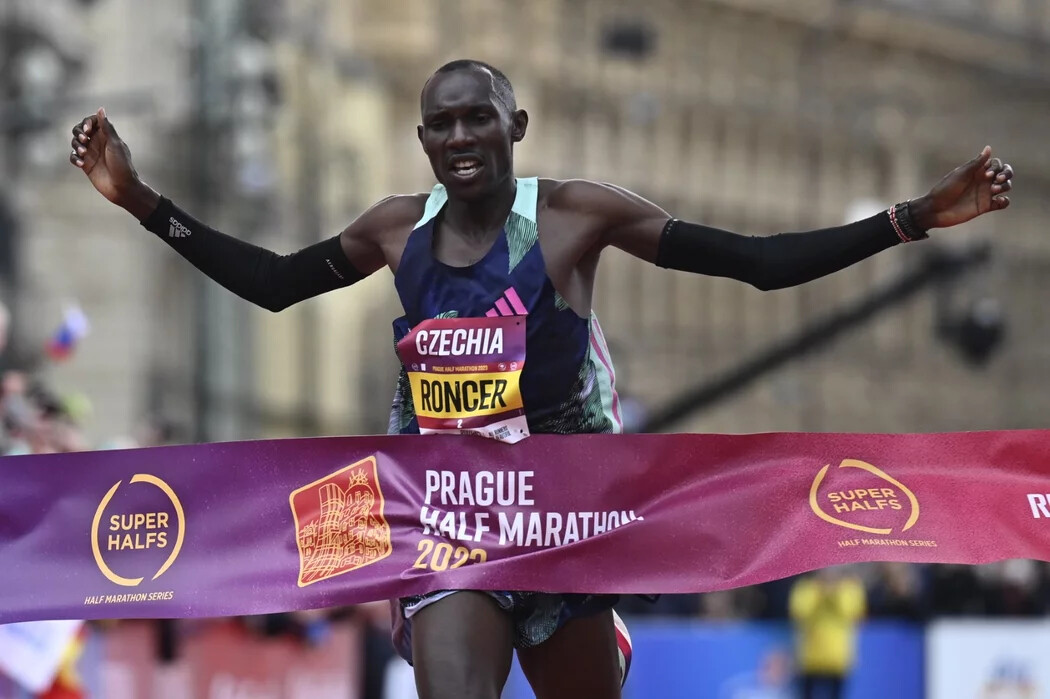
Nairobi
Kenyan road runner Roncer Kipkorir Konga has been banned from competition for three years after testing positive for testosterone, a prohibited substance.
The Athletics Integrity Unit (AIU) announced the sanction on Monday, saying the suspension would run from 16 June 2025. All results recorded since 29 December 2024 have been annulled, including medals, prize money and appearance fees.
Konga admitted to breaking anti-doping rules, which shortened his ban from the standard four years.
In a statement, the AIU said: “This decision confirms the following consequences for a first Anti-Doping Rule Violation: a period of ineligibility of three years commencing on 16 June 2025, and disqualification of the athlete’s results on and since 29 December 2024, with all resulting consequences.”
The case centres on a urine sample collected in Iten, Kenya’s high-altitude training hub, on 29 December 2024. Initial testing by a World Anti-Doping Agency laboratory in Lausanne found no irregularities. But a later analysis confirmed testosterone and its metabolites of exogenous origin—meaning the substance came from outside the body.
The AIU noted that Konga had no Therapeutic Use Exemption that might have justified the finding.
In an interview, the runner denied deliberately taking testosterone. He suggested the result could have come from a traditional herbal medicine prepared by his mother, or from a supplement he had used. “I believe in my training and my talent. I only used those two before Christmas, and I didn’t use any injections,” he told investigators.
However, after consulting the Athlete Passport Management Unit, the AIU concluded that neither the herbal mixture nor the supplement was a plausible source.
This is Konga’s first doping offence. He waived his right to a disciplinary tribunal hearing, though he, the World Anti-Doping Agency, or the Anti-Doping Agency of Kenya could still appeal to the Court of Arbitration for Sport in Lausanne.
The AIU said the ruling underscored its “zero-tolerance” stance on doping and stressed the importance of protecting the credibility of athletics.