

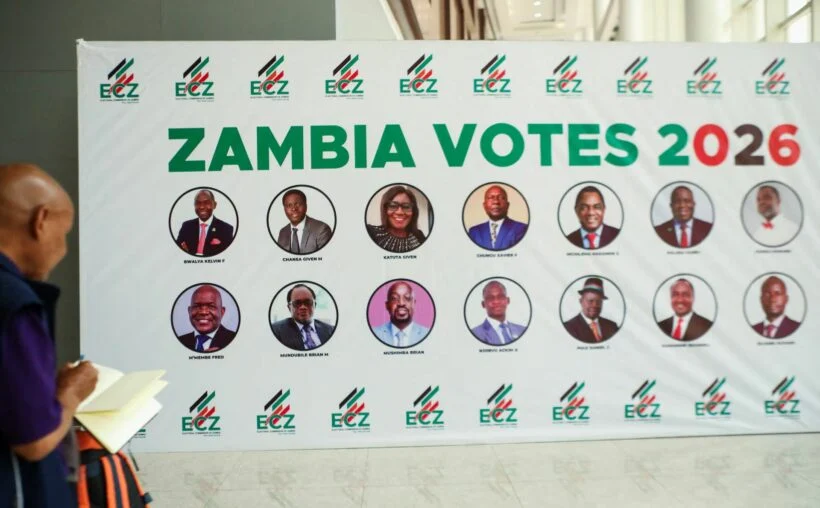
LUSAKA, Zambia — Zambia has entered a crucial political moment as voters cast ballots in an election testing whether President Hakainde Hichilema’s economic reforms have translated into better living conditions for ordinary citizens.
Hichilema, who came to power in 2021 after defeating then-President Edgar Lungu, is seeking a second five-year term in the August 13 presidential, parliamentary and local government elections. About 8 million registered voters were eligible to participate, with counting beginning after polling stations closed. The Electoral Commission of Zambia expects the initial presidential results by Monday.
The election pits Hichilema's governing United Party for National Development (UPND) against a fragmented opposition, with Brian Mundubile of the Tonse Alliance emerging as his principal challenger.
But beneath the political contest lies a more consequential question: have Zambia's headline economic gains improved everyday life?

Economy becomes Hichilema's biggest campaign test
Hichilema took office after Zambia defaulted on its sovereign debt in 2020, inheriting an economy weighed down by high debt, inflation and weak investor confidence.
His administration has since pursued debt restructuring, fiscal reforms and efforts to attract investment.
International investors have responded positively, with Zambia securing major mining investments and making progress in restructuring more than $12 billion of debt. The International Monetary Fund projects economic growth of about 4.3 per cent in 2026, while inflation has fallen sharply from its earlier highs.
Yet the economic recovery has created a political paradox.
The numbers are improving, but many households say they are not feeling the recovery.
The cost of food and other essentials, unemployment and weak purchasing power remain major concerns for voters. More than 60 per cent of Zambians were living in poverty as of 2022, according to figures cited by Reuters.
For Hichilema, Thursday's vote therefore represents a referendum on whether macroeconomic stability is enough when ordinary citizens continue to struggle with the cost of living.
Copper could determine Zambia's future
The election also has implications far beyond Zambia's borders.
Zambia is Africa's second-largest copper producer, placing it at the centre of the global competition for critical minerals needed for electric vehicles, renewable energy infrastructure and other technologies.
Hichilema has sought to position Zambia as an attractive destination for mining investment, while his administration has set ambitious targets for increasing copper production.
Nearly $10 billion in mining investment has been announced under his administration, according to the Financial Times, with plans to significantly increase copper output by 2031.
But the copper boom has also intensified a central political question: who benefits from Zambia's mineral wealth?
Opposition politicians have argued that ordinary Zambians are not receiving enough of the benefits from the country's natural resources, while communities in mining areas continue to complain about access to land, employment and economic opportunities.
That tension was dramatically illustrated during Hichilema's campaign visit to Chingola, where a crowd protested over access to a mining site and the president was forced to leave amid unrest.
A divided opposition gives Hichilema an advantage
Hichilema enters the election with a significant political advantage: his opponents are divided.
Brian Mundubile is leading the Tonse Alliance, a coalition with links to forces that supported former President Edgar Lungu. Lungu, who died in 2025, remains a powerful symbol in the opposition's political narrative.
But opposition parties have struggled to present a single unified alternative.
The fragmentation could help Hichilema retain power, particularly if opposition votes are split among several presidential candidates and parliamentary contenders.
Still, the opposition retains significant support in key urban and mining regions, including Lusaka and the Copperbelt, making the contest more competitive than a simple incumbent-versus-challenger narrative might suggest.
Democracy also on the ballot
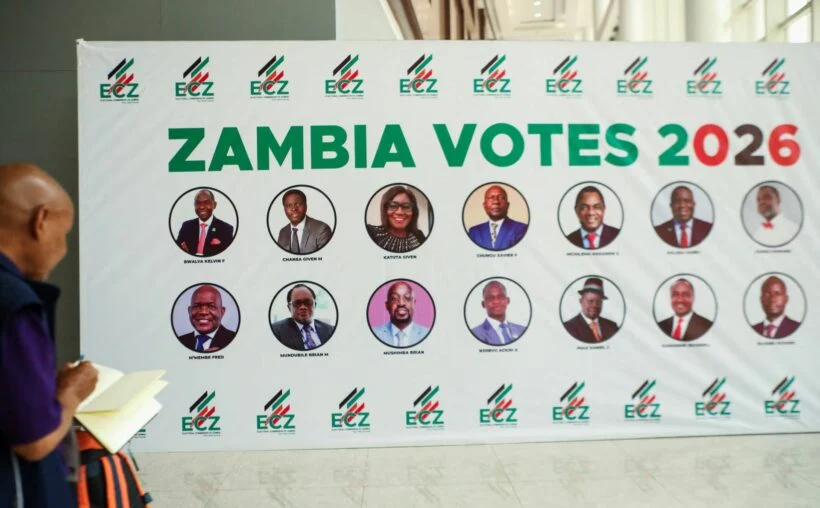
Economic performance is not the only issue facing Hichilema.
Rights groups and opposition figures have accused the government of restricting political space and putting pressure on opposition groups—claims the administration has rejected.
The concerns matter because Zambia has long been viewed as one of the more stable electoral democracies in the region.
The 2021 election resulted in a peaceful transfer of power when Hichilema defeated Lungu by a wide margin, winning about 59.4 per cent of valid votes.
This year's election is therefore being watched not only for its winner but also for whether Zambia can preserve its reputation for peaceful democratic transitions.
What happens next?
Under Zambia's electoral system, a presidential candidate must secure more than 50 per cent of valid votes to win outright. If no candidate crosses that threshold, the top two candidates proceed to a second-round vote.
For now, vote counting is underway and official results are expected in the coming days.
Whatever the outcome, the election has already crystallised the dilemma facing many African resource-rich economies:
Can strong economic indicators translate into prosperity that citizens can actually feel?
For Hichilema, the answer could determine whether Zambians give him another five years—or decide that economic recovery has not gone far enough.
And for Africa, Zambia's experience offers a closely watched case study in whether debt reform, mining investment and macroeconomic stability can ultimately deliver jobs, lower living costs and a larger share of natural-resource wealth for ordinary citizens.
Related Stories
- Hunter Biden Says Joe Biden’s Cancer Has Spread to His Bones, Causing Severe Pain
- Armed Man Arrested Near Trump Golf Course Ahead of Presidential Visit
- Africa Mourns Raila Odinga: AU Leads Tributes to Kenya’s Visionary Statesman
Category: International
 Facebook
 Twitter / X
 WhatsApp
 LinkedIn
 Telegram
 Reddit