
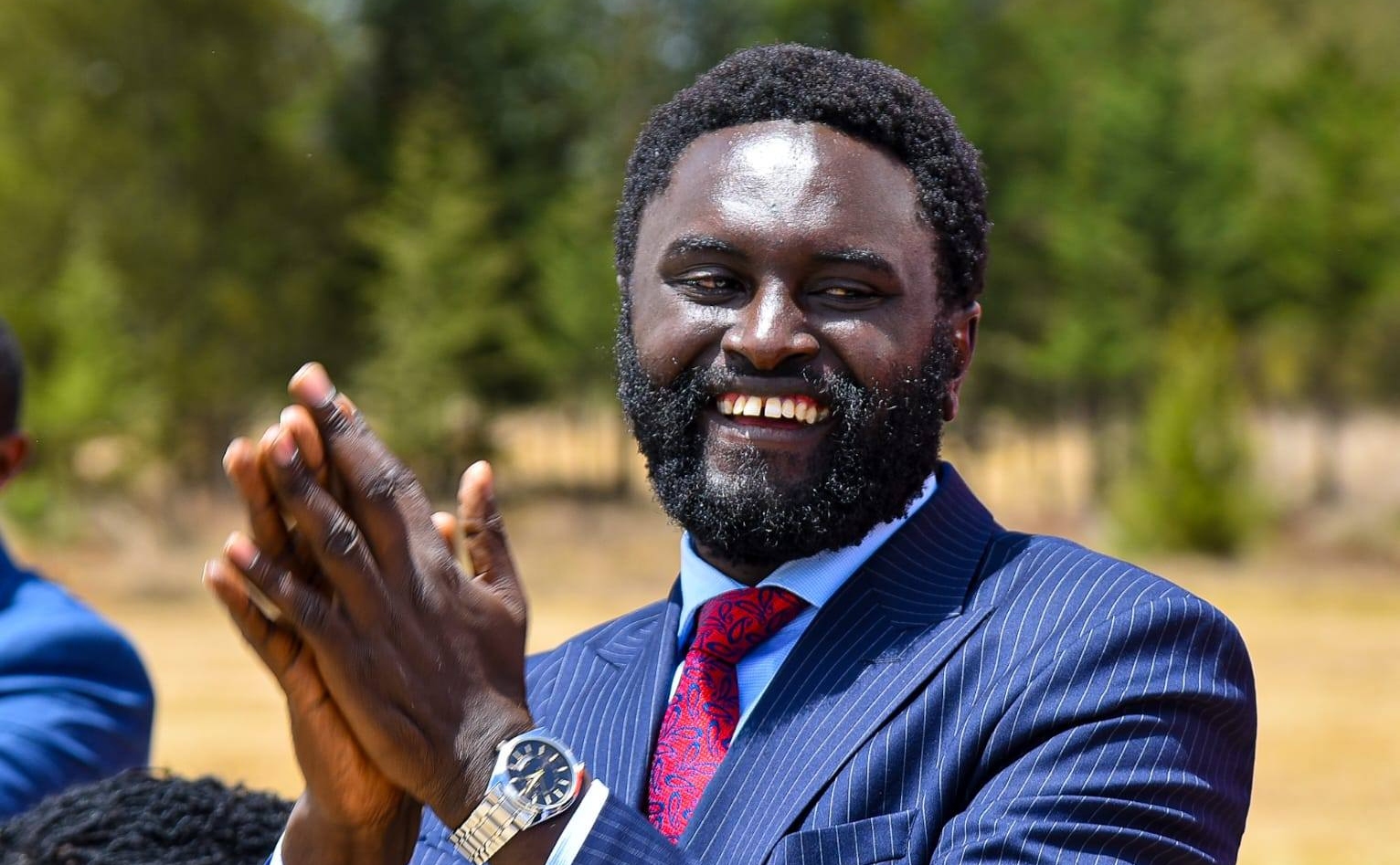
Nyandarua Senator John Methu has challenged President William Ruto to put his 2022 campaign promises to a public test, demanding a detailed account of what has been delivered four years into the administration.
Methu says the real question ahead of the 2027 General Election is no longer what the government promised, but what ordinary Kenyans can point to and say has actually changed.
Speaking at the DCP headquarters in Nairobi on Thursday, Methu challenged Ruto to identify at least one major promise from his 2022 campaign that has been fulfilled and publish the evidence.
“Of all the promises William Ruto made to Kenyans in 2022, which one, just one, has been delivered after four years? Publish the scorecard,” Methu said.

He then posed a question likely to become increasingly important as the country moves towards the next election.
“If Ruto deserves another term, what measurable improvement has the ordinary Kenyan seen?”
The government already has its own scorecard
Methu's challenge comes with an important twist: the Ruto administration has already published performance reports defending its record.
The Government Delivery Unit's latest scorecard tracks progress under the Bottom-Up Economic Transformation Agenda (BETA), covering areas including agriculture, housing, infrastructure, healthcare, jobs and digital services.
Government figures show, for example, that maize production rose from 44 million bags in 2022 to 75 million bags in 2024. The administration also says more than 260,000 affordable housing units are under construction, while 2,669 kilometres of roads have been completed and more than 6,000 kilometres are under construction.
The government also reports that more than 28.5 million Kenyans have registered under the Social Health Authority and that more than 10 million electricity connections have been reached.
Those figures form the basis of the administration's argument that its promises are producing measurable results.
But Methu's challenge goes to a different question: do those national statistics translate into a better daily life for the average Kenyan?
That distinction is likely to become one of the central political battles of the next year.
The economy is another battleground
Ruto's administration has also pointed to improvements in several economic indicators.
The government says inflation has eased from the high levels recorded when it took office, while foreign exchange reserves, investment and agricultural production have improved.
But macroeconomic gains do not necessarily tell the whole story for households.
The Central Bank of Kenya's latest available figures put annual inflation at 6.41 per cent in June 2026, while average commercial-bank lending rates remained at 14.5 per cent in May.
For voters, therefore, the political test is likely to be more personal: the cost of food, housing, transport, healthcare, school fees and access to jobs.
Government says it has numbers to show
Deputy President Kithure Kindiki has been among the administration's strongest defenders of its record.
He has pointed to increased farmer registration, fertiliser support, higher agricultural production, teacher recruitment, classroom construction and expanded healthcare coverage.
The government's published scorecard similarly says the number of digitally registered farmers has risen sharply and that fertiliser subsidies have reduced the cost of the input for farmers. It also reports gains in tea, dairy and other agricultural sectors.
On employment, the administration says its affordable housing programme and other projects have created hundreds of thousands of jobs. It also credits the digital economy and fibre expansion with opening opportunities for young people.
The government's case, therefore, is that judging the administration only through household expenses would overlook broader changes taking place across the economy.
Methu wants promises matched to results
Methu, however, wants the government to move beyond broad claims and show Kenyans exactly what has been achieved against the promises made during the 2022 campaign.
His argument also extends to former Deputy President Rigathi Gachagua, whose criticism of the administration has intensified since leaving office.
Methu defended Gachagua against suggestions that his former position makes his current criticism less credible.
“The question is not whether he was there. The question is, is what he is saying true or false?” Methu said.
That is a significant political argument as the 2027 campaign begins to take shape.
The government will have its numbers. Opposition leaders will have their own assessment. And voters will ultimately decide which version reflects their experience.
The more revealing scorecard may therefore not be the one published by government or opposition politicians, but the one ordinary Kenyans carry in their daily lives.
You may also like
Category: Politics · Related Topic: William Ruto
Related Video: Dolly Parton’s Family Announces Her Passing in Emotional Tribute
About the Author
Maureen Onyango is a journalist passionate about storytelling, life coaching and spiritual lessons. She studied at the Kenya Institute of Management and enjoys telling stories that inform, inspire and empower communities.
 Facebook
 Twitter / X
 WhatsApp
 LinkedIn
 Telegram
 Reddit