
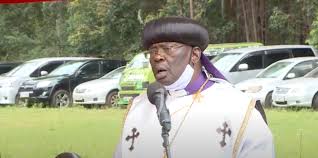
Father John Juma Pesa, the founder of the Holy Ghost Coptic Church and one of Kenya’s most debated religious figures, has died in Kisumu, bringing an end to a decades-long and often controversial ministry.
He died on Thursday, May 28, while receiving treatment at a hospital in Kisumu County, according to sources familiar with the matter. The exact cause of death had not yet been confirmed. His body was later moved to the Jaramogi Oginga Odinga Teaching and Referral Hospital mortuary pending postmortem examination.
For many, Pesa’s name has long sat at the intersection of faith, healing and controversy.
He first came into public view in the 1970s after breaking away from the Roman Catholic Church. He later established the Holy Ghost Coptic Church along the Kisumu–Kakamega highway, building a following that cut across parts of western Kenya and beyond.
His ministry grew through claims of spiritual healing. Followers travelled to his church seeking help for illness, mental health struggles and personal crises. Supporters often described him as a man with deep spiritual gifts and a message that challenged established religious institutions.
But his church also drew scrutiny over the years.
Police and human rights organisations repeatedly raised concerns about practices within the compound. In 2023, officers alongside the Kenya National Commission on Human Rights carried out an operation at the site, where several people were found and later removed from what investigators said were locked rooms.
Some of those rescued were believed to be individuals with mental health conditions, brought there by relatives in search of spiritual intervention rather than medical care.
Authorities questioned aspects of the church’s operations, while rights groups warned about the vulnerability of some followers. The church, however, maintained that it was unfairly targeted.
Despite the disputes, Pesa retained a committed base of supporters who viewed him as a misunderstood spiritual leader whose work was often misrepresented.
In 2020, he also made headlines after claiming he had received threats following a visit to then-Deputy President William Ruto at his Sugoi home. He denied allegations that money had changed hands during the visit, saying the claims circulating at the time were false and politically driven.
As news of his death spread in Kisumu on Thursday, reactions reflected that same divide — grief from followers, and reflection from those who had long questioned his methods.
His passing closes a chapter on a figure who remained both influential and contested in Kenya’s religious landscape.
