
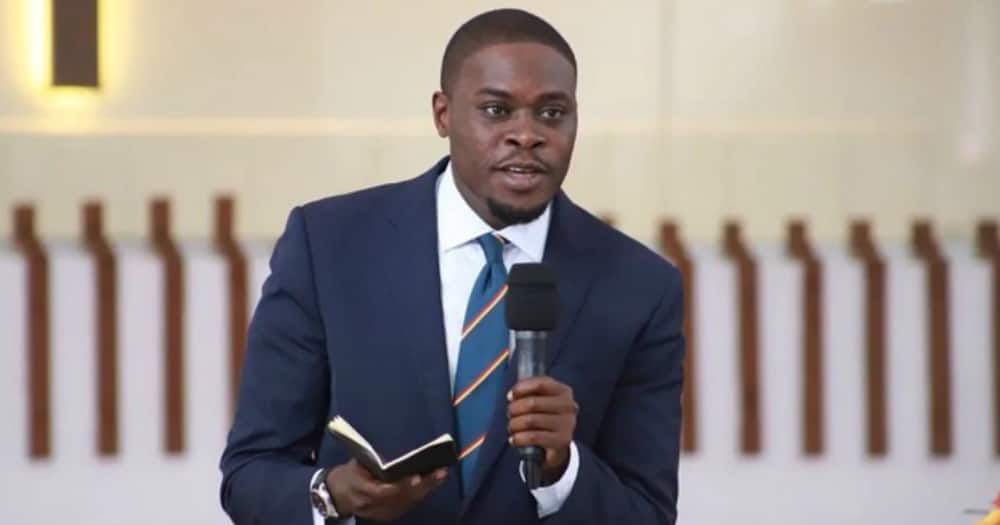
When Nairobi Governor Johnson Sakaja promised to make Kenya’s capital work, many hoped for a new era of order. Two years into his term, that promise is under heavy strain.
From street brawls and political infighting to controversial crackdowns, Sakaja’s administration is increasingly being seen not as a force for calm, but a source of friction.
The latest flashpoint came last Tuesday, when a peaceful protest over the killing of 31-year-old teacher Albert Ojwang’ turned violent. Men wielding machetes and clubs stormed parts of the city centre, attacking demonstrators and looting shops. Eyewitnesses say they roamed freely as police stood by.
After unleashing chaos, they marched to City Hall in broad daylight. “Sakaja, we have protected the city. We are not afraid. Let them come,” one man boasted in a video widely shared online, brandishing a stick and walking with others carrying similar crude weapons.
Denials and Doubts
Sakaja quickly distanced himself. “We categorically dissociate ourselves from any gangs, militias, or politically sponsored groups that exploit demonstrations to engage in criminal activity,” he said in a public statement. He called the violence a “barbaric violation” and blamed hired goons from outside Nairobi.
But the denials did little to quiet the outrage.
Just days earlier, Sakaja had warned protesters of consequences. “Let them come back. Let them try again. We will protect the capital city,” he said at a rally in Uasin Gishu. On Sunday, he doubled down: “They’ll find me in Nairobi.” When Tuesday came, Sakaja was nowhere in sight. The goons were.
That, said critics, raised serious concerns.
“Sakaja has to explain himself,” said Philip Kisia, a governance expert and former Nairobi town clerk. “We can’t confirm who was behind the violence. But the perception is there. And perception matters.”
Kisia called the governor’s comments “most unfortunate,” and warned that allowing violence to silence dissent was “a tactic used by regimes that lack legitimacy.”
A Pattern of Power Plays
Tuesday’s events are not isolated.
In February, in the middle of a dispute with Kenya Power over unpaid debts, City Hall deployed garbage trucks to block the entrance to Stima Plaza. Trash was dumped outside the building, affecting nearby businesses. Sakaja denied giving the order to dump waste, but admitted sending the trucks.
“I reprimanded staff for dumping garbage,” he said, insisting they were only meant to block access. Yet restaurant owners nearby say the stunt cost them days of lost business.
“There were better ways to handle it,” said Kisia. “Both Sakaja and Kenya Power failed in leadership.”
Street vendors, too, have been caught in the crossfire. In October 2023, after viral footage showed county officers violently clashing with hawkers, Sakaja issued a public apology. But the crackdowns have continued. His conflict with traders even sparked a feud with former Deputy President Rigathi Gachagua, who opposed a plan to relocate Marikiti market vendors.
From the beginning, controversy has stalked Sakaja. His academic credentials — a degree from Uganda’s Teams University — were questioned during the 2022 campaign. Many still doubt the validity of the qualification.
Political Trouble at Home
Inside Nairobi County Assembly, frustrations are also mounting. Some Members of County Assembly (MCAs) have accused Sakaja of unleashing violence on them too. In January, Kileleshwa MCA Robert Alai claimed that the governor was “targeting MCAs to ensure they are assaulted.”
“If the governor thinks the hiring of goons will improve his performance, he’s deluded,” said Alai. The Sunday Standard could not independently verify the allegations.
Tensions with MCAs have cooled somewhat after Sakaja forged alliances across party lines. His early outreach to members of the Orange Democratic Movement (ODM) — part of a broader political truce between President William Ruto and Raila Odinga — may have shielded him from impeachment. But it hasn’t earned him a quiet term.
Mounting Pressure
Embakasi East MP Babu Owino was among those who directly blamed the governor for the violence.
“Sakaja, hurting others does not give you power,” he wrote online. “It reveals your weakness, your fear, and your lack of respect for the rule of law.”
Activist Boniface Mwangi also weighed in. “Let them come — goons wa Sakaja and police,” he said defiantly ahead of another protest planned for next Wednesday, the anniversary of last year’s demonstration that breached Parliament.
Sakaja now faces a crossroads. While he denies wrongdoing, his critics say the buck stops with him.
“The law is clear,” said Kisia. “Even if you think the Constitution offends you, you must still work within it.”
Whether Sakaja can regain public trust — or even survive the political storm — may depend on his next move. For now, Nairobi remains uneasy, its governor under scrutiny, and its streets a battleground between power and protest.