
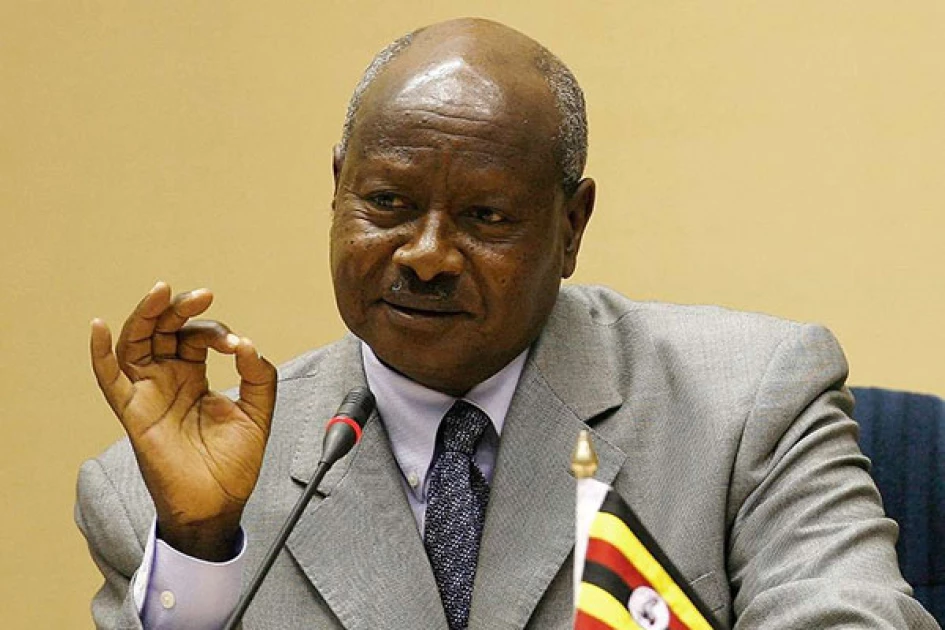
Since assuming office in 1986, President Yoweri Museveni has been a prominent figure in Ugandan politics, leading the nation through significant socio-economic and political transformations. With his unwavering commitment to stability, development, and the welfare of the Ugandan people, Museveni has left an indelible mark on the nation's history. This profile delves into the life, achievements, and enduring legacy of President Museveni, a leader who has shaped Uganda for nearly four decades.
Early Life and Rise to Power:
Yoweri Museveni was born on August 15, 1944, in Ntungamo, southwestern Uganda. From an early age, he exhibited leadership qualities and a keen interest in political affairs. After completing his education in Uganda and Tanzania, Museveni joined the National Resistance Army (NRA) in the early 1980s, determined to challenge the oppressive regime of President Milton Obote.
Museveni's guerrilla warfare tactics and charismatic leadership propelled the NRA to victory in 1986, resulting in his ascendancy to the presidency. He promised to bring stability and development to Uganda, which had been plagued by years of political instability and economic stagnation.
Political and Economic Reforms:
One of President Museveni's notable achievements is his implementation of comprehensive political and economic reforms. He introduced multiparty democracy, encouraging political pluralism and allowing opposition parties to participate in the electoral process. Additionally, Museveni established a constitution that emphasized human rights, freedom of expression, and the rule of law. These reforms aimed to promote a more inclusive and transparent political system in Uganda.
Economically, President Museveni implemented market-oriented policies, attracting foreign investment and stimulating economic growth. His government prioritized agriculture, infrastructure development, and diversification of the economy, leading to increased foreign exchange earnings and poverty reduction. Museveni's commitment to economic liberalization and prudent fiscal management contributed to Uganda's remarkable economic growth in the 1990s and 2000s.
Regional and International Influence:
President Museveni played a pivotal role in regional affairs, actively participating in peace negotiations and conflict resolution. His efforts were instrumental in ending civil wars in neighboring countries, such as Sudan, South Sudan, and the Democratic Republic of Congo. Museveni's commitment to peace and stability earned him respect on the international stage, where he became a prominent mediator in African conflicts.
Challenges and Criticisms:
While President Museveni's leadership has undoubtedly brought positive changes to Uganda, his lengthy tenure has also faced criticisms. One of the major concerns is his extended rule, with some arguing that his presidency undermines Uganda's democratic principles and stifles political competition. Additionally, issues of corruption, income inequality, and limited freedom of the press have raised concerns among human rights advocates.
Legacy and Future Outlook:
As President Museveni enters his later years in office, his legacy is a subject of much discussion and debate. His contributions to peace, stability, and economic growth cannot be ignored, but the concerns surrounding governance and democratic principles must also be addressed.
The future of Uganda lies in a transition of power that ensures a smooth and democratic succession, allowing for new leadership and ideas to emerge. Museveni's commitment to the country's progress should be recognized, but it is vital for Uganda to embrace a system that promotes inclusivity, transparency, and accountability to build upon the foundations laid during his tenure.
Conclusion:
President Yoweri Museveni's leadership in Uganda has been marked by resilience, determination, and a vision for progress. His contributions to stability, economic growth, and regional peace have shaped the nation's trajectory. While challenges and criticisms exist, Museveni's legacy will be remembered for his transformative impact on Uganda's development. As Uganda moves forward, it is crucial to strike a delicate balance between acknowledging Museveni's achievements and embracing a more vibrant and democratic future.