
PARIS —
For years, the idea of a woman running a mile in under four minutes was little more than a distant dream. This week in Paris, that dream will be tested by a soft-spoken, determined athlete from Kenya.
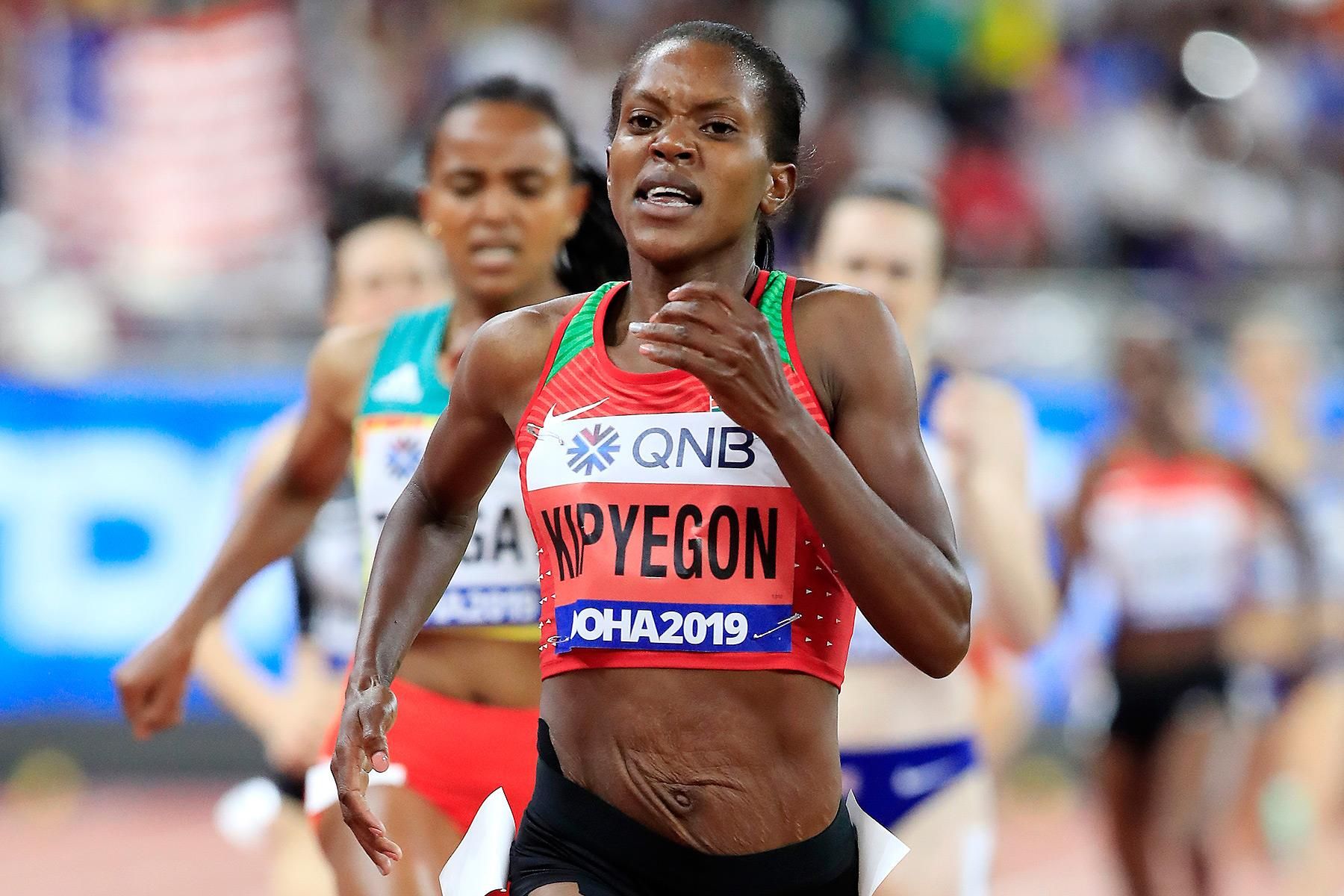
Faith Kipyegon, 31, already a legend in her own right, will line up on Thursday for a one-mile race organised by Nike. The event, titled Breaking4, is no ordinary meet. It’s a calculated bid to shatter one of sport’s final frontiers — a woman completing the mile in less than four minutes.
“I want to leave a mark in history,” Kipyegon told The Associated Press in the days leading up to the race. “Breaking four will really cement my legacy.”
She’s not wrong. No woman has ever crossed the finish line under the four-minute mark. Kipyegon, a three-time Olympic gold medallist, has come closer than anyone. In Monaco in 2023, she clocked 4:07.64, smashing the previous world record by more than four seconds. Now, just 7.64 seconds stand between her and a new chapter in sporting history.
But shaving off that time — in a race where every tenth of a second matters — won’t be easy.
The Science Behind the Attempt
In February, a team of American researchers published a study in the Royal Society Open Science journal suggesting it was possible. They built their model on Kipyegon’s 2023 world record, and factored in improved drafting and race conditions. If she runs in a tightly controlled “aerodynamic pocket,” created by pacemakers running just ahead and behind her, they argue, she could cross the line in 3:59.37.
That, notably, is the exact time Roger Bannister ran when he first broke the four-minute barrier in 1954 — using pacers for most of the race.
“Faith is really stretching what we think is possible for women in sport,” said Rodger Kram, a biomechanics expert from the University of Colorado and co-author of the study. “If anyone can do it, it’s her.”
His colleague, former Olympian and Mayo Clinic researcher Dr Shalaya Kipp, agrees. “We’re not just excited as scientists, but as fans,” she said. “This moment matters. It could pull more women into middle-distance running, and finally put a spotlight on female physiology — something that’s been sidelined for too long.”
Why Now?
Kipyegon’s attempt comes at a time when distance running is seeing rapid progress. Of the 50 fastest miles ever run by women, two-thirds have come since 2016. Advances in training, diet, and perhaps most significantly, footwear, have rewritten what athletes can expect of themselves.
That year, Nike unveiled a new kind of running shoe — combining bouncy foam with stiff carbon plates. These so-called “supershoes” helped Kenyan star Eliud Kipchoge get tantalisingly close to running a marathon in under two hours in 2017. In 2019, he finally managed it — clocking 1:59.40 in a specially designed race in Vienna.
Though not recognised as a world record due to race conditions, Kipchoge’s feat shifted expectations. What once seemed impossible suddenly looked inevitable.
“We opened the floodgates in 2016,” said Kipp. “Since then, the records just keep falling.”
Kipyegon will wear her own version of the superspike — a custom Nike racing shoe built specifically for this race. She’ll also don a wind-slick suit and a lightweight sports bra, each fine-tuned to shave milliseconds off her time.
A Race with Symbolism
This is more than a race. It’s a statement.
In 1954, the year Bannister broke four minutes, British runner Diane Leather became the first woman to run under five. Few noticed then. For decades, women were told the mile wasn’t for them. Some doubted their bodies could handle it. That thinking has lingered — if not in science, then in coverage, funding, and research.
Now, with Kipyegon front and centre, all eyes are watching.
“She’s rewriting the story,” said Kipp. “And this time, the world is paying attention.”
Kipyegon won’t be alone on the track. Pacers — their number and formation kept secret for now — will shield her from the wind, keeping her on pace. Some suspect Nike may borrow from the setup used in Kipchoge’s marathon attempt: a rotating team of runners, falling away one by one until only Kipyegon remains for the final push.
Whatever tactic is used, Kram will be watching closely.
“I’ll be checking if she’s staying in the pocket,” he said. “That’s crucial. Too fast out of the blocks and she’s done. Too slow and she can’t catch up.”
He believes the golden number is three minutes at 1,200 metres. “If she hits that, I think she’s got it.”
More Than a Record
Back in Kenya, support is swelling. Kipchoge himself posted a message of encouragement online, calling Kipyegon “a true inspiration for our world.”
“If there’s one person to do it,” he wrote, “it is you.”
For Nike, the event is also timely. The company, born from the track and field circuit, faces growing pressure from rivals such as Hoka and On. Kipyegon’s attempt falls on the same day as its quarterly earnings call — a coincidence, perhaps, but one with commercial weight.
But for most watching, the business of it all fades into the background. The question is simple: can a woman finally do what once seemed impossible?
Kram, who has spent months crunching the numbers, says he still feels the nerves. “Even if she runs 4:01 or 4:02 — it won’t be a failure,” he said. “This moment will still change everything.”
In sport, the numbers always tell part of the story. But on Thursday night in Paris, all that will matter is what Faith Kipyegon can do when the gun goes off, and the clock begins to tick.