
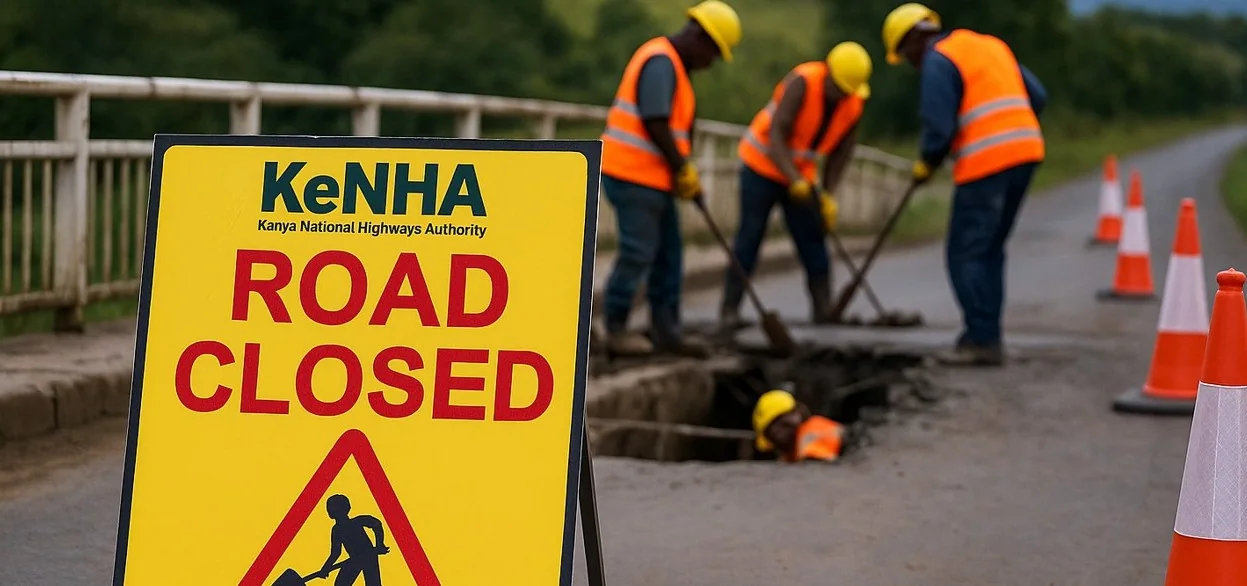
NAIROBI, Kenya — Kenya is preparing for another major test of its road network, and this time the first line of defence is not asphalt.
It is drainage.
The Kenya National Highways Authority (KeNHA) has begun upgrading stormwater drainage along the James Gichuru Road Junction–JKIA A8/B10 corridor, as authorities prepare for a potentially very wet October-to-December season.
The move comes as climate forecasters warn that a strengthening El Niño could bring above-normal rainfall to parts of Kenya and the wider Greater Horn of Africa later this year.

For motorists, the concern is familiar: flooded roads, impassable sections, damaged surfaces and hours lost in traffic.
For KeNHA, the bigger issue is what happens underneath the road when heavy water has nowhere to go.
Why KeNHA is focusing on drainage
The authority says the current works are intended to increase the amount of stormwater the existing drainage system can safely handle.
KeNHA Director General Luka Kimeli said the works are designed to reduce flooding along the busy corridor and protect the road from damage during periods of intense rainfall.
“The drainage improvement works are intended to strengthen the capacity of the existing system to safely manage stormwater and minimise the risk of flooding along the corridor,” Kimeli said.
The intervention forms part of an ongoing capacity enhancement, landscaping and beautification project along the corridor.
But the drainage component takes on added importance as the rainy season approaches.
Water that accumulates on a major highway can quickly become a traffic problem. It can reduce visibility, increase the risk of vehicles losing control and slow traffic on routes that carry thousands of commuters every day.
Over time, poorly managed runoff can also erode road shoulders and weaken road surfaces.
The James Gichuru-JKIA route is no ordinary road
The corridor is one of Nairobi's important links to Jomo Kenyatta International Airport (JKIA).
It connects several busy parts of the capital to the airport and carries a mixture of private cars, public transport, commercial vehicles and freight.
That makes flooding here more than an inconvenience.
A major disruption can ripple through the city, affecting airport journeys, deliveries and commuters travelling between western Nairobi and the airport.
The drainage works also come as KeNHA continues wider improvements along the A8/B10 corridor.
The authority has recently advertised maintenance works for the James Gichuru Road Junction–JKIA-Mazao Road-Gateway Overpass section, underscoring the strategic importance of the route.
Parliament stormwater is also part of the problem
KeNHA's drainage intervention follows discussions between Kimeli and National Assembly Clerk Samuel Njoroge over how stormwater from the Parliament Buildings area connects with the highway drainage system.
The issue points to a challenge that is often overlooked when Nairobi floods: a road drainage system cannot be considered in isolation from the surrounding urban drainage network.
Runoff from neighbouring properties and roads eventually has to go somewhere.
If several drainage systems converge on the same corridor, a weak point in one section can create problems further downstream.
KeNHA says the discussions are aimed at finding a sustainable way of handling the runoff while protecting the highway infrastructure.
The timing matters
Kenya is approaching a potentially challenging weather period.
NOAA's Climate Prediction Center said in its August 13 update that El Niño is strengthening and put the likelihood of a very strong event during the Northern Hemisphere autumn and winter at more than 90 per cent. It also estimated a 69 per cent chance of an event reaching a historically exceptional level during October-December.
But that does not mean every part of Kenya will automatically experience extreme rainfall.
The relationship between El Niño and rainfall varies by location and season.
ICPAC's latest outlook shows wetter-than-normal conditions expected in eastern and coastal Kenya during the August-October period, while other parts of the country are expected to be drier than normal.
For the October-December season, however, the regional picture becomes considerably wetter.
The World Meteorological Organisation says there is an increased likelihood of above-normal rainfall across the Greater Horn of Africa, with ICPAC estimating a 90 per cent chance of enhanced rainfall over north-eastern Kenya, among other areas.
That is why drainage preparation is becoming a priority before the rains arrive.
More rain could be good news — if the roads can handle it
There is an important upside to the forecast.
After periods of below-normal rainfall, heavier seasonal rains can replenish reservoirs, improve pasture and boost water availability for households and agriculture.
But rainfall becomes a hazard when it falls too heavily or too quickly.
ICPAC has warned of increased flood and landslide risks in parts of the Greater Horn during the coming wet season. Its regional outlook shows particularly strong wet signals over parts of eastern Kenya and neighbouring areas.
That creates a difficult balancing act for road authorities.
They need enough drainage capacity to handle intense downpours without allowing water to undermine roads, bridges and embankments.
It is not just about preventing potholes
Kimeli said protecting road infrastructure while keeping traffic moving safely remains a priority.
“Our priority is to protect the road infrastructure while ensuring that motorists and other road users can continue to move safely and efficiently, especially during periods of heavy rainfall,” he said.
That focus matters because flooding can cause damage long after the rain has stopped.
Water can wash away soil beneath road edges, clog culverts and drainage channels, weaken pavements and accelerate deterioration.
Once a road is damaged, repairs can take much longer and cost considerably more than routine drainage maintenance.
The economic consequences can also extend beyond the road itself.
A flooded transport corridor can disrupt workers, businesses, public transport operators and the movement of goods.
The bigger test will be what happens when the rain comes
The drainage works are a useful first step, but they are not a guarantee against flooding.
The effectiveness of any drainage system depends on whether channels remain clear, whether culverts can cope with the volume of water and whether the wider urban drainage network can move runoff away from the road.
It will also depend on how quickly rain falls.
A seasonal forecast can indicate that a season is likely to be wetter than normal, but it cannot tell motorists whether a particular road will flood on a particular afternoon.
That is where shorter-range weather warnings become crucial.
The Kenya Meteorological Department and regional climate agencies will continue refining their forecasts as the October-December season approaches.
WMO is also due to issue its next global El Niño update on September 3, 2026.
Motorists also have a role
KeNHA has urged motorists to exercise caution during periods of heavy rain and follow traffic regulations.
That advice may sound routine, but heavy rainfall can quickly change driving conditions.
Drivers should slow down, keep a safe distance and avoid attempting to cross flooded sections where the depth or condition of the road cannot be safely assessed.
For road users on the James Gichuru-JKIA corridor, the drainage upgrades may reduce one of the major risks associated with the coming rains.
But the real test will come when the skies open.
If the drainage system can move water quickly, the investment will be barely noticed by most motorists.
If it cannot, the familiar Nairobi scenes of flooded lanes, stalled vehicles and long traffic queues could return.
With a potentially strong El Niño building, KeNHA is betting that fixing the water problem before the rain arrives is far cheaper than repairing the road after it has been damaged.
Related Stories
- 2027 election countdown begins as IEBC sets dates for parties and candidates
- Passport shortcut? EACC arrests immigration employee over Sh12,000 demand
- Court of Appeal temporarily restores ODPP senior appointments after recruitment dispute
Category: News
About the Author
Maureen Onyango is a journalist passionate about storytelling, life coaching and spiritual lessons. She studied at the Kenya Institute of Management and enjoys telling stories that inform, inspire and empower communities.
 Facebook
 Twitter / X
 WhatsApp
 LinkedIn
 Telegram
 Reddit