
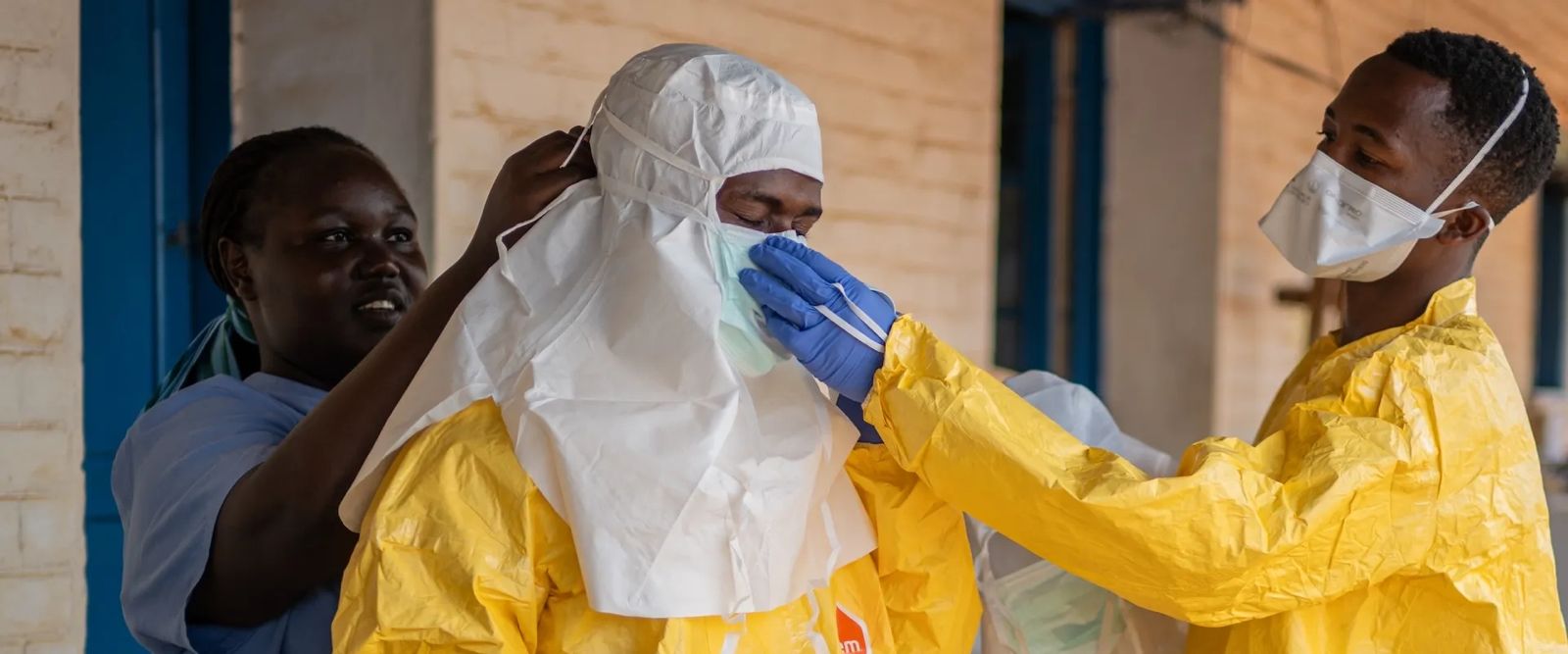
Kenya has stepped up surveillance and safety measures as it prepares for the Democratic Republic of Congo's (DRC) worsening Ebola outbreak, which has now become the largest Ebola outbreak ever recorded in the country.
The outbreak, caused by the Bundibugyo virus, was declared in the DRC on May 17, 2026. The World Health Organization (WHO) has since declared it a Public Health Emergency of International Concern, citing sustained transmission, the rapid geographical spread of the virus and the potential for international transmission.
As of August 12, WHO reported 4,665 confirmed cases and 2,184 deaths in the DRC, giving the outbreak a crude case fatality ratio of 46.8 per cent. The virus has spread from its initial epicentre in Ituri province to six provinces — Ituri, North Kivu, South Kivu, Haut-Uélé, Tshopo and Bas-Uélé — affecting 54 health zones.
WHO says the outbreak is expanding faster than any previous Ebola outbreak in the DRC, with sustained transmission occurring across interconnected geographical clusters. The response has also been complicated by insecurity, population displacement, movement across borders and attacks on healthcare facilities.

The situation has raised concern across East Africa, particularly in Kenya, which has extensive trade, transport and travel links with Uganda and the wider Great Lakes region.
Kenya has not recorded a confirmed Ebola case. However, the Ministry of Health says it has investigated 196 suspected Ebola alerts, with all samples testing negative.
The government says more than 450,000 travellers have been screened at designated points of entry as surveillance has been intensified at Jomo Kenyatta International Airport (JKIA), airports and major land border crossings.
Kenya's preparedness level currently stands at 81 per cent, according to Public Health Principal Secretary Mary Muthoni. The measures include enhanced surveillance, laboratory testing, infection prevention and control, border screening, risk communication and the strengthening of isolation and treatment capacity.
The country has also strengthened its laboratory capacity. The Ministry of Health said in August that two mobile laboratories had processed 173 Ebola samples, all of which tested negative. Kenya's National Public Health Institute also has a national virology laboratory and a Biosafety Level 3 central laboratory to support detection of high-risk infectious diseases.
In July, the Ministry of Health established a National Ebola Virus Disease Preparedness and Response Taskforce to coordinate surveillance, laboratory testing, infection prevention and control, case management, risk communication and cross-border preparedness. The taskforce brings together government agencies, county governments, security agencies, development partners and technical experts.
Kenya has also received additional preparedness supplies. On July 22, India donated five tonnes of Ebola preparedness commodities, including personal protective equipment, rapid diagnostic kits and infrared thermometers. The supplies are intended to support frontline health workers and replenish Kenya's emergency stockpile, including supplies for 22 designated Ebola isolation units.
The threat is particularly significant because of Kenya's proximity and connectivity to Uganda. The country intensified preparedness at the Malaba border after Uganda reported Ebola cases linked to the regional outbreak. By June 6, the Ministry said all 59 suspected cases investigated in Kenya had tested negative.
The regional situation has since evolved. Uganda's Ebola outbreak has shown signs of containment, with WHO reporting in July that the country had entered the 42-day countdown towards declaring the outbreak over after its last confirmed patient was discharged following two negative tests. However, WHO continues to classify the risk to neighbouring countries as high because of the continuing outbreak in the DRC and cross-border movement.
A major development this week has been the decision to release 70,000 doses of the Ervebo Ebola vaccine to the DRC.
The decision was announced by WHO and the Africa Centres for Disease Control and Prevention on August 20. However, there is an important scientific distinction: Ervebo is licensed for Ebola virus disease caused by the Zaire species, not the Bundibugyo virus responsible for the current outbreak.
WHO says it is not yet known whether Ervebo protects humans against Bundibugyo virus. Early laboratory and animal studies suggest that it may offer some protection, but the evidence is not yet sufficient to establish its effectiveness.
Of the 70,000 doses released, 20,000 will be used in a Phase 3 clinical trial designed to determine whether Ervebo provides protection against Bundibugyo virus. The remaining 50,000 doses will be made available to frontline and healthcare workers in line with current WHO recommendations. Participants are expected to be informed about the potential benefits, risks and limitations of using the vaccine against a virus for which it is not currently licensed.
This is a significant development because there is currently no licensed vaccine specifically approved for Bundibugyo virus. WHO says there are also no licensed vaccines for Sudan virus, Taï Forest virus or Bundibugyo virus, although several candidate vaccines are under development.
The vaccine trial could therefore provide important evidence for future outbreaks involving the Bundibugyo virus.
Kenya has previously participated in Ebola preparedness and vaccination efforts. According to WHO, more than 167,000 doses of Ervebo have been used in preventive vaccination campaigns for healthcare and frontline workers in Kenya, Uganda, Guinea-Bissau, Sierra Leone and the DRC since the emergency Ebola vaccine stockpile mechanism was established.
For Kenya, the immediate priority remains prevention rather than vaccination.
WHO's latest rapid risk assessment, published on August 20, classifies the risk as very high within the DRC and high for neighbouring countries, while assessing the regional and global risk as lower because of existing preparedness and rapid detection measures. Imported cases have already been reported in Uganda, France and Germany, demonstrating the potential for international spread, although WHO says there is currently no sustained transmission outside the DRC.
Kenyan health authorities therefore face the challenge of maintaining vigilance without creating unnecessary public alarm.
For travellers and communities, health officials continue to emphasise early reporting of suspected symptoms, appropriate infection-prevention measures and reliance on verified information.
With the DRC outbreak continuing to expand and the scientific community now testing whether an existing Ebola vaccine can offer protection against the Bundibugyo virus, Kenya's surveillance systems and preparedness measures are likely to remain under close scrutiny in the weeks ahead.
Related Stories
- Ozempic craze: Why Kenyan doctors want patients to think beyond the scale
- 8 Practical Tips to Stay Warm During Nairobi’s Cold Season
- Ruto Challenges Claims of SHA Payment Delays at Karen Hospital, Orders Live Check of Claims
Category: Health
About the Author
Angel Wairimu is a media specialist and Communication and Multimedia graduate with a passion for digital media and content creation. Her areas of interest include scriptwriting, voice-over, content production, anchoring, videography and graphic design. She is passionate about using her creative skills to tell engaging stories while continuously learning and growing in the media industry. Email: angelicawairimumaina@gmail.com LinkedIn: Angel Wairimu
 Facebook
 Twitter / X
 WhatsApp
 LinkedIn
 Telegram
 Reddit