
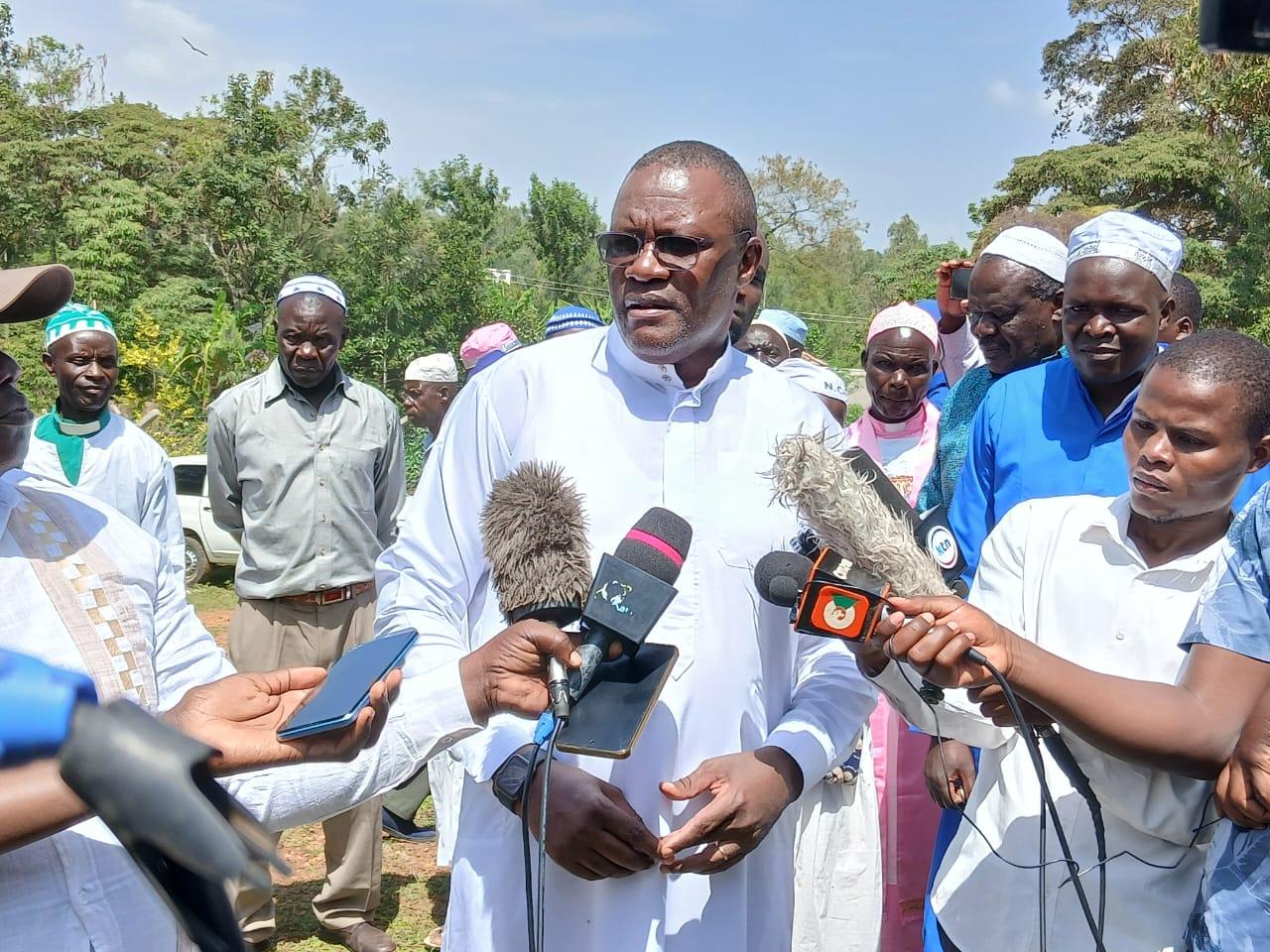
Eliud Owalo is attempting to sell Kenyan voters a political proposition that has repeatedly proved difficult to deliver: a presidential campaign built around economic grievances rather than ethnic alliances.
In a Radio Maisha interview, the presidential aspirant presented himself as a candidate seeking to break with Kenya’s established political order, arguing that voters are increasingly concerned about the cost of living, unemployment, declining purchasing power and unequal distribution of economic opportunities.
His message was clear: Kenya needs a political “paradigm shift” — and, in his view, that shift requires new leaders rather than recycled political coalitions.
But Owalo's bigger challenge may not be defining what is wrong with Kenya's politics. It is convincing voters that he has the political machinery, national reach and electoral mathematics to replace it.
From strategist to presidential candidate
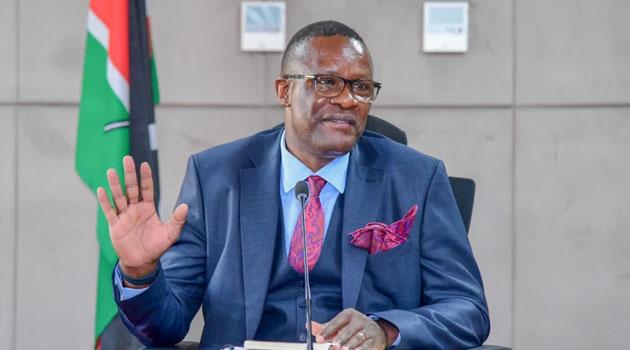
Perhaps the most revealing part of the interview was Owalo's insistence that he has moved beyond being a strategist for other politicians.
He acknowledged his history of working with prominent political figures, including Raila Odinga, Musalia Mudavadi and William Ruto. But he argued that this chapter of his political career is over.
“I have passed the level of working for another politician,” was the substance of his argument.
That positioning is important.
For years, Owalo has been better known as a political strategist and campaign operative than as an electoral heavyweight in his own right. His 2027 project therefore requires a significant political transformation: from the man helping others win elections to the candidate asking Kenyans to entrust him with the presidency.
Owalo is effectively asking voters to judge him not by the political personalities he previously served, but by what he says he can deliver himself.
That is a difficult transition.
The ‘fresh’ candidate pitch
Owalo's strongest political branding emerging from the interview is the idea of being “fresh”.
He rejected the suggestion that his presidential ambition is premature, saying Kenya needs a new beginning and that he represents a “fresh” option.
This is an attempt to exploit voter fatigue with familiar political faces.
His argument is that many of the politicians dominating Kenya's political scene have spent decades in government, whether on the government or opposition side. He repeatedly contrasted these established figures with what he described as a new generation of leaders.
The political calculation is obvious.
Rather than trying to outdo established politicians on their traditional terrain of ethnic mobilisation and political networks, Owalo wants the election framed as a contest between the old political establishment and a new generation.
His preferred battlefield is therefore not ethnicity.
It is economics.
‘My stronghold is economic’
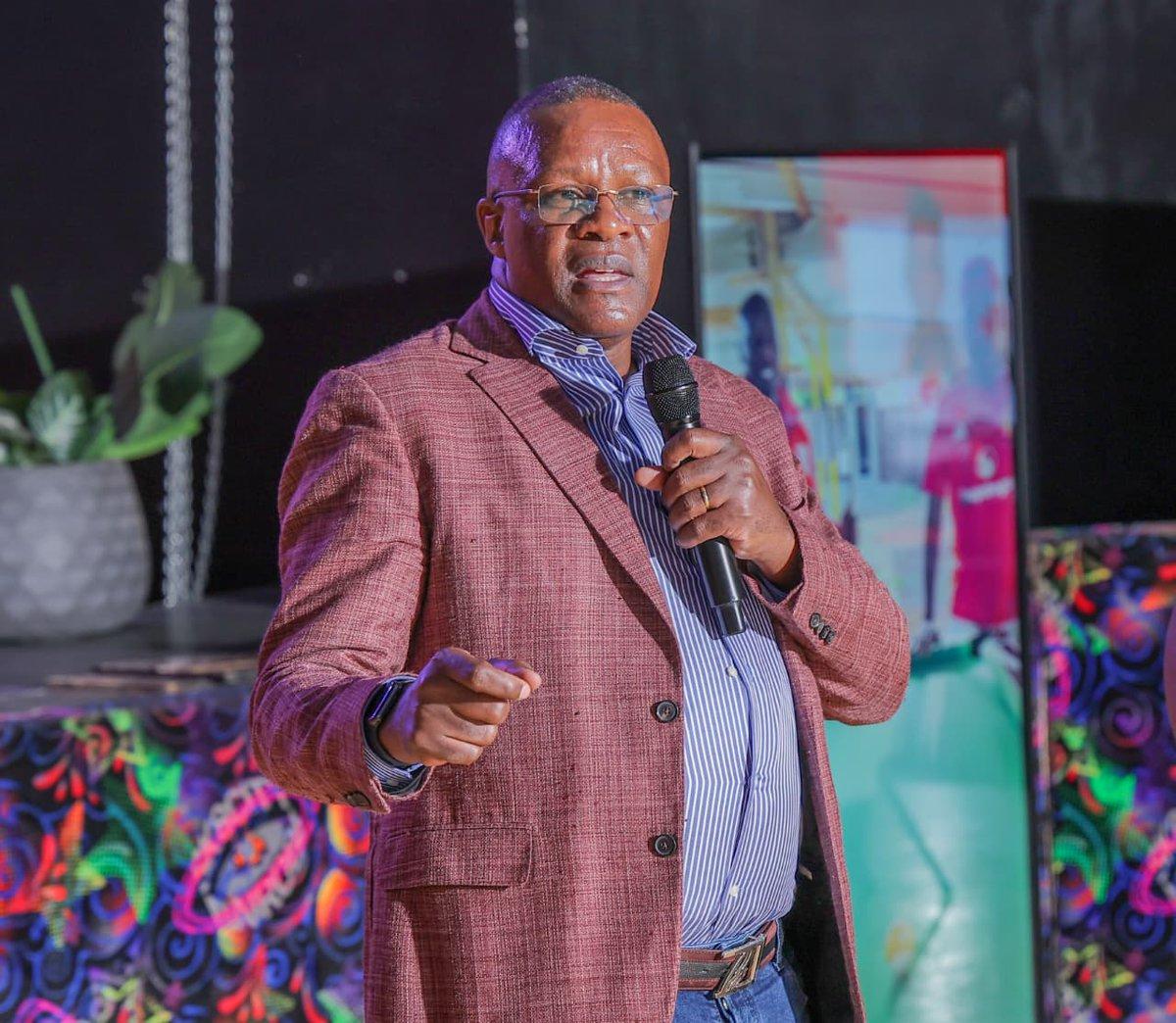
One of the most striking lines from the interview was Owalo's rejection of the traditional idea of political strongholds.
Asked where his political stronghold lies, he rejected the conventional ethnic interpretation.
Instead, he described his potential constituency as young people without jobs, women lacking capital to run businesses and workers struggling with high taxes and the rising cost of living.
This is central to his political strategy.
Owalo is attempting to construct a nationwide constituency around economic vulnerability rather than geography or ethnicity.
It is an ambitious proposition because the economic pressures he identifies cut across ethnic and regional boundaries.
He argues that Kenyans increasingly face similar problems regardless of their ethnic background, religion or geographical origin.
But identifying a national grievance is not the same thing as converting that grievance into votes.
The unanswered question is whether economic frustration can overcome the deeply embedded organisational structures through which presidential elections in Kenya are normally fought.
PPP's economic message
Owalo's newly launched People's Prosperity Party is being presented as the political vehicle for this strategy.
According to him, the party's ideological foundation is “distributive social democracy”, with the central objective of creating greater economic equality.
His criticism is directed at what he sees as an economy in which a small group benefits disproportionately from national resources while producers receive a smaller share of the value generated from their labour.
He cited fishermen, farmers and young construction workers as examples.
The message is therefore less about traditional left-versus-right politics and more about who benefits from Kenya's economy.
Owalo wants PPP to represent the worker, farmer, trader, unemployed young person and economically struggling household.
That could give the party a distinctive message if it can translate the broad economic argument into specific, measurable policies.
For now, however, the interview provides the political philosophy more clearly than the detailed policy architecture.
A direct attack on the political establishment
Owalo's most sustained criticism was directed at established politicians.
He argued that Kenyan leaders have continued practising the politics of the past — ethnic mobilisation, political violence and what he described as “dirty politics” — despite ordinary citizens having moved beyond those concerns.
He placed particular blame on what he called veteran politicians who have spent decades in government.
This is an important political contradiction.
Owalo himself has spent years operating within the political establishment and has worked closely with some of the very political figures he now says represent the old order.
His answer is that his experience inside the system gives him the knowledge to understand why it has failed.
But voters may ask a harder question: if he was close enough to the establishment to help shape political campaigns and government strategy, why should he now be viewed as an outsider to that system?
That could become one of the defining vulnerabilities of his campaign.
Owalo puts the government on the spot over political violence
The interview also provided Owalo with an opportunity to distinguish himself on the issue of political violence and organised groups at political gatherings.
He rejected attempts to blame the opposition alone for the violence.
His argument was straightforward: maintaining public security is fundamentally the responsibility of government.
He questioned why police officers would allow groups of people allegedly carrying weapons to move towards political gatherings without being arrested.
At the same time, he said the law should apply equally to government and opposition politicians who mobilise such groups.
This position allows Owalo to present himself as neither a government defender nor an opposition firebrand.
Instead, he is attempting to occupy the constitutionalist middle ground: enforce the law regardless of political affiliation.
That fits neatly with his broader argument that Kenya needs politics based on rules, policy and accountability rather than intimidation.
The Ruto question
Owalo's political history makes his relationship with President William Ruto unavoidable.
He worked within Ruto's political camp from 2019 until January 2026, according to his account in the interview. He now insists that he has left that political space and is committed to an opposition presidential bid.
He strongly rejected the suggestion that he could eventually return to Ruto's side.
But Owalo simultaneously acknowledged that Kenya's political alliances are still fluid.
He argued that political “tectonic plates” will continue shifting and that politicians currently in government could move to the opposition while opposition politicians could move towards government.
This creates an interesting tension in his campaign.
Owalo presents himself as a man of principle who will remain in the presidential race, yet he also accepts that the political landscape could change substantially before 2027.
His answer is that he is willing to work with other leaders — provided they share his objectives.
The distinction he draws is between coalition for a common national programme and coalition simply to share government positions.
That could become a significant selling point if voters become disillusioned with elite bargaining after elections.
He wants to be the candidate — but leaves the door open
Owalo repeatedly said that, with all factors remaining constant, he intends to be on the presidential ballot.
At the same time, he said he is willing to work with like-minded politicians.
This is perhaps the most politically sophisticated part of his pitch.
He does not completely close the door on alliances. Instead, he wants to negotiate from the position of a presidential candidate rather than a subordinate political operative.
His message is essentially: I am prepared to cooperate, but I am not looking for another politician to work for.
That is a significant departure from his previous political identity.
The biggest test: political machinery
For all the confidence displayed in the interview, Owalo's greatest challenge remains electoral organisation.
He claims PPP has national appeal, pointing to supporters from different parts of the country who attended its launch.
But a presidential campaign requires far more than national representation at a party launch.
It requires candidates, agents, financing, grassroots structures, voter mobilisation and a sophisticated national campaign operation.
Owalo also faces the reality of Kenya's presidential electoral system, where visibility and a compelling message must eventually be converted into votes across the country.
His assertion that he can win the presidency without relying on traditional ethnic strongholds is therefore one of the biggest political bets of his campaign.
The Kibra question remains unresolved
The interviewer also raised Owalo's previous unsuccessful bid for the Kibra parliamentary seat.
Owalo responded confidently, arguing that his campaign had been strong enough to force major political mobilisation against him.
He suggested that had Ruto's preferred candidate not entered the race, his chances would have been considerably stronger.
But politically, the question remains significant.
A candidate who has not previously won a parliamentary constituency must convince voters that he can make the much larger leap to the presidency.
Owalo's response is essentially that presidential politics is different and that his campaign strategy will be different.
That argument will need to be demonstrated rather than merely asserted.
Can economics defeat ethnic politics?
This is ultimately the central question surrounding Owalo's campaign.
His strongest idea is also his biggest gamble.
He wants economic interests to become Kenya's new political identity.
Young people without jobs, women struggling with capital, workers affected by taxation, farmers and fishermen receiving inadequate returns — these are potentially millions of voters.
But transforming shared economic frustration into a presidential coalition requires organisation.
Kenya has experienced numerous political movements built around promises of economic transformation. The difficulty has often been maintaining that economic message when campaigns become dominated by alliances, personalities, ethnicity and the arithmetic of winning the presidency.
Owalo appears to understand this danger.
That is why he repeatedly returned to the language of policy, economic equality, new leadership and a break from ethnic politics.
The political gamble
The Radio Maisha interview shows an Owalo who is no longer presenting himself as a strategist waiting for another candidate to emerge.
He is presenting himself as the candidate.
His political proposition can be reduced to four messages:
First, Kenya's biggest problem is economic inequality and the high cost of living.
Second, established politicians have failed to solve these problems.
Third, ethnic mobilisation and political violence should give way to policy-driven politics.
Fourth, a new generation of leaders should take over the country's political leadership.
It is a coherent political narrative.
But coherence does not automatically translate into electoral success.
Owalo must still answer the practical questions that will define his campaign: How will PPP build a national grassroots structure? How will it finance a presidential campaign? Which political leaders will join him? How will he convert economic frustration into votes? And, perhaps most importantly, can he persuade Kenyans that a former political strategist who has worked with several major political camps is genuinely the “new beginning” he says the country needs?
For now, Owalo's strategy is clear.
He does not appear to be positioning himself as Ruto's alternative merely because he left government.
Nor does he appear to be positioning himself as another figure in the traditional opposition establishment.
He is attempting something more difficult: to build a third political lane around economic grievances and a rejection of Kenya's old political order.
Whether that lane becomes a viable route to State House or simply another political road less travelled will depend on what happens between the launch of PPP and the moment Kenyans finally begin making their electoral choices.
For Owalo, the campaign has already begun.
The harder task now is turning the promise of a “fresh” political beginning into a movement capable of winning a national election.
 Facebook
 Twitter / X
 WhatsApp
 LinkedIn
 Telegram
 Reddit