
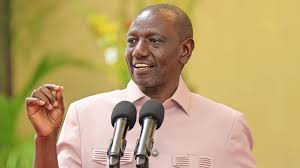
President William Ruto has set an ambitious target: raise Ksh2.5 trillion by April to kick-start a new National Infrastructure Fund, part of a broader Ksh5 trillion plan to finance roads, rail and airports without adding to Kenya’s already heavy debt load.
Speaking at a Methodist Church leadership event at State House in Nairobi on February 20, Mr Ruto said the government had begun mobilising funds for what he described as a shift in how Kenya pays for large projects.
“We have already started the journey to obtain Ksh5 trillion, and by God’s grace, and by the fourth month of this year, we would have raised half of that money,” he told the gathering.
The full Ksh5 trillion target is expected to be raised over a decade. The first half, he said, would signal a major step in reducing reliance on borrowing.
A debt-heavy backdrop
Kenya’s public debt stands at roughly Ksh12 trillion, according to official figures. Servicing that debt has consumed a growing share of government revenue, leaving limited room for new spending.
Mr Ruto said the National Infrastructure Fund would not depend on fresh loans. Instead, it would draw from asset sales, domestic institutional investors and international development finance.
Among the measures outlined is the partial privatisation of state-owned enterprises. The president cited Kenya Pipeline Company and East Africa Portland Cement as examples, estimating that such moves could raise about Ksh350 billion upfront.
He also said the government would seek long-term capital from pension funds, insurance firms and development finance institutions.
“We are shifting away from traditional debt and taxation toward an investment-led, market-driven model,” Mr Ruto said.
Big-ticket projects
The fund is expected to finance flagship schemes, including extending the Standard Gauge Railway to Malaba on the Ugandan border and modernising Jomo Kenyatta International Airport in Nairobi.
Both projects have long been discussed as critical to strengthening Kenya’s position as a regional transport hub. Supporters argue that improved rail links and airport capacity could boost trade and lower logistics costs.
Critics, however, caution that asset sales must be handled transparently and that pension funds, which hold workers’ savings, should not be exposed to undue risk.
Economists have previously warned that while tapping domestic capital markets can ease pressure on public borrowing, governance and oversight will be key to maintaining investor confidence.
A broader vision
The president linked the plan to his broader ambition of accelerating Kenya’s economic growth, often framed as a drive to move the country into the ranks of more advanced economies.
Alongside the infrastructure fund, the government is developing a Sovereign Wealth Fund to manage royalties from natural resources and dividends from state investments. Officials say it will operate as a limited liability company with an independent board and chief executive, designed to shield it from political interference.
Whether the National Infrastructure Fund meets its April target will be closely watched by investors and citizens alike. For a country balancing development needs against rising debt, the stakes are high.

 Facebook
 Twitter / X
 WhatsApp
 LinkedIn
 Telegram
 Reddit