
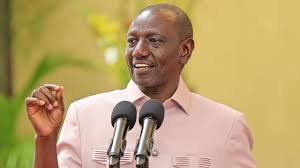
President William Ruto has ordered the recruitment of 600 teachers from Mandera County, saying local hiring is the only lasting answer to chronic staff shortages driven by insecurity in northern Kenya.
Speaking in Mandera on Thursday during the issuance of Nyota youth funds, Mr Ruto said schools in the region have suffered repeated disruption as teachers from other parts of the country seek transfers after security incidents.
“Many teachers who are teaching students in northern Kenya come from Kisumu, Eldoret, Siaya, Central and Coast,” he told residents. “Why shouldn’t we have teachers from northern Kenya?”
His remarks come weeks after a teacher was killed in January in an attack authorities attributed to suspected Al-Shabaab militants. The killing renewed fears among educators posted to the region. Some reportedly applied for transfers, citing safety concerns.
Affirmative action
Mr Ruto framed the directive as affirmative action.
“As a matter of affirmative action, for all the teachers who left here to be replaced, I have said we are hiring here in Mandera another 600 teachers to make sure they take charge of education in our primary and secondary schools,” he said.
“Now we will have teachers who were born here. Even if there are problems, they will stay here to make sure your children are taught.”
Mandera, which borders Somalia, has long struggled with insecurity linked to cross-border militant activity. Over the years, attacks have targeted security forces, telecommunications infrastructure and, at times, civilian workers, including teachers.
Education officials have previously acknowledged that schools in parts of northern Kenya face persistent staffing gaps when non-local teachers leave during periods of unrest.
Balancing safety and opportunity
The government says recruiting locally will reduce disruptions while also creating jobs for residents.
Mr Ruto has pledged to hire 24,000 additional teachers by the start of 2026, which would bring total recruitment since he took office in 2022 to more than 100,000.
Some education experts, however, note that staffing is only one part of the challenge. They argue that improving security and investing in school infrastructure are equally important to ensure stability in learning.
Local leaders in Mandera have repeatedly called for both better protection and greater inclusion of residents in public service jobs.
For parents in the region, the priority is simpler: that classrooms remain open and teachers remain at their posts.
Whether the new directive will achieve that goal may depend not only on who is hired, but on whether peace holds.
 Facebook
 Twitter / X
 WhatsApp
 LinkedIn
 Telegram
 Reddit