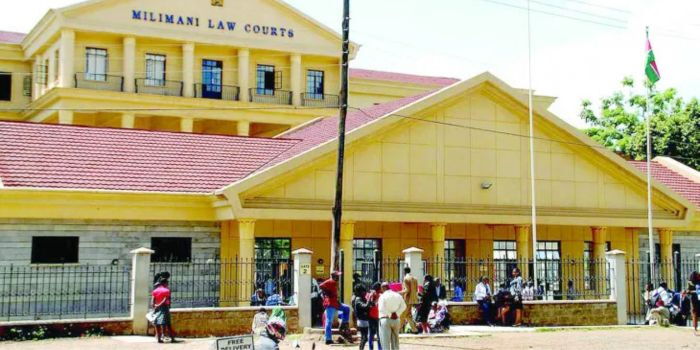
A Kenya Revenue Authority (KRA) officer has been charged before the Anti-Corruption Court in Kisumu for allegedly receiving a Sh500,000 bribe to alter a tax audit report for a local school.
Evans Agumba Oriato, a Customer Care Officer attached to the KRA Kisumu office, appeared before Chief Magistrate Benson Ireri on Thursday, where he faced three counts of receiving a bribe contrary to the Bribery Act.
According to a charge sheet filed by the Office of the Director of Public Prosecutions (ODPP), through the Ethics and Anti-Corruption Commission (EACC), Oriato allegedly demanded a financial favour from Teresia Akinyi Wasonga, linked to Jane Adeny Memorial School, in exchange for manipulating a tax audit.
The Allegations
Prosecutors said the offence took place on December 31, 2021, when Oriato allegedly asked for Sh500,000 from Wasonga “to reconcile and alter the audit report” concerning tax arrears owed by the school.
The court heard that on January 13, 2022, Oriato allegedly agreed to receive and did receive Sh250,000, as part of the total amount demanded.
The bribe, according to the prosecution, was intended to facilitate the alteration of the school’s audit report to either reduce or clear the outstanding tax liabilities.
Investigations by the EACC led to Oriato’s arrest, and the ODPP approved his prosecution earlier this week, on November 13, 2025.
Oriato denied all three charges and was released on a Sh500,000 bond with a surety of a similar amount.
What Happens Next
The court set the case for pretrial directions on November 25, 2025.
Prosecutors said they intend to call several witnesses, including Wasonga, who is listed as the first witness.
If found guilty, Oriato faces a fine of up to five million shillings or imprisonment, or both, under Kenya’s anti-bribery laws.
The case is one of several recent prosecutions arising from an ongoing crackdown on corruption within public agencies.
EACC’s Mandate and Wider Crackdown
The Ethics and Anti-Corruption Commission, established under Article 79 of the Constitution, is charged with preventing and investigating corruption and economic crimes.
In recent months, the commission has intensified its focus on public institutions, including the Kenya Revenue Authority, which is often cited as a key target for integrity reforms.
The EACC has also ramped up systems audits and policy reviews aimed at tightening loopholes that allow bribery and misuse of office.
Meanwhile, KRA continues to stress its commitment to transparency and accountability, saying it is working closely with oversight bodies to root out internal misconduct.
A Broader Picture
Kenya’s public sector has seen renewed scrutiny over corruption amid growing pressure from civil society and donors for stronger governance.
Experts say that prosecutions like Oriato’s are critical in rebuilding public trust.
“Each successful conviction sends a message that impunity has limits,” said a governance analyst in Kisumu, who spoke on condition of anonymity as the case is ongoing.
Whether Oriato’s case leads to a conviction or not, it has once again thrown a spotlight on the delicate intersection between tax enforcement and integrity in public service.