
Nairobi — October 2025
Kenya will soon switch to a single-dose Human Papillomavirus (HPV) vaccine, a move officials say will boost national coverage and accelerate efforts to wipe out cervical cancer.
The new policy, announced by the Ministry of Health, replaces the current two-dose schedule. Officials say local data shows that one shot provides sufficient protection against HPV — the virus responsible for most cervical cancer cases.
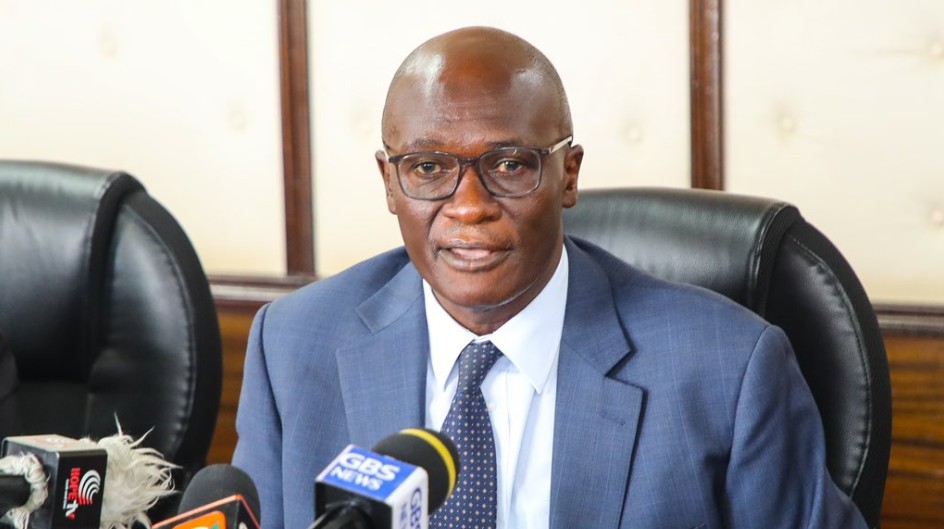
“Within a month, we are moving from two doses of the HPV vaccine to a single dose,” said Dr Patrick Amoth, the Director-General for Health. “This shift is based on our own locally derived data.”
Speaking at the National Science Research Translation Congress held at the African Population and Health Research Center (APHRC) in Nairobi, Dr Amoth said the change will allow health workers to reach more girls, particularly in underserved areas, and ease the vaccination process for families.
“A single-dose regimen will promote better coverage because we can reach more girls quickly,” he said. “Our dream, both globally and nationally, is to make cervical cancer a thing of the past by 2030.”
Kenya introduced the HPV vaccine in 2019, targeting girls aged 10 to 14. But uptake has lagged, partly due to logistical barriers and pandemic-related disruptions. Current data shows about 60 percent of girls have received the first dose, compared with 38 percent for the second.
“Moving to one dose will help close that gap,” Dr Amoth noted.
Scientific studies, including research reviewed by the Kenya National Immunisation Technical Advisory Group (KENITAG), have shown that a single dose offers the same protection as the two- or three-dose regimens used before. The research was led by a Kenyan professor, according to Dr Amoth.
The ministry says the policy will also help redirect funds toward other essential vaccines. “Our budget requirements will reduce, allowing us to deploy that money to buy other antigens,” Dr Amoth said.
The HPV vaccine protects against strains of the virus that cause cervical cancer, genital warts and several other cancers. Globally, HPV types 16 and 18 account for around 70 percent of cervical cancer cases, according to the World Health Organization.
Kenya’s revised immunisation strategy will also add a second dose of the inactivated polio vaccine for children at nine months, part of a broader effort to strengthen child immunisation.
Dr Amoth emphasised that every change in vaccine policy is rooted in evidence. “We make policy based on data. Research has to guide every change we make in our immunisation programme,” he said.
He also acknowledged the growing challenge of vaccine misinformation. “Vaccine hesitancy remains a major issue. We want to work closely with the media from the beginning, not just during launches, so that accurate information reaches the public,” he said.
Amoth urged scientists to communicate more simply and work alongside journalists to help communities understand vaccine benefits. “Scientists often speak like they’re talking to their colleagues,” he said. “We need to bridge that gap.”
The ministry is also investing in artificial intelligence and data tools to speed up vaccine approval and analysis. “If we can use technology to analyse data faster, we can cut approval timelines and save lives,” Dr Amoth said.
The rollout aligns with Kenya’s commitment to the World Health Organization’s Global Strategy to Eliminate Cervical Cancer, which targets 90 percent HPV vaccine coverage among girls by 2030.
“This new policy gives us a real chance to protect our future generations,” Dr Amoth said. “The evidence is clear: one dose works, and it will save more lives.”