
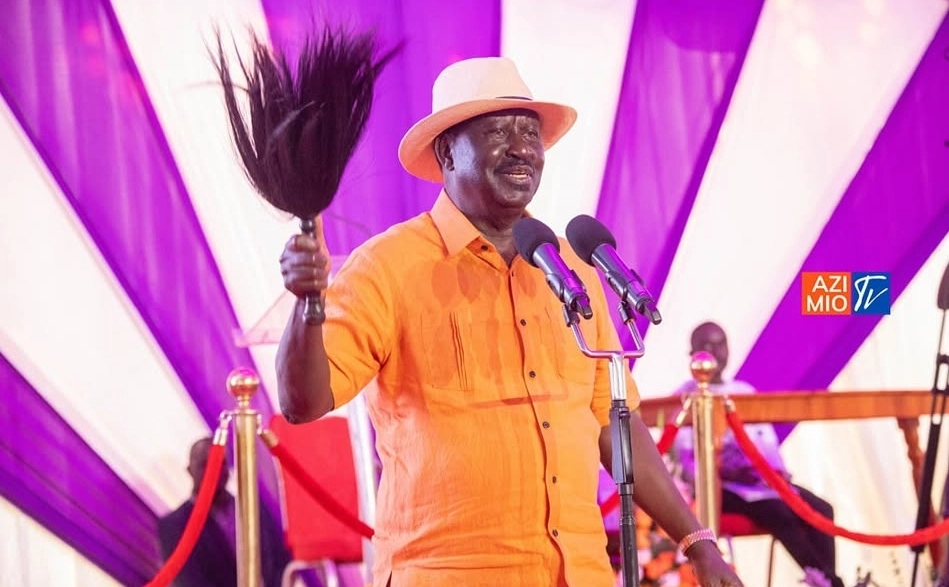
When Raila Odinga raised his fly whisk above Daniel arap Moi’s casket in February 2020, the air fell silent. Then, in a deep, deliberate voice, he called out three times — “Jowi! Jowi! Jowi!”
To the uninitiated, it might have sounded like a simple cry. But to those steeped in Luo tradition, it was a sacred chant — one reserved for heroes.
The word “Jowi” means buffalo in the Luo language, an animal admired for its strength and courage. Within the community, the chant signals that someone of immense stature has fallen — a leader, elder, or figure whose influence rippled far beyond their home.
“‘Jowi’ is not for everyone,” explains a Luo elder from Siaya. “It is spoken only when a great one departs. When you hear it, you know a pillar has fallen.”
At Moi’s state burial in Kabarak, Raila’s chant was both personal and cultural. Dressed in a dark suit, he performed a short dirge in his mother tongue before raising his orengo — the traditional fly whisk carried by respected elders. Slowly, he swept it over the coffin, waving it six times in a ritual of farewell.
The gesture was not theatre; it was heritage. In Luo custom, the orengo symbolises wisdom and authority. Waving it above the dead is an act of blessing — a silent call for peace and dignity as the departed journeys on.
Odinga’s chant drew national attention, but its meaning runs deep through history. His father, Jaramogi Oginga Odinga, once performed the same rite in 1978 at the funeral of Mzee Jomo Kenyatta. It was, then as now, a bridge between tradition and statecraft — a reminder that even the highest office bows to ancestral respect.
Over the years, Raila has revived the “Jowi” chant at other funerals — each time for a figure of remarkable standing. When he honoured former Education Cabinet Secretary Professor George Magoha in 2023, he did so in full traditional attire, holding a whisk, shield, and spear. He tapped the casket gently before chanting, “Jowi, Jowi,” his voice carrying through the packed church like a call across generations.
Observers say the ritual speaks to Odinga’s dual identity — a modern statesman who remains rooted in African tradition. “He sends them off as true Africans,” one mourner said after Moi’s funeral. “He reminds us that our ways still matter.”
The chant itself has layered meanings. It celebrates greatness — leadership, courage, and sacrifice — but it also humbles. The dirge that often precedes it reflects on life’s brevity, reminding mourners that all return to dust, no matter their rank.
In that sense, “Jowi” is both honour and lament. It uplifts the fallen while grounding the living in shared humanity.
For many Kenyans, Raila’s voice echoing that word has become a sound of continuity — a link between the political and the spiritual, the modern and the ancestral. It carries an affirmation: that African customs, though often overshadowed by colonial legacies, remain vital expressions of identity and belonging.
When Raila Odinga chants “Jowi, Jowi” and waves his fly whisk, he is not performing for spectacle. He is summoning memory — of his father, his people, and a long line of African leaders who honoured their dead with song, rhythm, and reverence.
“Jowi” is more than a word. It is a tribute, a declaration, and a prayer. It says, this life mattered. This leader stood tall. And even in death, their name endures.
 Facebook
 Twitter / X
 WhatsApp
 LinkedIn
 Telegram
 Reddit