
Kisumu fell silent on Wednesday. Then, almost as if on cue, the wails began. From Kondele to Nyalenda, from Oginga Odinga Street to Manyatta, voices rose in grief as the news spread: Raila Amollo Odinga was gone.
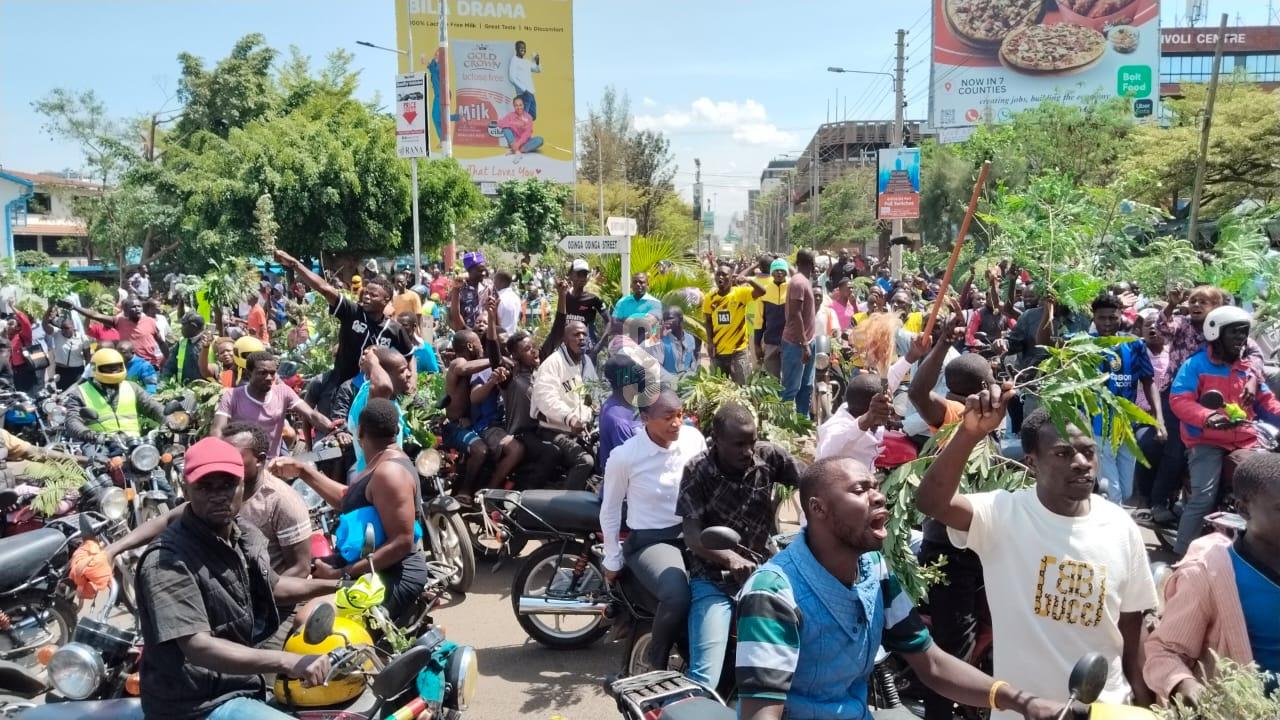
By midmorning, crowds poured into the streets. Men, women, and children chanted “Baba! Jowi!” — the cry reserved for heroes — their sorrow echoing through the lakeside city that had always been his political and spiritual home.
Shops shuttered early. Matatus played mournful Luo dirges. Boda boda riders snaked through the roads waving black flags. Along pavements, people held candles, twigs, and portraits of the man they called “Baba.”
“Baba has left us orphans… where will we go now?” cried an elderly woman outside the Kisumu bus park, her voice breaking as others around her nodded silently.
Across the city, scenes of raw emotion unfolded. Some knelt in the middle of the road, others broke into song, while groups gathered in hushed disbelief. The air felt heavy — thick with tears, chants, and memories of a leader whose bond with Kisumu ran deeper than politics.
Odinga, 80, died on Wednesday, October 15, 2025, in India after suffering cardiac arrest during a morning walk, according to hospital officials.
To Kisumu, his death was not just the loss of a political icon, but of family — of Baba, the man whose name was woven into their hopes, their struggles, and their dreams for Kenya.