
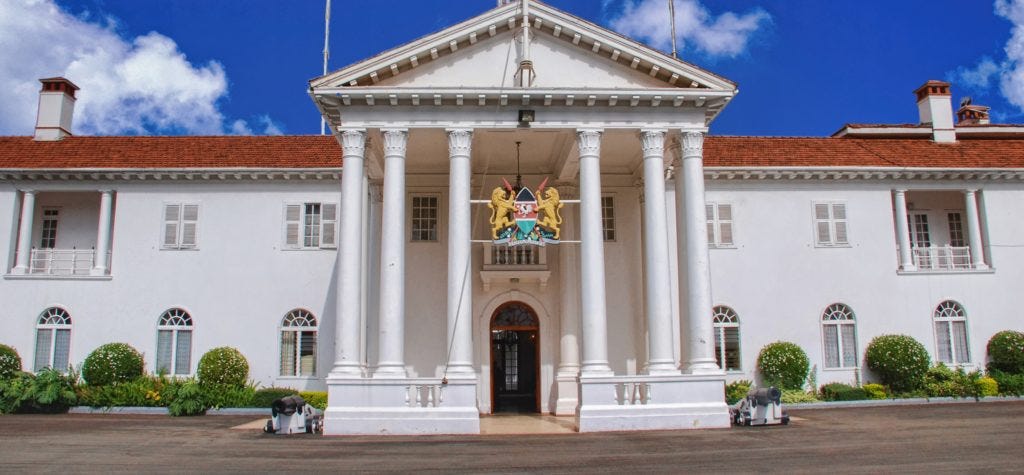
A Nairobi court has declined to block the ongoing construction of a Sh1.2 billion church at State House, despite growing public concern over its constitutionality and the use of public land.
President William Ruto, through the Attorney General, objected to the petition, arguing that the High Court lacked jurisdiction over land-use disputes. The case, government lawyers say, belongs in the Environment and Land Court.
“The Court is expressly barred,” said lawyer Emmanuel Bitta, representing the Attorney General, “from hearing and determining any disputes arising from the use, occupation of, and title to land, including public land.”
Court Declines to Issue Stop Order
High Court Judge Lawrence Mugambi ruled that both the current petition and a related case will be heard on 22 September 2025, but declined to issue a conservatory order halting the project.
The decision means that construction may continue in the meantime, despite legal and public scrutiny.
Petitioners Allege Secrecy, Breach of Law
Lawyer Levi Munyeri, representing the petitioners, said the project—an 8,000-seater church reportedly funded privately but built on public land—raises serious constitutional questions.
He argued that the President himself admitted to the church project but failed to subject it to public participation or competitive bidding as required by law.
“Building a church at State House using resources of a private citizen on public land,” Munyeri said, “undermines the constitutional principles of separation of church and state, transparency, and the rule of law.”
He asked the court to intervene before what he described as “irreparable damage” is done.
A Risk to Constitutional Safeguards?
The petition alleges that the construction has already started and is visible via satellite images, located near the presidential helipad.
“The project was shrouded in secrecy,” Munyeri said, adding that it may have gone unnoticed if not for a Daily Nation report published on 4 July 2025.
Munyeri warned that if the construction is allowed to continue unchecked, it could weaken public confidence in the rule of law and “fuel rising religious tensions” in a country where faith and politics are deeply intertwined.
Public Resources and Legal Jurisdiction
The petitioners are asking the court to prohibit any use of public funds in the construction. While President Ruto has not confirmed whether government resources are being spent on the project, critics argue that any use of public land—even for privately funded works—must be subjected to full public scrutiny.
Munyeri expressed concern that allowing the project to proceed could allow the Executive to “tamper with evidence,” undermining the petition's intent and potentially rendering the court’s final decision moot.
What’s Next
For now, the church project continues. But with a court date set for September, both sides are preparing for a deeper legal battle—one that could redefine boundaries between faith, politics, and public accountability in Kenya.
As of publication, State House and President Ruto’s office have not issued a formal statement addressing the specific claims in the petition.