
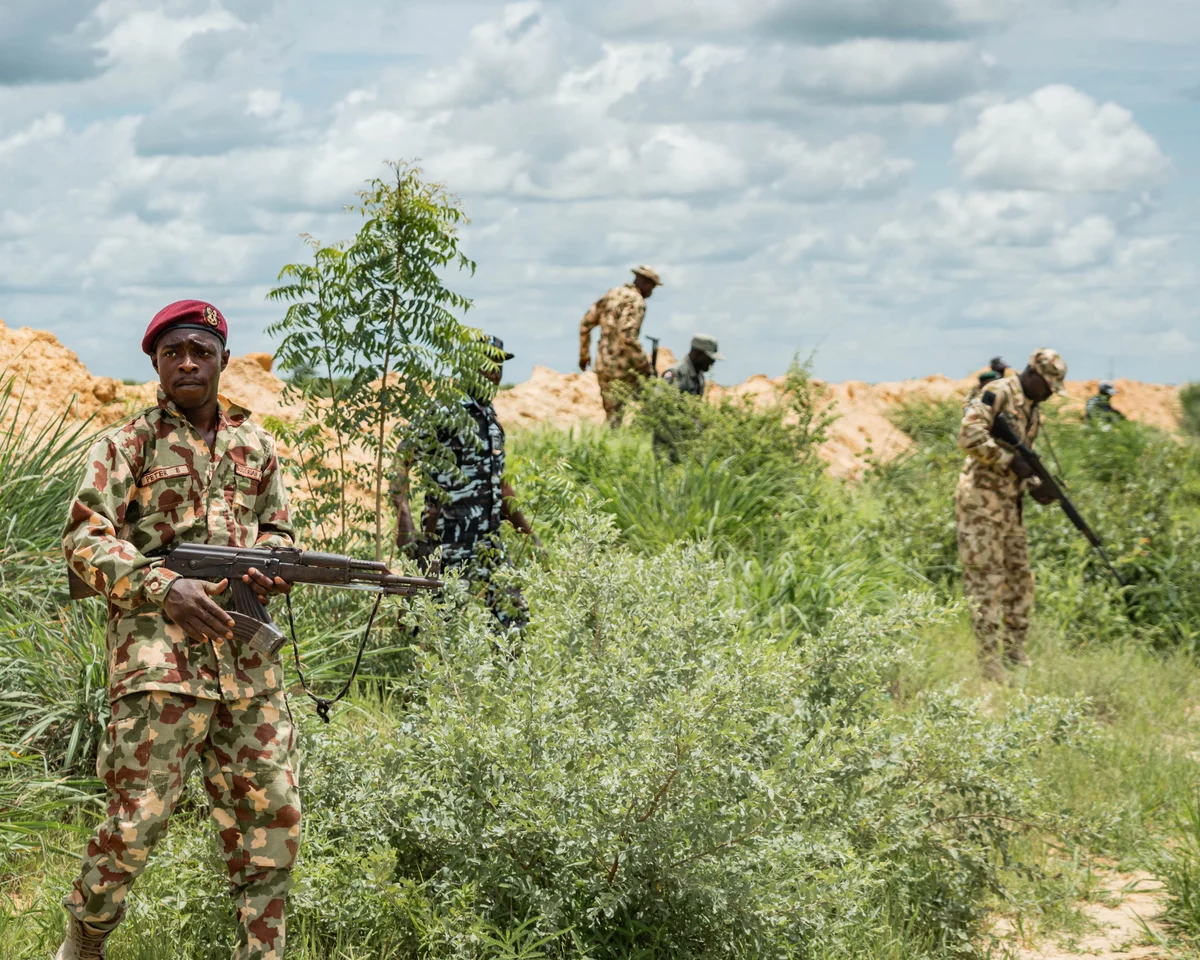
MAIDUGURI, Nigeria — A video appearing to show hundreds of women, children and elderly people being held by armed men has raised fresh fears over the scale of a mass kidnapping in Nigeria's north-central Niger State.
Residents say the people shown in the footage are among worshippers abducted during attacks on communities in Borgu Local Government Area last Friday.
Some residents estimate that as many as 600 people may have been taken, but Nigerian authorities have not confirmed that figure. The Niger State government said Monday that it was still working to establish the number of victims and verify other details of the attack.
The distinction is important: there is currently no independently verified figure of 600 abductees.

What happened?
Armed men attacked worshippers during Friday prayers in and around the communities of Dekara, Kpenya, Sabon-Gida and Gidan-Zana in Niger State.
Residents said the attackers moved people from the mosques into nearby forests.
Nigerian police confirmed that an attack occurred in the area and said some worshippers managed to escape. Authorities also said no deaths had been reported in the initial information available to them.
Local reports have put the number of people taken at different levels, underlining how difficult it has been to establish the full scale of the incident.
The state government has acknowledged the abductions but said the number of victims remains under verification.
The video that changed the story
The latest development came when an armed group posted a video online showing large groups of people sitting in a forested area surrounded by armed men.
Several children can be heard crying in the footage.
Residents who watched the video said they recognised relatives and other people from their communities among those shown.
Reuters was able to confirm that the video had been posted online but could not independently verify its authenticity, when it was filmed or where it was filmed.
That means the video provides disturbing evidence of people being held captive, but does not by itself establish that all of the people shown were abducted in last week's mosque attack.
Why the number matters
The difference between dozens, hundreds and 600 victims is enormous.
If the larger estimate is eventually confirmed, it would represent one of the largest mass abductions reported in Nigeria in recent years and would raise fresh questions about the ability of security forces to protect vulnerable communities.
But even a much smaller number would represent a serious security failure.
The attack also has a particularly disturbing dimension because the victims were targeted while attending Friday prayers.
Nigeria's kidnapping crisis
The incident is part of a wider security crisis in parts of northern Nigeria, where armed gangs have increasingly carried out mass kidnappings for ransom.
Villages, schools, roads and religious gatherings have all been targeted.
The violence has traditionally been concentrated in northwestern and north-central Nigeria, but armed groups have increasingly expanded their operations into other parts of the country.
The latest incident comes only days after families in another part of Nigeria protested over children who have been missing for almost 100 days after being abducted from their classrooms.
Families of the children taken in Borno State have continued to demand government action to secure their release.
Why this is bigger than one kidnapping
Nigeria's kidnapping crisis has increasingly become an economic and social problem as well as a security issue.
When armed groups can raid communities and take large numbers of people, residents may abandon farms, markets and schools because they fear becoming targets.
That can affect food production and local trade.
Families may also be forced to sell property or borrow money to meet ransom demands.
For communities already struggling with poverty and insecurity, repeated kidnappings can create a cycle in which people lose both their livelihoods and their sense of safety.
The government faces a difficult test
The Nigerian government has increased military and security operations against armed groups.
Earlier this month, Nigerian forces said they had rescued 308 kidnapping victims in separate operations in Niger and Kwara states. President Bola Tinubu described it as the largest same-day rescue operation carried out by a joint security team.
But the continuing attacks show the scale of the challenge.
The government now faces pressure to locate the people shown in the latest video and establish exactly how many people were taken.
For the families involved, the priority is much simpler: finding their relatives and bringing them home.
What happens next?
Security agencies are expected to continue efforts to locate the abducted worshippers and establish the number of people still missing.
Authorities will also need to determine who carried out the attack and whether the group behind the video is responsible for the mosque kidnappings.
Until that happens, the 600 figure should be treated as an estimate, not a confirmed death or kidnapping toll.
But the images emerging from Niger State have already raised a more troubling question for Nigeria:
How many people can armed groups take from a community before the country's security response becomes a national emergency?
For the families waiting for relatives to return, the answer is already painfully clear.
Related Stories
- Europe puts another €6.1 billion behind Ukraine as defence spending accelerates
- Congo ceasefire monitors deploy as peace deal faces its first major test
- Zambia election dispute deepens as courts close on final day for opposition challenge
Category: International
Related Explainer: Kenya’s inflation holds near 30-month high as transport and food costs squeeze households
 Facebook
 Twitter / X
 WhatsApp
 LinkedIn
 Telegram
 Reddit