
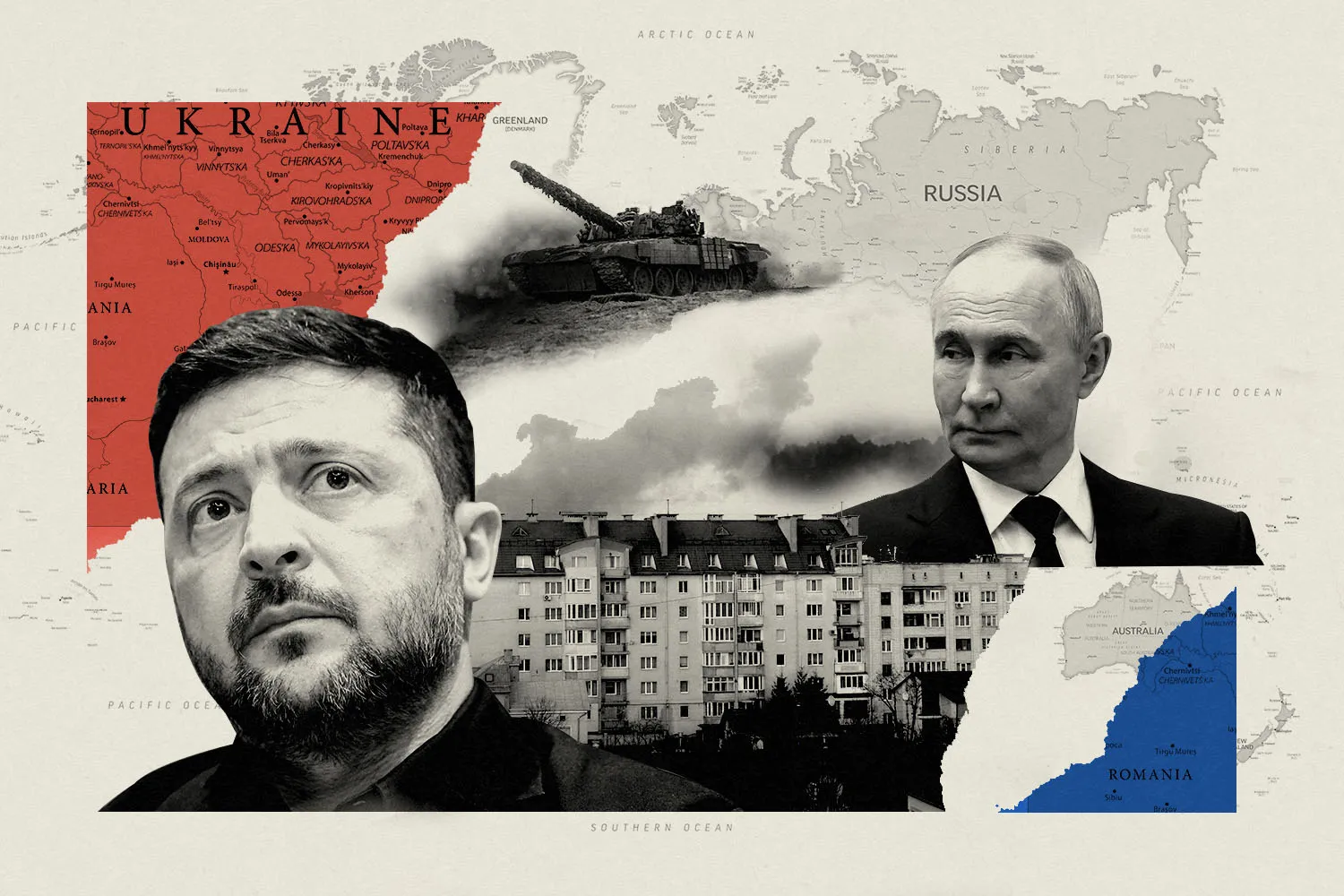
BRUSSELS — Europe is putting another €6.1 billion ($7.12 billion) into Ukraine's defence effort, reinforcing Kyiv's military capacity as Russia's war enters another critical phase and European governments prepare for a future in which they may have to carry more of the security burden themselves.
The European Commission approved the additional funding on Monday, with the money set to support the procurement of air-defence systems, missiles, ammunition and radar equipment for Ukraine. It comes on top of €16 billion in previously approved defence aid, of which €8.35 billion has already been disbursed, according to Reuters.
The announcement came as Ukraine marked its Independence Day, with Britain and France also promising additional military assistance to Kyiv amid intensified Russian missile attacks.
But the significance of the latest European commitment goes beyond Ukraine.

Europe is increasingly spending money on defence at a time when governments across the world are being forced to decide how much they can afford to spend on security, development and social programmes.
Why Europe is putting more money into Ukraine
European governments increasingly view Russia's war against Ukraine as a direct security challenge to Europe rather than a conflict that can be left primarily to the United States.
The latest package is aimed at some of Ukraine's most urgent military needs, particularly air defence, missiles, ammunition and radar systems.
That focus reflects a major problem facing Ukraine: Russia's continued ability to launch missile and drone attacks against cities and critical infrastructure.
Ukraine's President Volodymyr Zelenskiy has said Kyiv needs at least 300 US-made Patriot interceptors to strengthen its air defences. Britain and France have also pledged increased military support.
The European message is increasingly clear: Ukraine cannot afford to run short of weapons while negotiations over a possible long-term settlement remain uncertain.
Europe is building its own defence capacity
The money also fits into a much bigger European strategy.
The EU says its overall support for Ukraine's armed forces has reached €88.7 billion, including assistance provided by member states. Its wider support for Ukraine—including financial, humanitarian and refugee assistance—is much larger, at about €220.3 billion.
Europe is simultaneously trying to expand its own defence industry.
The EU's SAFE programme provides loans of up to €150 billion to help member states increase defence investment through joint procurement. Ukraine can participate in common procurement under the programme.
That could eventually transform Europe's defence industry.
Instead of individual countries buying relatively small quantities of weapons, governments can increasingly combine orders, giving European manufacturers incentives to expand production.
Why Africa should pay attention
At first glance, another European package for Ukraine may appear to have little to do with Africa.
There are, however, several reasons African governments and businesses should watch what happens.
The first is money.
European governments have finite budgets.
As defence spending rises, governments face competing demands for infrastructure, development assistance, climate financing, humanitarian programmes and overseas aid.
That does not mean money for Africa will automatically fall because Europe is spending more on Ukraine.
But the competition for public funds is becoming more important.
African governments that depend on European development assistance therefore have a reason to monitor the shift in European spending priorities.
The second issue is food security
Ukraine and Russia are major players in global agricultural and commodity markets.
The war has repeatedly disrupted trade in grain, fertiliser, energy and other commodities.
When supply chains are disrupted, countries that import food and agricultural inputs can face higher costs.
African countries are particularly exposed because many depend on imported fertiliser, wheat and other commodities.
That means the trajectory of the war can affect African consumers even when there is no direct involvement by African governments.
A prolonged conflict could keep supply chains vulnerable.
A lasting peace, on the other hand, could eventually improve trade routes and reduce some of the geopolitical risks surrounding commodity supplies.
Defence companies are also becoming more important
There is another economic story developing underneath the war.
Europe is trying to expand its capacity to manufacture weapons, ammunition, missiles, drones and other military equipment.
The EU's Ukraine support policy explicitly includes efforts to increase defence-industrial production and joint procurement.
That could create a major European industrial expansion.
Factories producing ammunition and defence technology will require workers, raw materials, components, energy and investment.
It could also accelerate innovation in areas such as drones, radar, artificial intelligence and autonomous systems.
For African countries, this creates both opportunities and risks.
Countries with minerals and other raw materials used in advanced manufacturing could potentially attract new investment.
But increased global demand for strategic minerals could also intensify competition for Africa's resources.
Africa is watching the changing global order
Ukraine has also become part of a much larger geopolitical competition.
The war has brought Europe closer together on defence while increasing tensions between Russia and Western countries.
It has also encouraged European governments to rethink their dependence on foreign defence suppliers.
For Africa, this matters because the continent has traditionally balanced relationships between Europe, the United States, China, Russia and other emerging powers.
A more security-focused Europe could mean more European engagement with African governments on defence, counterterrorism and strategic minerals.
It could also mean European countries become more aggressive in protecting their own supply chains.
Europe faces a difficult political choice
European governments now have to answer a difficult question:
How much should they spend to support Ukraine—and for how long?
The answer is becoming more expensive.
The EU's €90 billion Ukraine support loan for 2026 and 2027 is designed to cover urgent economic and defence needs, with an indicative €60 billion earmarked for military assistance and €30 billion for economic support.
That is a huge financial commitment.
It demonstrates the scale of Europe's determination to keep Ukraine supplied.
But it also highlights the enormous cost of a war that has now lasted more than four years.
What happens if the war ends?
That is where the story becomes particularly interesting for Europe's economy.
If fighting eventually stops, Europe is unlikely simply to return to its pre-war defence spending levels.
The war has changed the continent's perception of military preparedness.
European countries are likely to continue investing in ammunition stocks, air defence, drones, cybersecurity and domestic weapons production.
That could create a long-term defence boom.
It could also change Europe's relationship with countries that supply the raw materials needed for those industries.
For Africa, that could mean greater interest in the continent's critical minerals.
What to watch next
The immediate question is whether the additional European weapons can help Ukraine withstand Russia's continuing attacks.
But there are several bigger developments worth watching:
- How quickly the new €6.1 billion reaches Ukraine
- Whether European defence manufacturers can increase production
- Whether Britain and France expand their commitments
- Whether US support for Ukraine changes
- Whether Russia and Ukraine move closer to a lasting peace agreement
- Whether European defence spending reduces money available for other priorities
- Whether demand for strategic minerals creates new African investment opportunities
The latest funding does not mean the war is nearing an end.
If anything, it shows that Europe is preparing for the possibility that the conflict—and the security threat it represents—will remain a major issue for years.
For Africa, the lesson is simple: Ukraine is not just a European war. It is influencing global food markets, commodity demand, defence spending and the balance of power between the world's major economies.
Related Stories
- Congo ceasefire monitors deploy as peace deal faces its first major test
- Nigeria mosque kidnapping: Video appears to show hundreds of worshippers held captive
- Zambia election dispute deepens as courts close on final day for opposition challenge
Category: International
Related Explainer: Kenya’s inflation holds near 30-month high as transport and food costs squeeze households
 Facebook
 Twitter / X
 WhatsApp
 LinkedIn
 Telegram
 Reddit