
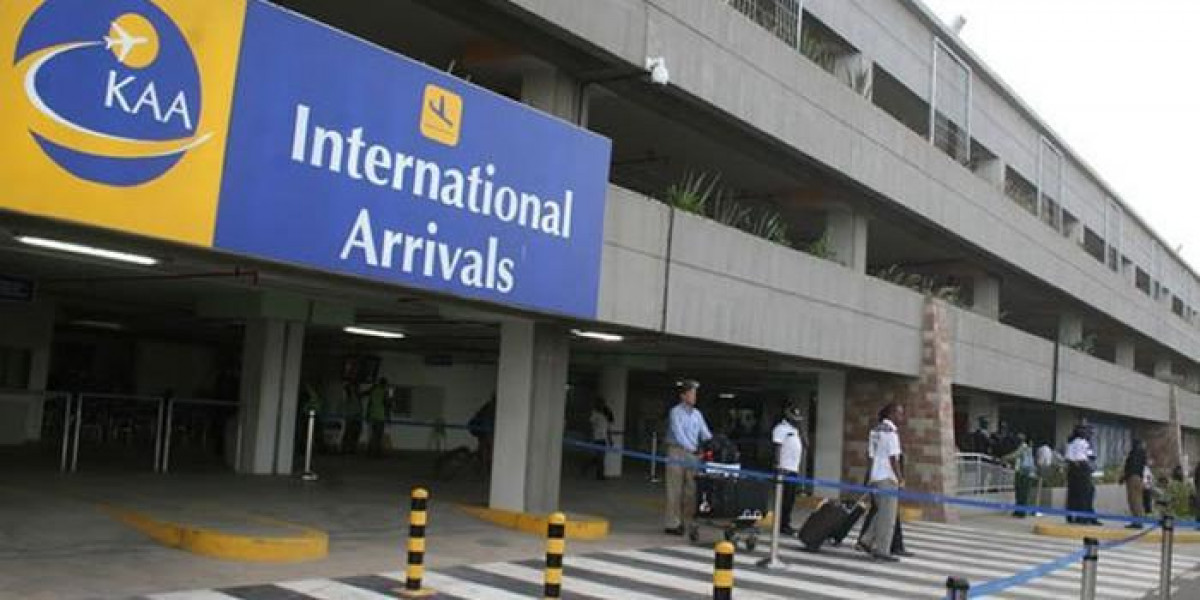
NAIROBI — Kenya is moving closer to enforcing mandatory health insurance for foreign visitors, a government policy that promises to shield hospitals and taxpayers from unpaid medical bills but is also raising questions about the country's competitiveness as a tourism destination.
The requirement is anchored in Section 26(6) of the Social Health Insurance Act, 2023, which provides that non-Kenyans intending to enter and remain in Kenya for less than 12 months must possess travel health insurance cover designated by the Cabinet Secretary for Health. The Ministry of Health has since developed an administrative framework to operationalise the programme.
The policy is aimed at ensuring that international visitors can meet the cost of healthcare during their stay rather than leaving hospitals, healthcare providers or the public system to absorb potentially large medical bills.
Under the framework, the mandatory inbound travel health insurance programme has a minimum cumulative benefit limit of $50,000, equivalent to roughly Sh6.4 million at recent exchange rates. Reported benefit components include up to $20,000 for medical expenses, $25,000 for emergency medical transportation, $15,000 for repatriation of mortal remains, $1,000 for mental-health treatment and $300 for prescribed medicines.
A policy that has been years in the making
The requirement is not entirely new.
The Ministry of Health began laying the administrative groundwork for the programme in 2025. Its framework states that the policy is intended not only to protect visitors but also to reduce pressure on Kenya's publicly financed health system and establish a coordinated mechanism for managing healthcare costs associated with foreign visitors.
Implementation, however, has faced delays.
The government previously attempted to procure a designated insurance arrangement for visitors, but the process was cancelled in January 2025 following concerns raised around procurement compliance and opposition from parts of the insurance industry.
The Ministry's approved framework subsequently set stringent requirements for insurers seeking to participate, including a minimum Sh2 billion gross written premium, evidence of an extensive medical-provider network across Kenya's 47 counties and demonstrated claims-paying capacity.
The tourism question
It is the implementation — rather than the principle of having medical insurance — that is likely to attract the most scrutiny.
Many international travellers already purchase travel insurance before leaving their home countries. The key question for Kenya's tourism industry is therefore whether visitors with existing comprehensive international policies will be able to use them or whether they will have to purchase a separate product designated by the Kenyan government.
That distinction could have significant implications for the ease and cost of travelling to Kenya.
Kenya's tourism sector has recovered strongly since the pandemic. The country recorded 2.39 million international visitor arrivals in 2024, up 14.6 per cent from 2.089 million in 2023, according to figures reported from official tourism data. Arrivals continued to rise in the first nine months of 2025.
With Kenya competing for international tourists against destinations across Africa and beyond, the industry will be watching closely to see whether the insurance requirement becomes a seamless digital entry requirement or an additional administrative and financial hurdle.
Protection versus competitiveness
There is a clear public-interest argument for the policy.
A tourist who suffers a serious accident or medical emergency — particularly in a remote safari destination — can generate substantial costs for emergency treatment, evacuation and repatriation. Mandatory cover can ensure that those costs are financed without leaving healthcare providers or the public system exposed.
But the government will also need to answer practical questions about implementation.
Will visitors who already have adequate international travel insurance be exempt? Who will verify the policies? How much will the cover cost? Will the insurance be purchased before departure or upon arrival? And will the process add friction at airports and other points of entry?
These questions could prove as important to the tourism sector as the insurance requirement itself.
The Ministry's framework provides for a designated model, in which the government selects the insurance product and provider through a procurement process, although alternative arrangements involving insurance sourced from travellers' home countries have also been discussed.
For Kenya, the challenge will be finding the balance between protecting visitors and the health system from catastrophic costs while keeping the country easy and attractive to visit.
The policy therefore represents more than a health-sector reform. Its implementation could become an important test of whether Kenya can strengthen financial protection in healthcare without adding unnecessary friction to one of the country's most important foreign-exchange and employment-generating sectors.
Why this matters
The debate is ultimately not about whether tourists should have health insurance. Most sensible travellers already do.
The bigger question is whether Kenya's system will recognise adequate existing international cover or require visitors to buy another product — and whether that process will be simple enough not to discourage travel.
That is where the government's final implementation rules could determine whether the policy becomes a sensible protection mechanism or another perceived cost of entering Kenya.
Related Stories
Category: Health
Author: Gerald Paul
 Facebook
 Twitter / X
 WhatsApp
 LinkedIn
 Telegram
 Reddit