
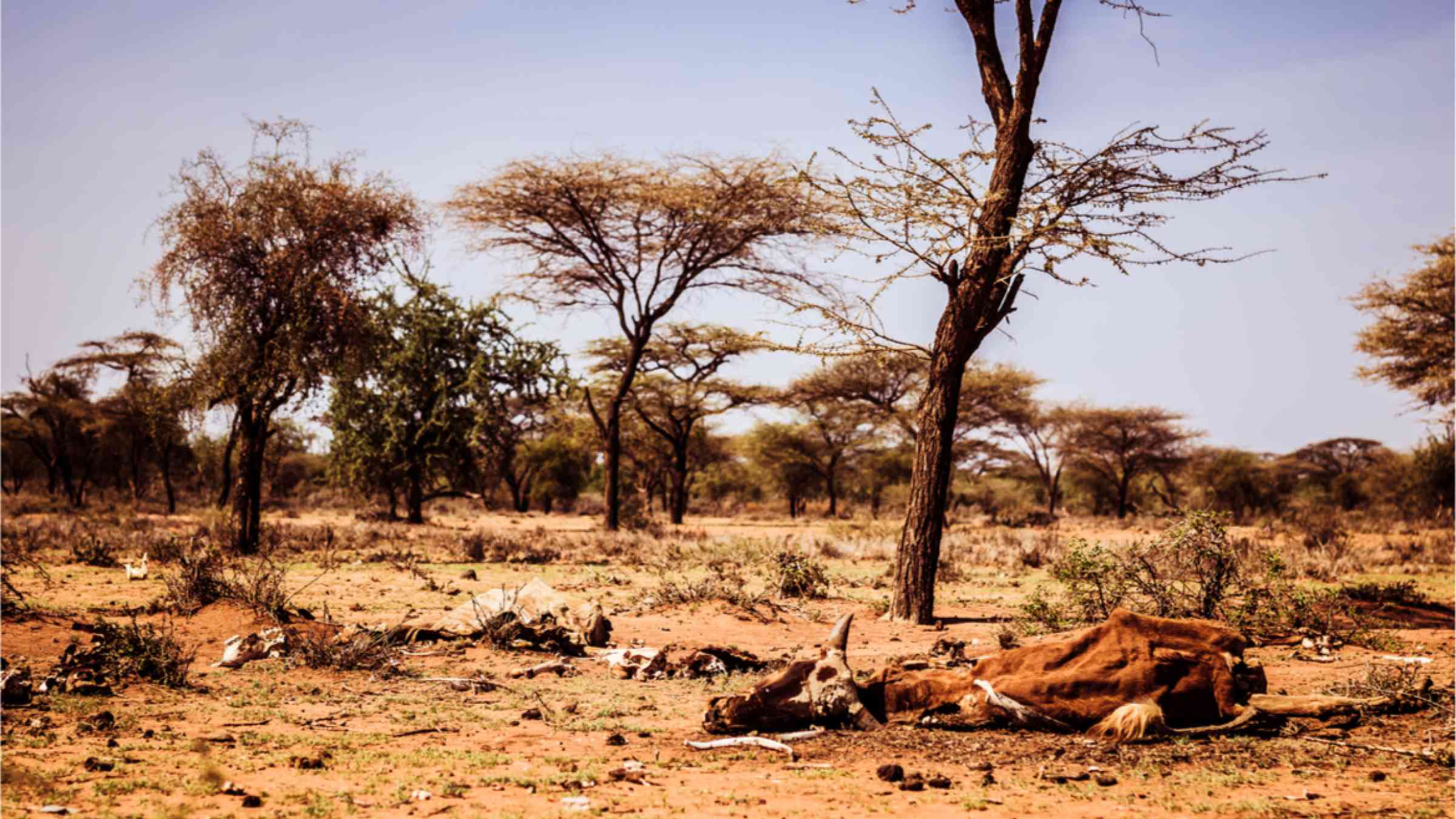
Millions of Kenyans are being urged to prepare for two difficult months after the Kenya Meteorological Department warned that much of the country will remain dry through August and September, raising concerns over food supplies, water availability and livestock.
In its latest seasonal outlook, the department forecasts below-average to near-average rainfall across large parts of the country before the expected onset of the short rains in October. While the dry conditions may favour harvesting in some farming areas, officials warn they could deepen the effects of previous poor seasons, leaving communities vulnerable to water shortages and reduced agricultural production.
"Seasonal rainfall is expected to begin in October," the department said in its forecast.
The warning comes at a time when many counties are still recovering from earlier dry conditions that affected crop production and pasture.

Farmers Face Another Difficult Season
Agriculture is expected to bear the brunt of the prolonged dry spell.
Counties including Trans Nzoia, Bungoma, Busia, Kakamega, Siaya, Vihiga, Nandi, Uasin Gishu, Elgeyo Marakwet, Kisumu, Kericho, Nyamira, Kisii, Bomet, Migori, Homa Bay, Narok, West Pokot, Samburu and Turkana are projected to receive below-average rainfall during the August-September-October period.
Although the weather may allow farmers to complete harvesting activities without interruption, the department cautioned that existing shortages of food, pasture and browse are likely to persist because of crop losses experienced during previous dry months.
For pastoral communities, the forecast points to continued pressure on grazing land and water sources, particularly in arid and semi-arid counties.
Water Levels Could Decline
The dry conditions are also expected to affect Kenya's water resources.
According to the forecast, catchment areas around Mt Kenya are likely to remain largely dry, while those surrounding Mt Elgon and the Mau Escarpment may receive only near- to below-average rainfall.
Lower rainfall in these critical water towers could reduce inflows into rivers and reservoirs, affecting water supply and potentially lowering levels at hydroelectric dams.
Communities in arid regions are expected to face the greatest strain as water availability declines over the coming weeks.
Strong Winds and Fog Raise Safety Concerns
The weather department has also warned of strong southerly, south-easterly and easterly winds exceeding 25 knots across several counties, including Kwale, Kilifi, Mombasa, Lamu, Tana River, Kitui, Taita Taveta, Garissa, Wajir, Mandera, Isiolo, Marsabit, Turkana and Samburu.
The strong winds could disrupt marine transport, damage roofs and power lines and create hazardous conditions for travellers.
Elsewhere, residents in Nairobi, Kiambu, Murang'a, Nyeri, Embu, Meru, Kirinyaga, Nyandarua, Tharaka Nithi and neighbouring counties should expect cool mornings, fog and occasional drizzle.
The department warned that reduced visibility could increase the risk of road accidents while also disrupting operations at Wilson Airport and Jomo Kenyatta International Airport.
Health Risks Could Increase
Health officials are also being urged to remain alert.
Cold mornings and damp conditions may contribute to higher cases of respiratory illnesses such as asthma, pneumonia, influenza and the common cold in parts of the central highlands and Nairobi.
Meanwhile, dry and windy conditions in arid counties could increase dust levels, worsening respiratory illnesses and eye infections.
The department also warned that isolated lightning strikes remain possible in western Kenya, particularly around Kisii, Kericho, Kisumu, Nandi, Bungoma, including the Mt Elgon region, and Kakamega.
A Mixed Picture Across the Country
Not every region is expected to remain dry.
Parts of the Coast, including Kwale, Kilifi, Mombasa and Lamu, together with sections of Tana River, Taita Taveta, Garissa, Mandera, Wajir and Marsabit, are forecast to receive above-average rainfall later in the season, with most of it expected in October.
Even so, temperatures are expected to remain warmer than normal across most of Kenya during the three-month period.
July Already Showed Warning Signs
The outlook follows a generally dry July across much of the country.
According to the department's monthly review, only a handful of counties, including Nairobi, Kisii, Kisumu, Kakamega, Busia and Bungoma, recorded near- to above-average rainfall.
Kisii Meteorological Station received the highest monthly rainfall at 152 millimetres, while stations in Marsabit, Garissa, Wajir, Mandera and Makueni recorded no rainfall during the month.
Mandera also registered the country's highest temperature at 37.4 degrees Celsius, while Nyahururu recorded the lowest minimum temperature of 4.2 degrees Celsius.
With another dry spell now forecast before the October rains arrive, the department is urging farmers, transport operators, health agencies and county governments to prepare for the seasonal challenges and take measures to reduce the impact on livelihoods.
Related Stories
- Argwings Kodhek Protests Put Nairobi's Trader Crackdown Under Spotlight
- Queenter Mbori Appointed to Global Cyber Safety Advisory Council
- Kenyan man detained by ICE after church service: What the video reveals about his US immigration case
Category: News
Related Explainer: Kenya’s inflation holds near 30-month high as transport and food costs squeeze households
 Facebook
 Twitter / X
 WhatsApp
 LinkedIn
 Telegram
 Reddit