
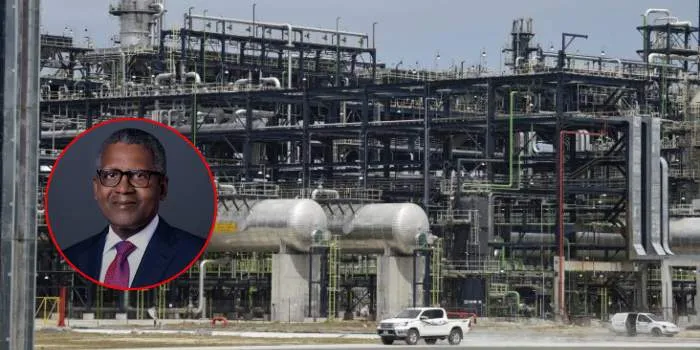
The refineryThe refinery, expected to cost around $17 billion (roughly Ksh2.2 trillion), is billed as one of the largest foreign investments Kenya has attracted in years.
It is designed to process up to 700,000 barrels of crude oil per day, with construction expected to begin around October 2026 and run for under four years.
The funding structure is planned at 30 percent equity and 70 percent debt.
The launch is expected around September, with Africa's richest man, Aliko Dangote, at the center of the launch.
Presidential economic adviser David Ndii has put the project's value closer to Ksh2.59 trillion ($20 billion).
Dangote Group has reportedly offered East African nations a combined 30 percent equity stake in the venture, with Kenya offered a 10 percent share worth about Ksh64.74 billion ($500 million).
Ethiopia and Rwanda have also signaled interest in the regional stake, together valued at roughly Ksh194.21 billion ($1.5 billion).
Ndii has also indicated that countries unwilling to commit to buying the refinery's output could still take part through a backstop arrangement.
“The total for the region is about Ksh194.2 billion ($1.5 billion),” Ndii said, adding that “countries that may not commit to off-taking products from the refinery could still be accommodated through a backstop arrangement.”
The project is projected to create about 60,000 jobs during construction and operation — a number President William Ruto himself has cited in public remarks tying the refinery to national youth employment efforts.
“We are building an East African refinery in Lamu which will require 60000 youth for doing the work,” the president said.
One young resident supported the project citing that it will create more jobs for the unemployed in that region.
“We are not against the refinery. We agree with the refinery taking place because we have no jobs and this opportunity can give us 60,000 positions that will help many youths here” one of the youths said.
The youths are also seeking for greater involvement in the negotiations surrounding the project, including discussion on employment, skill development community projects and other benefits that would directly benefit them.
In addition, the residents are also calling for training programmes that will equip the young people with skills that may be required for technical and professional programmes.
Community representatives have gone further, calling for a legally binding agreement with the government and Dangote Group that locks in the 70 percent local hiring share before work starts, rather than leaving it as an informal commitment.
The residents’ demand comes amid high youth unemployment in the region, with many young people hoping the project will create new employment opportunities.
One of the parents said the refinery could provide a much-needed opportunity for Lamu’s youth, who he noted had long been sidelined by poor leadership and limited opportunities to participate in the county’s development.
–By Regan Oluoch –
Related Stories
- Global markets watch oil, bonds and Nvidia
- US pauses visa appointments worldwide, this is how Kenyans are affected
- Sifuna’s Linda Mwananchi battle enters a new phase
Category: Business
Related Video: Murkomen Says Kenya Is Safe: “Stop Creating a Crisis” | Political Goons & Security Under Scrutiny
Related Explainer: Kenya’s inflation holds near 30-month high as transport and food costs squeeze households
 Facebook
 Twitter / X
 WhatsApp
 LinkedIn
 Telegram
 Reddit