
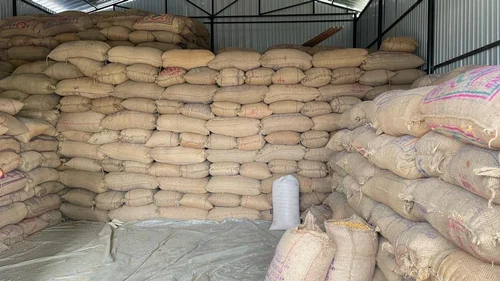
Kenya is preparing to import one million 90-kilogram bags of maize as erratic weather threatens to deepen a looming food-supply gap and put fresh pressure on the price of unga.
Agriculture Cabinet Secretary Mutahi Kagwe says the country could face a shortfall of up to 5.4 million bags by the end of September, forcing the government to turn to imports as it works to protect strategic stocks and keep the staple food available.
The proposed import is therefore not simply a response to higher prices. It is an attempt to plug a gap emerging between what Kenyan farms are expected to produce and what households will need in the coming months.
Kagwe said the government is considering a government-to-government arrangement to secure the additional maize.

The announcement comes after a difficult growing season in some of Kenya's major maize-producing areas. Rains arrived early in parts of the country, but were followed by prolonged dry conditions during crucial stages of crop development.
The result has been uneven crop performance, particularly in areas where maize was approaching flowering and grain filling.
The Food and Agriculture Organisation has also warned that unusually heavy rainfall early in the 2026 long-rains season, followed by expectations of drier conditions later in the season, could affect crop yields. It also reported delays in fertiliser imports, with reduced application rates expected to affect production in some high-potential farming areas.
Farmers in parts of the North Rift have already reported significant losses.
In Tinderet, Nandi County, agricultural officials estimated that maize production could fall by 30 to 40 per cent after prolonged dry spells disrupted crop development.
The problems have also raised questions about the timing of farm inputs.
Farmers in Marakwet West, for example, warned earlier this year that delays in accessing subsidised fertiliser could affect yields if the rains arrived before they were able to apply it.
But weather is not the only pressure facing farmers.
Kagwe said delays in the distribution of subsidised fertiliser compounded the impact of the changing weather pattern, leaving some farmers without key inputs at critical points in the planting season.
That combination has created a difficult cycle.
A poor harvest means farmers earn less. Lower earnings can then make it harder for them to buy seed, fertiliser and other inputs for the next season. The consequences can therefore extend well beyond this year's maize crop.
The import may not cover the gap
The proposed one million bags represent less than one-fifth of the government's projected 5.4 million-bag deficit.
That means further measures could be needed if domestic stocks decline faster than expected.
The government could potentially release additional grain from strategic reserves or arrange further imports, depending on how the market develops.
Kenya has previously turned to imports when domestic maize supplies have come under pressure. In February, Kagwe secured a commitment from Zambia for up to one million 90-kilogram bags as the government confronted drought-related food security concerns.
The latest proposal shows that the supply challenge has not disappeared, even as different parts of the country experience markedly different weather conditions.
Consumers could feel the pressure
The biggest concern for households is what a sustained supply shortage could mean for food prices.
Kagwe told officials that a two-kilogram packet of maize flour was selling for between Sh153 and Sh163 in June.
For millions of Kenyan households, maize flour is not an occasional purchase. It is the basis of ugali and one of the country's most important staple foods.
A prolonged shortage could therefore quickly become a household-budget problem, particularly for low-income families already dealing with high food and transport costs.
The government is likely to face pressure to ensure that any imported maize reaches the market at the right time and does not simply become a temporary fix.
There is also a longer-term question: how much longer can Kenya rely on maize imports to cushion increasingly unpredictable seasons?
Recent weather patterns suggest that farmers are having to contend with rainfall that is harder to predict and increasingly uneven. Agriculture CS Kagwe has previously acknowledged that changing rainfall and temperature patterns are exposing Kenyan farming to greater risks.
For now, the government's immediate task is straightforward: secure enough grain to keep the country's maize supply stable.
But the size of the projected deficit suggests that the bigger challenge may be rebuilding the resilience of Kenya's food system before the next difficult season arrives.
You may also like
Category: News
Related Video: Dolly Parton’s Family Announces Her Passing in Emotional Tribute
Related Explainer: Kenya’s short rains: What the 2026 forecast means for you
About the Author
Maureen Onyango is a journalist passionate about storytelling, life coaching and spiritual lessons. She studied at the Kenya Institute of Management and enjoys telling stories that inform, inspire and empower communities.
 Facebook
 Twitter / X
 WhatsApp
 LinkedIn
 Telegram
 Reddit