
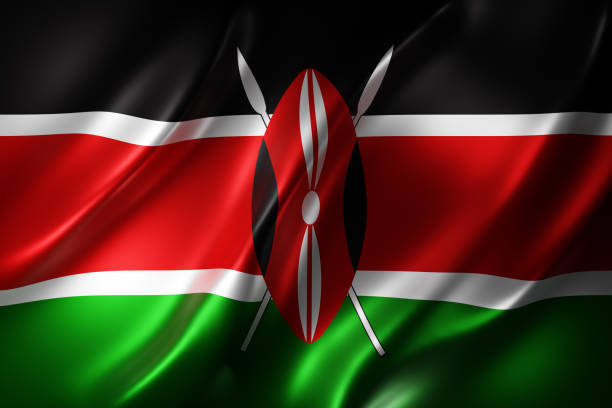
Nairobi, Kenya — The Kenyan flag is not just a piece of cloth. To many, it symbolises unity, struggle and identity. But it is also a protected emblem, and the law is clear: misuse it, and you could end up behind bars.
The debate has resurfaced after a viral video showed Mogadishu FC fans mishandling the Kenyan flag following a tense clash with Kenya Police FC at Nyayo Stadium. The clip sparked outrage online, with some Kenyans demanding legal action.
Few, however, realise that the National Flag, Emblems and Names Act sets strict rules on how the flag may be flown, displayed or used. First enacted in 1963 and revised over time, the Act was designed to preserve the dignity of state symbols, including the coat of arms, the public seal and the national anthem.
Where the flag may be flown
The law is unambiguous: the flag is not for general display. It can only be raised on government buildings, during public holidays, or on occasions specifically authorised by the president.

Regulations issued in 1965 further restrict its use on vehicles. Only a handful of state officials — including the President, Deputy President, Chief Justice, Speaker of the National Assembly, Cabinet Secretaries and the Attorney General — may display the flag on their cars.
Penalties for misuse
Anyone who displays a false version of the flag or a banner resembling it commits an offence. The punishment is a fine of up to 5,000 shillings, six months in prison, or both.
The law also punishes impersonation. For example, wearing a badge resembling that of Parliament without being a member can attract a fine of 2,000 shillings, two months in jail, or both.
Commercial use is banned
The government has repeatedly stressed that the flag cannot be exploited for profit. Using it in adverts, branding, or other commercial ventures is prohibited under the Act. Officials argue that turning the flag into a marketing tool risks diminishing its dignity.
While many Kenyans see the flag as a source of pride, the law insists it must also be treated with reverence. And as the Nyayo Stadium incident shows, the question of how the national colours are handled remains a deeply sensitive issue.
Related Stories
- Queenter Mbori Appointed to Global Cyber Safety Advisory Council
- Kenyan man detained by ICE after church service: What the video reveals about his US immigration case
- Rosemary Koech death: Autopsy confirms suicide as family reveals she faced personal and financial difficulties
Category: News
Related Video: Murkomen Says Kenya Is Safe: “Stop Creating a Crisis” | Political Goons & Security Under Scrutiny
Related Explainer: Kenya’s inflation holds near 30-month high as transport and food costs squeeze households
 Facebook
 Twitter / X
 WhatsApp
 LinkedIn
 Telegram
 Reddit