
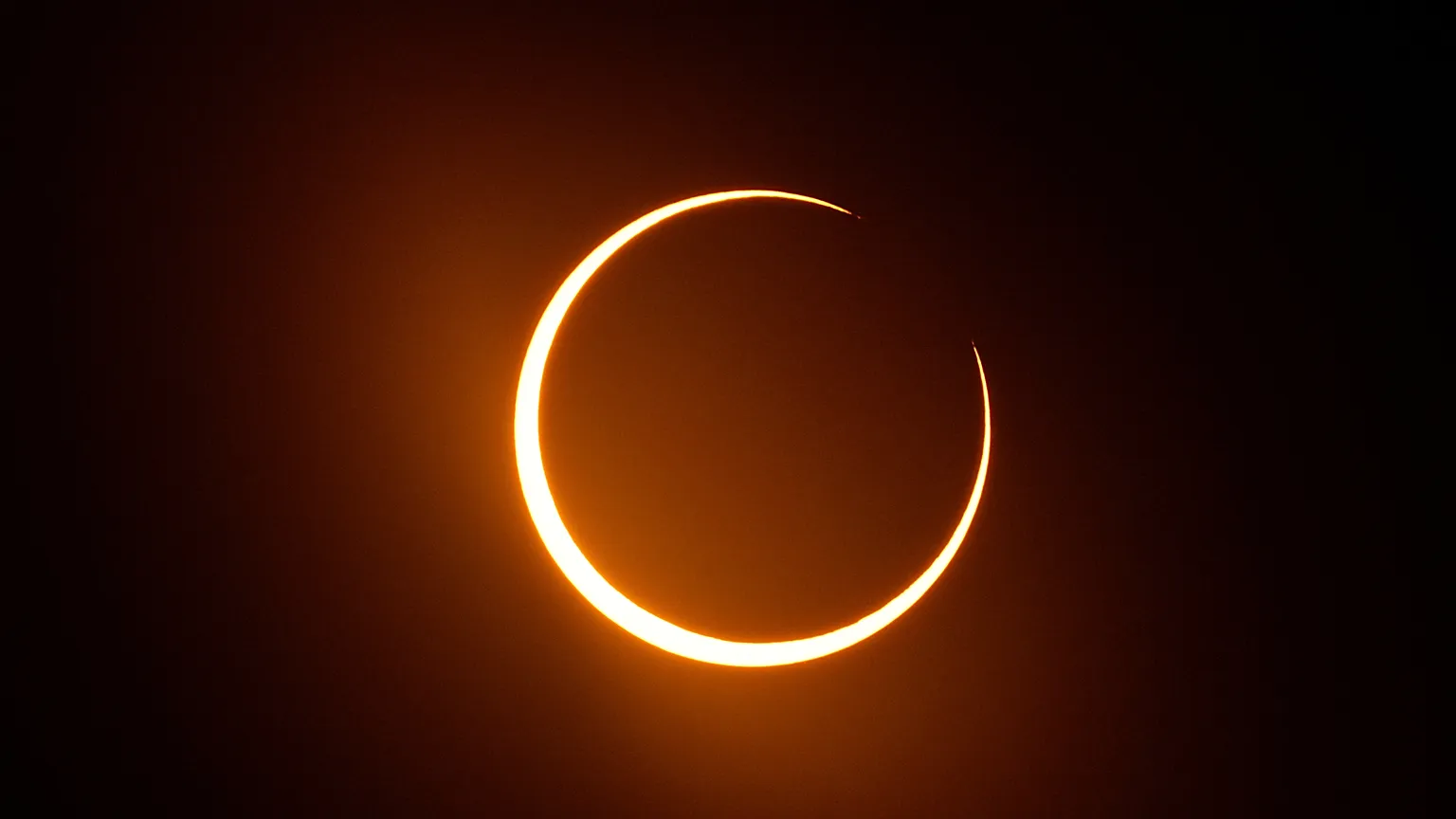
Skywatchers across parts of Europe are preparing for one of the most spectacular astronomical events in years as a rare total solar eclipse sweeps across the Northern Hemisphere on August 12.
For a few brief minutes, daylight will fade into an eerie twilight as the Moon passes directly between the Earth and the Sun, completely blocking the Sun's visible surface for observers positioned within the narrow "path of totality."
The event marks the first total solar eclipse visible from mainland Europe since 2006 and is expected to draw thousands of tourists, photographers and astronomy enthusiasts to locations offering the best views.
The eclipse will first become visible over a remote part of northern Russia before crossing Greenland, Iceland, northern Spain and the north-eastern tip of Portugal.

In Spain, the path of totality is expected to stretch from around Oviedo in the north towards the island of Mallorca. For those outside the path, a partial eclipse will still be visible across much of Europe, parts of Canada, the northern United States and north-west Africa.
Although solar eclipses occur somewhere on Earth roughly once or twice each year, witnessing a total eclipse from the same location is exceptionally uncommon. Because the Moon's shadow is relatively small, some places may wait centuries before experiencing another one.
NASA describes the phenomenon as a remarkable "cosmic coincidence." Although the Sun is about 400 times larger than the Moon, it is also approximately 400 times farther away from Earth. From our perspective, the two appear almost exactly the same size, allowing the Moon to cover the Sun completely for a short time.
During totality, observers can witness the Sun's corona—its faint outer atmosphere—which is normally hidden by the Sun's intense brightness.
The eclipse also creates unusual environmental changes. Daylight dims dramatically, temperatures can fall noticeably within minutes, shadows become unusually sharp, and birds and other animals may briefly behave as though night has arrived.
For many ancient civilisations, such events inspired fear and fascination, often being interpreted as supernatural signs. Today, scientists understand them as predictable astronomical events governed by the precise movements of the Earth, Moon and Sun.
For observers in Spain, totality will last less than two minutes, occurring shortly before sunset. In Burgos, for example, complete darkness is expected for approximately one minute and 48 seconds.
While totality is brief, the entire eclipse—including its partial phases before and after—will last close to one hour and 45 minutes.
Astronomers are also reminding the public that the eclipse should never be viewed directly without proper eye protection.
Experts recommend certified eclipse glasses that meet the international ISO 12312-2:2015 safety standard. Ordinary sunglasses, cameras, telescopes or binoculars without specialised solar filters do not provide adequate protection and may cause permanent eye damage.
Scientists note that because the human eye has no pain receptors capable of detecting retinal injury, people may not realise damage has occurred until hours later.
The August event is also the beginning of an exceptional period for eclipse enthusiasts. Another total solar eclipse will cross southern Spain, northern Africa and the Arabian Peninsula on August 2, 2027, lasting more than six minutes—making it one of the longest total eclipses of the century. Spain is then expected to witness an annular, or "ring of fire", eclipse in January 2028.
For millions of people, however, August 12 offers a rare opportunity to witness one of nature's most breathtaking spectacles—where, for a few unforgettable moments, the middle of the day resembles the middle of the night.
Related Stories
- Kenyan man detained by ICE after church service: What the video reveals about his US immigration case
- Rosemary Koech death: Autopsy confirms suicide as family reveals she faced personal and financial difficulties
- Dr. Olara Otunnu The Ugandan Who Could Lead The United Nations - Shorthand
Category: News
Related Explainer: Kenya’s inflation holds near 30-month high as transport and food costs squeeze households
 Facebook
 Twitter / X
 WhatsApp
 LinkedIn
 Telegram
 Reddit