
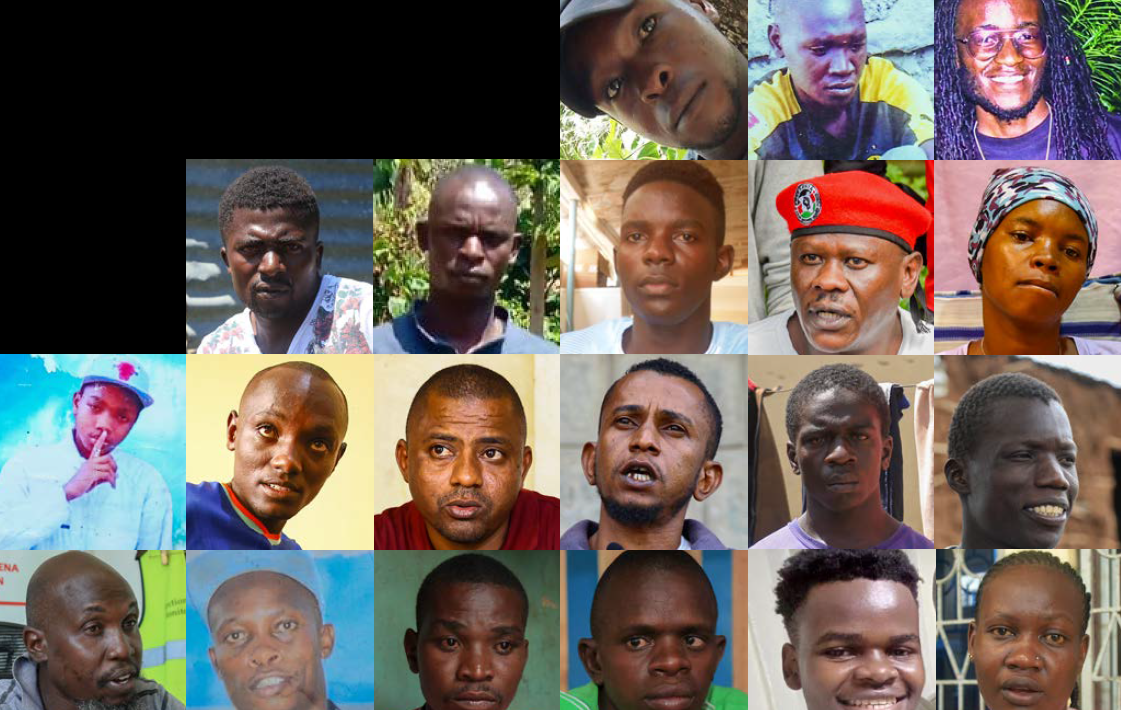
Amnesty International Kenya has called on the government to move beyond promises and take concrete action over enforced disappearances and police killings, saying 19 cases of enforced disappearance and 69 police killings have been documented in Kenya so far in 2026.
The rights organisation made the demand on Sunday, August 30, as Kenya joined the world in marking the International Day of the Victims of Enforced Disappearances.
Amnesty said the figures, compiled by the Missing Voices Coalition, demonstrate the continuing concerns around accountability and the conduct of security agencies.
The organisation's intervention comes days after President William Ruto said during celebrations marking the 16th anniversary of Kenya's Constitution that no Kenyan should lose their life, liberty or dignity for criticising the government, expressing an unpopular opinion or participating in a peaceful demonstration.

Amnesty welcomed the President's remarks but said they now needed to be followed by action.
“Words must now be matched with action,” the organisation said.
19 disappearances recorded
According to Amnesty, six cases of enforced disappearance were documented in Kenya in 2025, alongside 125 police killings.
In 2026, the organisation says 19 cases of enforced disappearance and 69 police killings have so far been recorded.
Amnesty said the figures should not be treated merely as statistics because each case represents an individual and a family seeking answers.
“Behind every number is a person whose liberty was taken away, a family left searching for answers, and a community forced to confront the consequences of impunity,” Amnesty said.
The figures cited by Amnesty come from Missing Voices, a coalition that tracks cases of police killings and enforced disappearances in Kenya. Its publicly available data records 125 police killings and six enforced disappearances for 2025.
35 cases verified by KNCHR
The concerns come against the backdrop of a separate process being undertaken by the Kenya National Commission on Human Rights (KNCHR).
Amnesty said KNCHR presented a national reparations framework and report at State House in Nairobi on June 15, 2026. The framework included 35 verified cases of enforced disappearance, alongside other violations linked to security operations and protests.
Amnesty said victims of enforced disappearance have yet to receive the reparations to which they are entitled, despite the government having established a process to compensate victims of violations arising from protests.
The organisation is now calling for the whereabouts of people who disappeared to be established and for families to receive information about what happened to their relatives.
Calls for investigations
Amnesty wants every allegation of enforced disappearance to be investigated promptly, independently and transparently.
It is also calling for people who remain unlawfully detained to be released or brought before an independent and impartial court.
Where there is sufficient evidence, the organisation wants suspects prosecuted through fair trials, regardless of their rank, position or affiliation.
It has further called for stronger command and individual accountability within security agencies, arguing that investigations should not stop with junior officers where evidence points to people who authorised, ordered, facilitated or concealed violations.
Amnesty is also asking for greater support and independence for oversight institutions, including the Independent Policing Oversight Authority (IPOA) and the Internal Affairs Unit.
Human rights and the 2027 election
The issue comes as Kenya moves towards the 2027 General Election, with political mobilisation already intensifying across the country.
Amnesty warned that enforced disappearances, arbitrary arrests and excessive use of force can discourage citizens from exercising their constitutional rights, including peaceful protest and criticism of government.
The organisation cited Article 29 of the Constitution, which protects people from arbitrary deprivation of freedom and torture, as well as Article 49 on the rights of arrested persons and Article 238, which requires national security to be exercised in accordance with the Constitution and the law.
Amnesty also called for protection of human rights defenders, journalists, lawyers, witnesses and families of victims against intimidation or reprisals when pursuing justice.
The organisation said accountability should apply to violations committed by both state and non-state actors and should be grounded in due process and the rule of law.
Government faces test of its commitment
President Ruto's recent comments on constitutional freedoms have therefore created a fresh test for the administration as rights organisations demand action on cases already documented.
Amnesty says the government's commitment should ultimately be measured not by statements but by whether missing people are accounted for, investigations are completed, perpetrators are prosecuted and victims receive reparations.
“No one should disappear for exercising their rights. No family should be left without answers. No perpetrator should enjoy impunity,” the organisation said.
The International Day of the Victims of Enforced Disappearances is observed every August 30. This year's observance also marks 20 years since the adoption of the International Convention for the Protection of All Persons from Enforced Disappearance.
Related Stories
- 5 Things You Must Know This Morning — Monday, August 31, 2026
- Amnesty demands action as Kenya records 19 disappearances, 69 police killings
- “Sikuheshimu na Sikuogopi,” Sifuna to William Ruto in Meru
Category: News · Related Topic: William Ruto
Related Video: Gachagua’s explosive Ruto scorecard: Debt, taxes, State capture and a government ‘that has failed’
Related Explainer: Fact Check: Did elephants save people during Nepal’s floods?
 Facebook
 Twitter / X
 WhatsApp
 LinkedIn
 Telegram
 Reddit