
NANYUKI, Kenya — A protest against a proposed United States-funded Ebola quarantine facility in central Kenya turned deadly this week, leaving two people dead and deepening tensions over a project that has sparked fierce public debate and legal challenges.
The deaths were confirmed on Tuesday by protest organiser Patrick Wahome and a security source cited by Reuters, a day after hundreds of residents took to the streets of Nanyuki to oppose plans to establish the facility at Laikipia Air Base.
The exact circumstances surrounding the fatalities remained unclear. By Tuesday afternoon, the National Police Service had not issued an official statement explaining how the two people died or whether any investigations had been launched.
The demonstrations began early Monday morning as residents marched through parts of the town carrying placards and leafy branches, demanding the cancellation of the proposed facility. Protesters questioned why Kenya had been selected to host the centre and voiced concerns about potential health risks to nearby communities.
"We want the facility closed by June 9," Mr Wahome told demonstrators during the protest.
Witnesses said crowds moved towards the air base, where they were blocked by military personnel. The resulting standoff lasted for roughly two hours before a senior official from the base addressed the gathering and appealed for calm.
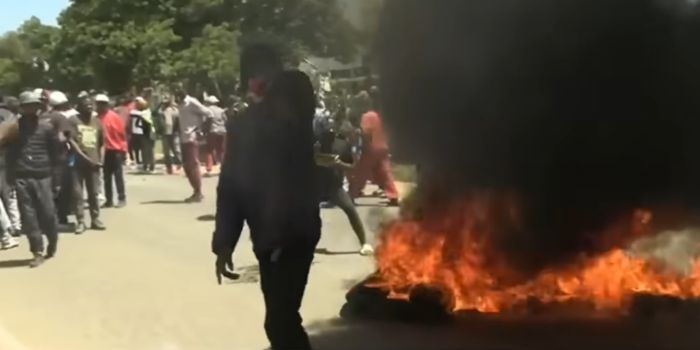
Videos circulating online showed burning barricades on roads across parts of Nanyuki, with thick black smoke rising above the town. Security officers were also seen firing during the unrest, though it remains unclear whether live ammunition or other crowd-control measures were used.
Residents of the Likii area said police later moved into affected neighbourhoods to restore order. Several reported seeing officers clear roads and escort people home as tensions persisted into the evening.
The unrest comes as the proposed Ebola facility faces growing legal and political scrutiny.
Last week, the High Court extended conservatory orders suspending the establishment of the centre pending the hearing of a petition filed by the Katiba Institute. The rights organisation has challenged the legality of the project, arguing that important constitutional and public interest questions must first be addressed before implementation can proceed.
The court orders remain in force while the case moves through the judicial process.
Despite public concern, President William Ruto has defended the proposed arrangement, arguing that cooperation with international partners would strengthen Kenya's ability to respond to future disease outbreaks.
Government officials have maintained that any public health partnership involving foreign nationals would be conducted within Kenya's legal framework and under strict health and safety protocols.
The controversy has intensified following reports that the United States has deployed a specialised Ebola response team to Kenya. According to statements from U.S. authorities, the team includes health professionals and technical experts tasked with supporting the monitoring and quarantine of American citizens departing the Democratic Republic of Congo, where Ebola cases have raised international concern.
For many residents in Nanyuki, however, assurances from both governments have done little to ease fears.
The prospect of hosting an Ebola-related facility has revived memories of pandemic-era restrictions and fuelled wider questions about transparency, public consultation and national health security.
As investigations continue into Monday's violence, attention is now shifting to both the court proceedings and the government's next steps. For families mourning those killed during the demonstrations, answers remain elusive.
What began as a protest over a public health facility has now become a national debate about trust, safety and the limits of international cooperation in times of crisis.
