
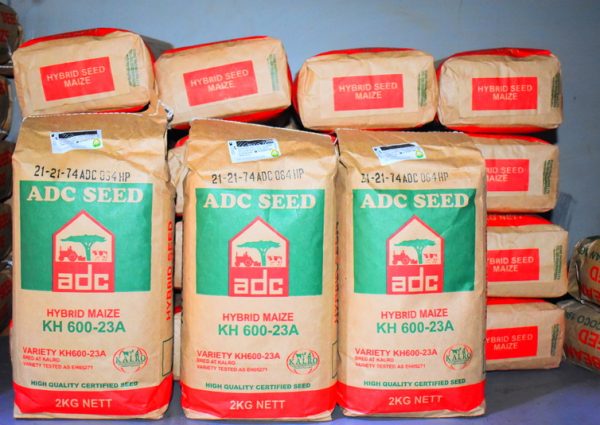
Kenya’s Agriculture Cabinet Secretary Mutahi Kagwe has called for treason charges against individuals selling fake seeds, describing the practice as an act of economic sabotage that endangers the country’s food security.
Speaking in Nyeri on Wednesday, November 5, during the launch of new Kenya Plant Health Inspectorate Service (KEPHIS) facilities, Kagwe said Parliament should consider passing laws to impose the harshest possible punishment on those involved in the illegal trade.
“Anyone selling fake seeds is deliberately sabotaging the country,” he told the gathering. “You are risking a national food crisis. That is economic sabotage, and it should be treated as treason.”
A Call for Stronger Laws
Kagwe’s remarks come amid growing concern about counterfeit agricultural inputs flooding the market. He announced a nationwide crackdown on sellers of fake seeds and unverified nursery materials, saying the government would no longer tolerate activities that threaten the livelihoods of farmers and the stability of the food chain.
“We will immediately arrest those involved,” he said, adding that security agencies had been instructed to intensify surveillance in key agricultural zones.
The CS urged farmers to buy only certified seeds and seedlings, warning that counterfeit products often lead to failed harvests and financial ruin. “When farmers plant fake seeds, they lose everything — time, money, and hope,” he said.
The Weight of Treason
Under Kenyan law, treason is one of the gravest offences, defined in the Penal Code (Cap 63) as a crime against the nation’s sovereignty. It includes waging war against the Republic, attempting to harm the President, aiding enemies of the state, or plotting to overthrow the government by force.
Conviction carries the death penalty, making it the country’s most severe punishment. The last people executed for treason were Hezekiah Ochuka and Pancras Oteyo Okumu, both involved in the failed 1982 coup attempt.
Although treason charges have occasionally been floated in political and security contexts since then, none have been successfully prosecuted in modern Kenya.
Protecting Farmers
Beyond counterfeit seeds, Kagwe warned that the government would pursue those vandalising farms and destroying cash crops, including coffee, avocado, and macadamia plantations.
“Even as you steal, use your brains,” he said, his tone sharp. “What will you steal tomorrow after you cut down the coffee trees? The long arm of the law will catch up with you.”
He also revealed plans to revive the agricultural police unit to protect farmers and their produce, noting that farm theft and crop destruction have become a growing concern in several counties.
The CS further cautioned against illegal coffee hawking, a practice he said undermines formal markets and exploits farmers. “Selling coffee for alcohol or quick cash is not trade — it’s theft of the farmer’s future,” he said.
Kagwe’s remarks mark one of the strongest warnings yet from the government on threats to Kenya’s agricultural integrity. His proposal to equate fake seed sales with treason underscores the administration’s determination to defend food security — by the law, and, if necessary, by the sword of justice.