
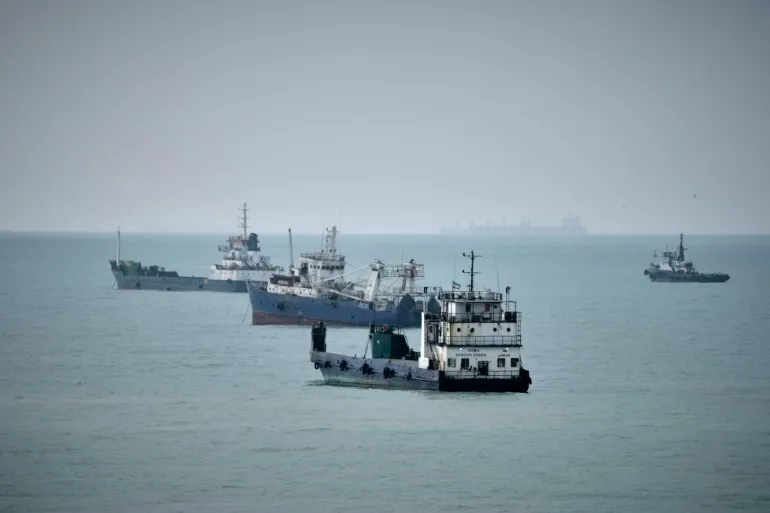
The renewed US-Iran fighting is again putting pressure on global oil markets and disrupting shipping through the Strait of Hormuz. For Kenya, the war may be thousands of kilometres away, but its effects could eventually reach petrol stations, matatu fares, supermarket shelves and household budgets.
Global oil prices have risen sharply following renewed military exchanges between the United States and Iran.
Brent crude jumped $4.16, or 4.6 per cent, to settle at $94.65 a barrel on September 1 as traders reacted to fears of further disruption to Middle East oil supplies. Prices remained elevated later in the week, putting Brent on course for an approximately 8 per cent weekly gain.
The immediate concern is the Strait of Hormuz, the narrow waterway connecting the Persian Gulf with global markets.

Shipping traffic remains well below recent levels. Reuters reported that only four commodity vessels passed through the strait on Tuesday, compared with 10 the previous day and a 10-day average of around 13.
The risks have become more tangible after two supertankers carrying Saudi crude were struck while passing through the waterway this week.
For Kenya, this is no longer simply a Middle East geopolitical story.
Why Kenya is exposed
Kenya imports virtually all the petroleum products consumed in the country.
That means international oil and refined-product prices, freight, insurance, exchange rates and other import costs eventually feed into the price motorists pay at the pump.
The current EPRA price cycle, running from August 15 to September 14, puts a litre of super petrol in Nairobi at KSh214.03, diesel at KSh217.86 and kerosene at KSh191.38.
Those prices do not change immediately every time Brent crude rises.
Kenya's regulated fuel-pricing system creates a lag between movements in international markets and what appears at local petrol stations.
That means motorists may not feel this week's oil-market shock immediately. The more important question is whether elevated crude, refined-product, freight and insurance costs persist long enough to enter subsequent EPRA pricing cycles.
Why Hormuz matters to someone buying unga in Nairobi
The connection does not stop at petrol.
Diesel powers trucks transporting food from farms to markets, buses and matatus carrying workers, tractors and other agricultural machinery, generators and large parts of Kenya's logistics network.
If diesel becomes substantially more expensive, transporters face higher operating costs.
Some of those costs can eventually be passed to consumers.
That means an oil shock can move through the economy roughly like this:
Iran conflict → shipping disruption → higher oil/fuel import costs → higher Kenyan pump prices → higher transport and production costs → pressure on food and other consumer prices.
This comes at a particularly difficult time for Kenya because households are already confronting pressure on food supplies following poor rainfall and reduced maize production.
A simultaneous food and energy shock would therefore be more painful than either problem in isolation.
The September 15 EPRA review will be closely watched
Kenya's next pump-price review is expected around September 14-15.
However, consumers should be cautious about assuming that this week's increase in oil prices automatically means a large increase in that review.
Fuel cargoes are purchased and priced over time, and government stabilisation measures, taxes, the shilling and other components also affect the final pump price.
The bigger risk is persistence.
If fighting continues, shipping through Hormuz remains constrained and crude prices stay elevated, pressure could build into later Kenyan pricing cycles.
That makes the next several weeks more important than a single day's movement in Brent crude.
Frequently Asked Questions
Will fuel prices increase in Kenya because of the Iran war?
They could, but an increase is not automatic. International petroleum prices, freight, insurance costs, the Kenya shilling, taxes and government interventions all influence the final EPRA pump price.
How much is petrol in Kenya right now?
For the August 15-September 14 pricing period, super petrol costs KSh214.03 per litre in Nairobi. Diesel is KSh217.86 and kerosene KSh191.38. Prices vary by location.
When will Kenya announce the next fuel prices?
EPRA normally publishes new maximum pump prices around the 14th of every month, taking effect from the 15th.
Could petrol reach KSh250 per litre?
It is possible under sufficiently severe market conditions, but there is currently no basis for stating that KSh250 is Kenya's confirmed next pump price. It would depend on international fuel costs, exchange rates, taxes, subsidies or stabilisation measures and other components of EPRA's formula.
What is the Strait of Hormuz?
It is a narrow maritime passage connecting the Persian Gulf with the Gulf of Oman and global shipping routes. It is strategically important because large quantities of oil and petroleum products pass through it.
Why does the Strait of Hormuz affect Kenya?
Kenya depends on imported petroleum. Disruption to major global supply routes can raise the cost of oil, refined fuel, shipping and insurance, eventually affecting Kenya's import bill.
Could matatu fares increase?
Potentially. Fuel is a major operating expense for public transport, but fare changes are determined by individual operators and market conditions rather than automatically following an EPRA adjustment.
Could the Iran war make food more expensive in Kenya?
Yes, indirectly. Higher diesel prices can increase the cost of transporting agricultural products and manufactured goods. Kenya is also dealing with separate pressure on maize and other food supplies, which could compound the impact.
Will the September EPRA review definitely increase prices?
Not necessarily. A recent rise in crude oil does not translate directly or immediately into the next Kenyan pump-price review.
What should Kenyans watch next?
The key indicators are Brent crude prices, shipping traffic through Hormuz, attacks on oil infrastructure and tankers, the Kenya shilling, landed petroleum costs and EPRA's next pump-price announcement.
What happens next?
The biggest danger to Kenya is not necessarily one dramatic oil-price spike.
It is a prolonged conflict.
If the Strait of Hormuz remains disrupted and oil prices stay high for weeks, Kenya could face higher fuel-import costs at precisely the moment the country is also confronting pressure on food supplies.
For Kenyan households, therefore, the distance between the Persian Gulf and the supermarket checkout may be shorter than it appears.
You may also like
Category: International
Related Video: Dolly Parton’s Family Announces Her Passing in Emotional Tribute
Related Explainer: Kenya’s inflation holds near 30-month high as transport and food costs squeeze households
 Facebook
 Twitter / X
 WhatsApp
 LinkedIn
 Telegram
 Reddit