
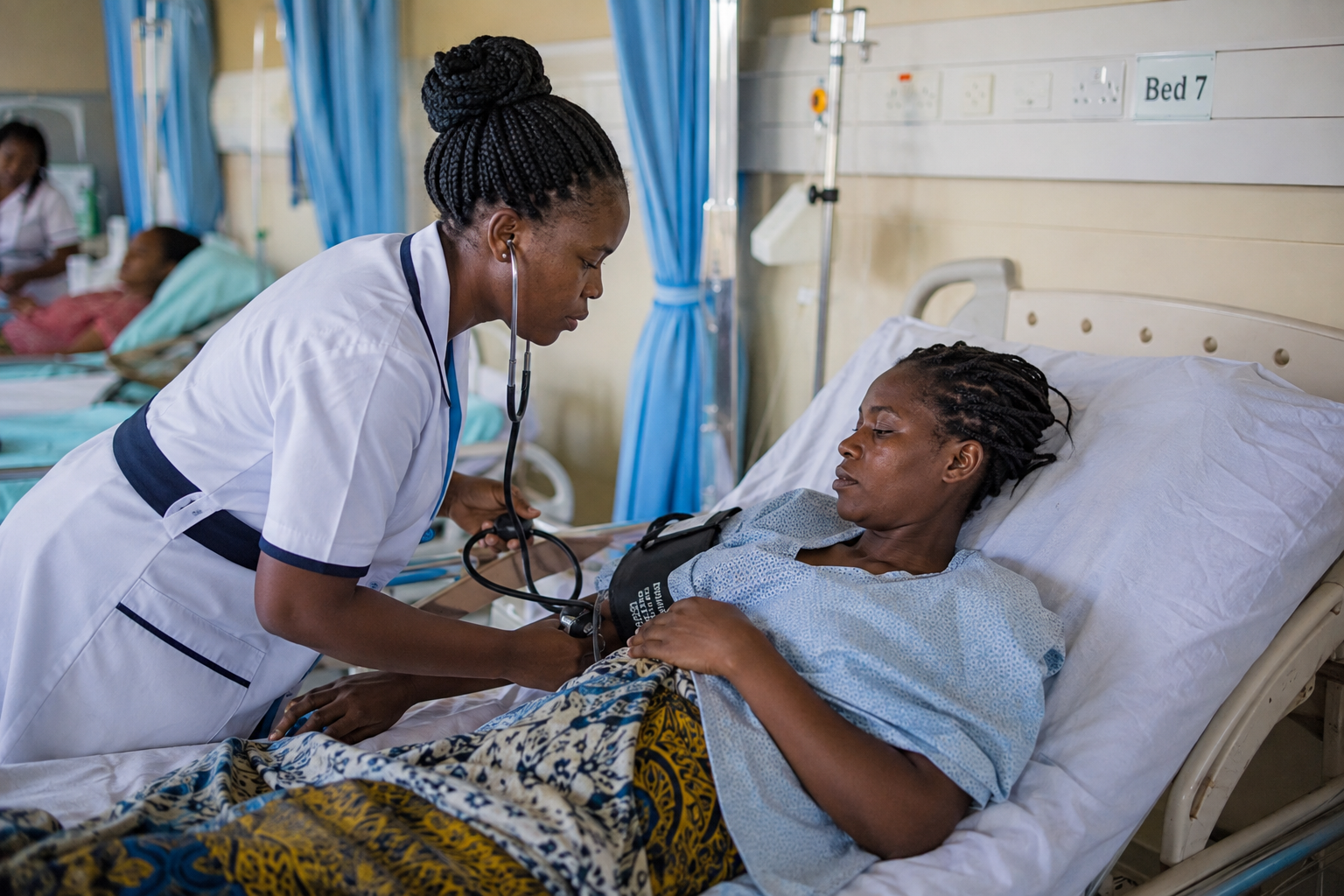
Kenya recorded fewer maternal and newborn deaths in the last financial year, but a sharp decline in women giving birth under the care of skilled health professionals is raising questions over whether the country is making sustainable progress in maternal healthcare.
The latest State of Devolution report by the Council of Governors shows reported maternal deaths fell by 6.8 per cent, from 2,851 in the 2024/2025 financial year to 2,656 in 2025/2026 — 195 fewer deaths.
Neonatal deaths also declined significantly, falling from 6,909 to 5,777 over the same period.
On the surface, the figures point to progress in Kenya's longstanding battle against preventable deaths during pregnancy and childbirth.

But another set of numbers in the report complicates that picture.
The number of deliveries attended by skilled health professionals fell by about 23 per cent, from 709,281 to 543,237.
Women completing recommended antenatal care visits also declined by about 19 per cent, from 459,489 to 368,585.
That means fewer maternal deaths are being reported at the same time that substantially fewer women are being recorded as receiving some of the healthcare interventions considered critical to preventing those deaths.
Fewer deaths, but fewer women receiving care
The apparent contradiction matters because pregnancy and childbirth complications can develop rapidly.
Postpartum haemorrhage, hypertensive disorders such as pre-eclampsia and eclampsia, infections and obstructed labour can become fatal without timely intervention.
WHO's latest Kenya assessment puts the country's maternal mortality ratio at an estimated 355 deaths for every 100,000 live births.
Despite progress over the past two decades, WHO says preventable conditions including postpartum haemorrhage and hypertensive disorders continue to contribute significantly to maternal deaths.
WHO estimates skilled birth attendance nationally at 89 per cent, while about 66 per cent of women receive at least four antenatal care visits.
This makes the decline reported in county service numbers particularly important to investigate.
It does not necessarily mean hundreds of thousands more Kenyan women are giving birth at home. Changes in reporting, data systems, facility utilisation or other administrative factors could contribute to the decline.
But if it reflects a genuine reduction in women accessing facilities, it would represent a significant warning for Kenya's maternal health programme.
Why antenatal care matters
The decline in antenatal attendance is equally concerning.
Antenatal visits allow healthcare workers to identify potentially dangerous conditions before they become emergencies.
Women can be screened for anaemia, hypertension, infections, HIV, tuberculosis and other conditions while receiving preventive interventions and preparing for delivery.
Under the former Linda Mama programme, the maternity package included antenatal screening, delivery services and postnatal care.
Research published in BMJ Open in 2024 found that Linda Mama improved geographical and financial access to maternal healthcare.
But the programme also exposed weaknesses within facilities, including staff shortages, increased workloads, inadequate equipment and supplies, overcrowding and problems with the quality and dignity of care.
Those structural problems have not disappeared with the introduction of the Social Health Authority.
The SHA transition
The decline in recorded maternity service utilisation comes during Kenya's transition from the National Health Insurance Fund to the Social Health Authority.
The former Linda Mama programme has been incorporated into the government's new maternal healthcare framework under SHA.
The government disputes claims that free maternity care was abolished.
President William Ruto has said Linda Mama was expanded into Linda Jamii, while the Ministry of Health says the new arrangement is intended to provide care throughout pregnancy, delivery and the postnatal period.
Under the new system, maternal services include antenatal care, normal and Caesarean deliveries, postnatal care and essential newborn services.
Government officials have also said SHA is intended to improve financial protection for households and expand access to healthcare.
However, the fall in skilled deliveries should prompt closer examination of whether the transition has created practical barriers for some mothers.
The available national data does not establish that SHA caused the decline.
Distance to health facilities, staffing shortages, referral failures, availability of medicines and blood, transport costs, quality of care and changes in health-data reporting could also influence utilisation.
What the figures do establish is the need to determine why hundreds of thousands fewer skilled deliveries and antenatal visits were recorded.
Penina Zawadi's death exposes the cost of delays
Behind the national statistics are individual cases that illustrate how quickly gaps in maternity care can become fatal.
In Kilifi County, 29-year-old Penina Zawadi died in June after suffering severe bleeding following a Caesarean delivery.
According to Associated Press reporting based on interviews with her family, Zawadi had been healthy during her pregnancy.
Her family said she suffered severe bleeding after giving birth and spent roughly four hours at Malindi Hospital while awaiting transfer to Kilifi County Referral Hospital.
She later underwent surgery to remove her uterus in an attempt to stop the bleeding but spent several days in intensive care before dying on June 23.
Her case illustrates what maternal health experts describe as the danger of delays: delays in recognising complications, reaching appropriate care and receiving effective treatment.
Kilifi's maternal mortality ratio has been reported at around 532 deaths per 100,000 live births, considerably higher than the national estimate of 355.
The disparities demonstrate why national averages can conceal vastly different experiences for women depending on where they live.
A health workforce under pressure
Facilities cannot provide safe maternity care simply by getting pregnant women through their doors.
They must also have enough qualified personnel, medicines, blood products, operating theatres, ambulances, equipment and referral systems available when emergencies occur.
This is particularly important in maternity units, which require round-the-clock capacity.
A woman experiencing severe postpartum haemorrhage cannot wait until the next working day for blood, an ambulance, an anaesthetist or an operating theatre.
Previous research into Kenya's free maternity programme found that expanded access increased pressure on health workers and facilities, with staff shortages, equipment deficiencies and heavy workloads affecting the quality of care.
The challenge for Kenya is therefore not merely getting more women into facilities, but ensuring those facilities are capable of saving them once they arrive.
Government targets 140 maternal deaths by 2028
The government is now pursuing a significantly more ambitious maternal health target.
Under the Every Woman, Every Newborn, Everywhere Kenya Maternal and Newborn Health Acceleration Plan 2026–2028, Kenya wants to reduce maternal mortality to no more than 140 deaths per 100,000 live births by 2028 and neonatal mortality to no more than 12 deaths per 1,000 live births.
The Ministry of Health has also announced plans to establish 10 specialised comprehensive maternal and newborn health facilities in counties carrying some of the country's highest burdens of preventable deaths.
The government says the facilities will form part of targeted investments intended to accelerate reductions in maternal and newborn mortality.
Achieving the 2028 target, however, would require Kenya to cut maternal mortality dramatically from the current estimated 355 deaths per 100,000 live births.
The numbers Kenya now needs to explain
The 6.8 per cent reduction in reported maternal deaths is significant.
So is the fall in neonatal deaths.
But those improvements should not obscure another potentially troubling trend.
If fewer women are receiving antenatal care and fewer births are being attended by skilled professionals, Kenya needs to establish why.
Part of the answer may lie in changes to reporting systems. Part may involve the transition to SHA. Geography, staffing, transport, quality of care and public confidence in facilities may also be contributing.
The data alone cannot determine which explanation is responsible.
What is clear is that maternal mortality cannot be reduced sustainably by counting deaths after they occur.
The stronger measure of Kenya's maternal healthcare system will be whether a pregnant woman — whether in Nairobi, Kilifi, Turkana or any other part of the country — can recognise a complication, reach a functioning facility, receive skilled treatment without financial barriers and return home safely with her baby.
Kenya's latest numbers offer reason for cautious optimism.
But the sharp decline in recorded skilled deliveries and antenatal care is a warning that the story behind those numbers needs closer scrutiny.
You may also like
Category: Health · Related Topic: Social Health Authority (SHA)
Related Video: Murkomen Says Kenya Is Safe: “Stop Creating a Crisis” | Political Goons & Security Under Scrutiny
Related Explainer: EXPLAINER: Why Kenya’s aviation workers are striking — and what travellers need to know
 Facebook
 Twitter / X
 WhatsApp
 LinkedIn
 Telegram
 Reddit