
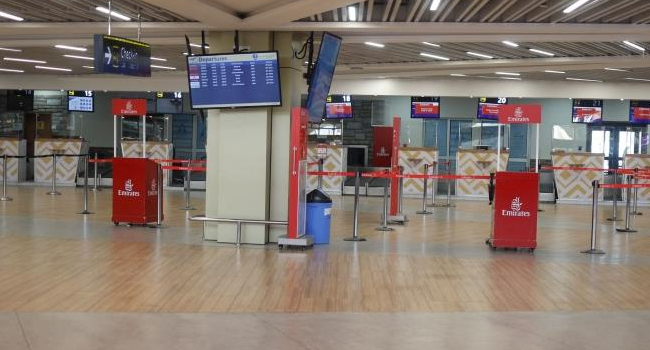
Thousands of travellers have been caught up in a fresh aviation workers’ strike that has disrupted flights at Kenya’s main airports, with negotiations between the union and government still underway.
The Kenya Aviation Workers Union (KAWU) began industrial action on Sunday, August 30, after saying commitments made in a July framework agreement had not been honoured.
By Monday, the disruption had entered its second day, with passengers stranded overnight at Jomo Kenyatta International Airport (JKIA), while airlines reported delays, cancellations and rescheduled flights.
The dispute is not simply about flight schedules. At its heart are long-running disagreements over pay, collective bargaining agreements, employment terms and the management of aviation agencies.
Why are workers on strike?
KAWU says the latest action followed the breakdown of efforts to resolve grievances covered by a framework agreement reached on July 27.
The agreement had suspended an earlier strike threat and provided time for the parties to negotiate outstanding issues.
The union says key commitments were not implemented, prompting workers to resume industrial action.
KAWU Secretary-General Moss Ndiema has also raised concerns over the failure to conclude a collective bargaining agreement with the Kenya Civil Aviation Authority (KCAA), as well as other employment and union-related issues.
The union has also complained about pay reviews and working conditions. Ndiema has said some KCAA employees have gone years without a salary review.
KAWU members affected by the dispute include workers at the Kenya Airports Authority (KAA), KCAA and Jambojet.
Why does a workers’ strike affect flights?
Airports depend on several groups working together. Air traffic controllers, airport operations staff, ground teams and airline personnel all play different roles in keeping flights moving safely.
When industrial action slows critical services, airlines cannot simply continue with normal schedules.
KCAA has confirmed disruption to air traffic control services, while airlines have been forced to delay, cancel or reschedule some flights.
The result has been a growing backlog.
Reuters reported that some passengers had been stranded for more than 12 hours, while Rwanda’s national carrier RwandAir cancelled two flights because of reported air traffic control problems in Nairobi.
What is happening at JKIA?
JKIA has been the main focus of the disruption.
Hundreds of passengers spent Sunday night at the airport, with some airlines arranging hotel accommodation for affected travellers.
KAA has acknowledged that disruption to air traffic control services is affecting operations and has urged passengers to confirm their flight status with their airlines before travelling to the airport.
Kenya Airways said on Sunday that its scheduled flights were operating with average delays of two to three hours because of constraints affecting air traffic control.
The airline has advised passengers to check their bookings before heading to JKIA and said customers affected by the disruption could change or reschedule flights without penalty.
What should travellers do?
The most important advice is simple: do not assume your flight is operating normally.
Before leaving for the airport:
- Check your flight directly with the airline.
- Look for SMS, email or app notifications.
- If your flight has been cancelled or moved, contact the airline before travelling to JKIA.
- If you are connecting to another flight, check both sectors of your journey.
- Keep receipts for reasonable expenses caused by the disruption.
- If you have travel insurance, check what your policy covers.
KAA has specifically asked passengers to confirm their flight status before travelling to the airport.
Who pays if your flight is cancelled?
There is no single answer.
What a passenger can recover depends on the reason for the disruption, the airline's terms and the applicable passenger-rights rules.
An airline may offer rebooking or a refund when a flight is cancelled. Assistance with accommodation, meals or other costs can depend on the circumstances and the applicable rules.
Passengers should therefore avoid assuming that every expense will automatically be reimbursed.
Kenya Airways, for example, has said customers affected by the current disruption can change or reschedule their flights without a penalty.
Travellers should keep evidence of cancelled bookings, revised tickets and expenses if they later need to make a claim.
What about travel insurance?
Insurance may cover some losses that fall outside an airline's obligations.
Depending on the policy, this can include certain accommodation costs, missed connections and other non-refundable expenses.
But cover varies widely. A policy may also exclude industrial action if it was already known or foreseeable when the policy was purchased.
Travellers should therefore check the specific wording of their policy rather than assuming they are covered.
Is the strike likely to continue?
As of Monday, negotiations were still underway, but the strike remained in effect.
KAWU Secretary-General Moss Ndiema said talks held on Sunday had not resolved the dispute. Further discussions were expected as the government sought to end the disruption.
For now, the impact will depend largely on how quickly the parties can reach an agreement and restore normal air traffic control and airport operations.
For passengers, the safest approach is to plan for possible delays and confirm every flight before setting out.
For Kenya, the dispute also carries a wider economic risk. JKIA is a major regional aviation hub, supporting tourism, trade and time-sensitive exports. A prolonged disruption could affect businesses well beyond the airport.
The immediate priority, however, is getting passengers moving again while addressing the workplace grievances that triggered the strike in the first place.
You may also like
Category: Explainers
Related Video: What Dangote’s proposed Lamu oil refinery could mean for East Africa
Related Explainer: Explainer: Why Kenya is moving hospitals to HMIS and what it means for SHA patients
About the Author
Maureen Onyango is a journalist passionate about storytelling, life coaching and spiritual lessons. She studied at the Kenya Institute of Management and enjoys telling stories that inform, inspire and empower communities.
 Facebook
 Twitter / X
 WhatsApp
 LinkedIn
 Telegram
 Reddit