
The Kenya National Examinations Council (KNEC) is racing against time to secure billions of shillings needed to administer this year's national examinations, raising fresh concerns over the financing of one of the country's largest education exercises.
Appearing before the National Assembly's Education Committee, KNEC officials revealed that the council requires Sh16.6 billion to conduct the 2026 examination cycle but has received only Sh9.9 billion, leaving a funding gap of Sh6.7 billion.
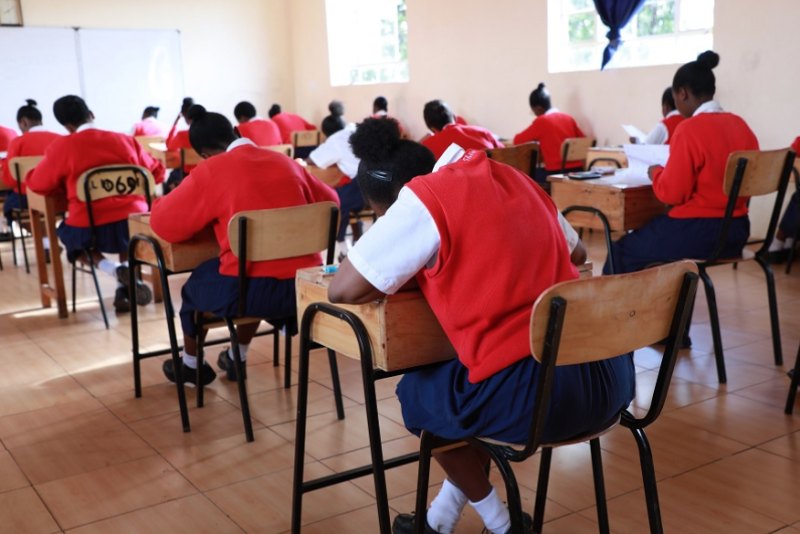
The shortfall comes as more than 3.6 million learners prepare to sit the Kenya Certificate of Secondary Education (KCSE), Kenya Primary School Education Assessment (KPSEA), Kenya Junior School Education Assessment (KJSEA) and Competency-Based Education (CBE) school-based assessments.
While Parliament was assured that preparations remain on course, education officials acknowledged that adequate funding remains essential to guarantee smooth administration of the examinations.
Ministry Seeks More Funding
Basic Education Principal Secretary John Ololtuaa told MPs that the Ministry of Education would continue engaging the National Treasury and Parliament for additional resources.
"We shall keep coming back to you for additional resources to enable the council to effectively and efficiently discharge its mandate, which depends substantially on the adequacy and timeliness of funding for examinations and assessments," Ololtuaa told the committee chaired by Tinderet MP Julius Melly.
The funding gap reflects the growing cost of administering national examinations, including the printing of examination papers, transport logistics, security, storage and payments for thousands of professionals deployed during the exercise.
KNEC also disclosed that it is carrying a Sh2.57 billion pending bill from the previous financial year, which it plans to settle once additional funds become available.
More Than 3.6 Million Candidates Registered
Despite the financial challenges, KNEC said preparations for this year's examinations have advanced significantly.
Candidate registration has already been verified ahead of the security printing of examination papers.
According to the council, 3,634,846 learners have been registered, comprising:
- 1,380,463 candidates for KPSEA
- 1,206,028 candidates for KJSEA
- 1,048,355 candidates for KCSE
The validated data will now be used to print, package and distribute examination materials to centres across the country.
Digital Exams Part of Long-Term Plan
Facing steadily rising operational costs, KNEC also unveiled plans to gradually introduce paperless examinations in the coming years.
The council says examination printing remains one of its biggest expenses, alongside transport and security.
Officials believe digital assessments could eventually reduce expenditure while improving efficiency and modernising Kenya's examination system.
The move would, however, require substantial investment in digital infrastructure, reliable internet connectivity and adequate ICT resources across schools before full implementation becomes possible.
Treasury Releases Funds for Delayed Payments
The funding concerns emerge just as KNEC begins clearing long-overdue payments owed to personnel who conducted the 2025 examinations.
Chief Executive David Njengere told MPs that the National Treasury had released Sh4.9 billion, enabling the council to pay invigilators, centre managers, drivers, security officers and other contracted staff.
"We received Sh4.9 billion today, and by Friday we will have paid all invigilators, centre managers, security personnel, drivers and any other contracted professionals for the 2025 examinations and assessments," Njengere said.
The payments end an eight-month wait that had sparked frustration among teachers and examination officials.
Earlier, examiners who marked the 2025 examinations also received their dues after Treasury released an additional Sh1.5 billion.
Teachers' unions had warned that continued delays risked undermining participation in this year's examination exercise, with some threatening to advise members against invigilation duties until outstanding payments were settled.
Pressure on Examination Funding
The latest disclosures also highlight broader funding pressures within Kenya's education sector.
In the previous financial year, the State Department for Basic Education requested Sh12.7 billion for examinations but received just Sh5.9 billion in the initial allocation. Although supplementary funding later increased the available resources, a significant portion went towards settling previous unpaid bills.
With examination candidate numbers continuing to rise under the Competency-Based Education framework, education officials say predictable and timely financing will be critical to maintaining the integrity and smooth delivery of national assessments.
For now, KNEC insists preparations remain on schedule, but Parliament will likely face renewed pressure to bridge the funding gap before the examination season begins.
Related Stories
- KNEC Opens Digital Access to 2025 KCSE Certificates in Major Shift Towards Paperless Academic Records
- Skills Over Certificates: Why Kenya’s Youth Must Rethink the Race for Jobs
- Grade 9 Learners to Begin Senior School Selection on August 24
Category: Education
 Facebook
 Twitter / X
 WhatsApp
 LinkedIn
 Telegram
 Reddit