
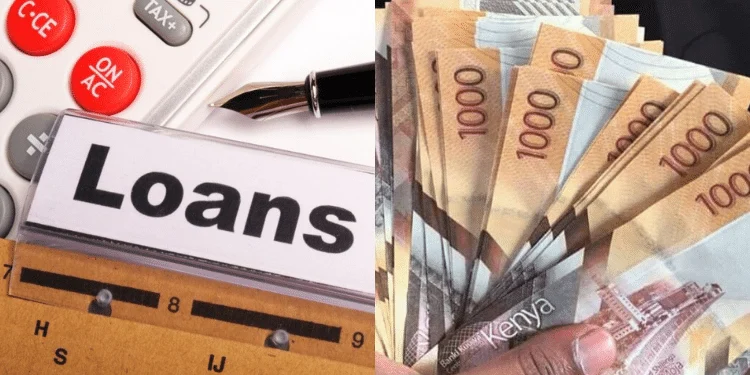
Kenya's banks are sitting on about KSh2.2 trillion worth of government securities — and the World Bank is warning that the growing exposure deserves closer attention.
The figure is striking because it means government debt now represents roughly 27% of total banking-sector assets and about 35% of Kenya's domestic debt, according to the World Bank's July 2026 Kenya Economic Update.
But there is an important detail that could easily get lost in the headlines:
Kenya's banking sector is not being described as unstable.

The World Bank says banks remain broadly stable, with strong liquidity and capital buffers. The concern is what could happen if banks become increasingly dependent on lending to the government at a time when Kenya is already carrying heavy public debt.
And that raises a question ordinary Kenyans should care about:
What does this mean for your loan, your business and your savings?
The KSh2.2 trillion question
When the Kenyan government needs to raise money locally, it issues securities such as Treasury bills and bonds.
Banks are among the biggest buyers.
For a bank, government securities can be attractive because they offer a relatively predictable return and can be easier to manage than lending to thousands of individual borrowers and businesses.
The result is a financial trade-off.
A bank has money available to deploy.
It can lend that money to:
-
a small business;
-
a farmer;
-
a home buyer;
-
a manufacturer;
-
a consumer;
or it can invest in government securities.
The more attractive government debt becomes relative to private-sector lending, the greater the possibility that private businesses and households could face tighter access to credit.
That is the crowding-out risk highlighted by the World Bank.
Is your bank refusing to lend?
Not necessarily.
In fact, the latest numbers show the opposite.
Commercial-bank lending to the private sector grew 10.2% in July 2026, compared with 10.6% in June, according to data reported from the Central Bank of Kenya.
Average commercial-bank lending rates also fell to around 14.3% in July, down from 14.4% in June and substantially below the 17.2% recorded in November 2024.
That means credit conditions have been improving.
So the World Bank's warning is not saying that Kenyan banks have stopped lending.
It is warning about concentration and future risk.
Why would banks prefer government debt?
Imagine a bank has KSh1 billion to invest.
One option is to lend the money to hundreds of businesses.
That requires:
-
assessing borrowers;
-
monitoring repayments;
-
managing defaults;
-
recovering collateral;
-
dealing with non-performing loans.
Another option is to buy government securities.
For banks, government paper can provide a more predictable investment and can be easier to manage.
This creates a powerful incentive when the government is borrowing heavily.
The World Bank says Kenya's increased reliance on domestic borrowing is likely to put pressure on private-sector credit.
What happens if government borrowing keeps rising?
This is where the issue becomes bigger than banking.
Kenya's public debt remains elevated.
The World Bank says public debt was 68.9% of GDP in FY2024/25, while domestic borrowing accounted for more than 56% of total debt. It also warns that interest payments remain high.
Kenya is also planning substantial financing through both domestic and international markets.
Reuters reported this month that the government is considering several financing options, including a proposed $300 million Panda bond, an $815 million Eurobond and borrowing from Japan, among other measures.
The more government depends on domestic markets, the more important the relationship between the Treasury and commercial banks becomes.
What does this mean for your loan?
The immediate answer is:
It does not automatically mean your loan will become more expensive.
In fact, average lending rates have recently been falling.
But over the longer term, heavy government borrowing can put pressure on the pool of money available to the private sector.
That can matter particularly for borrowers who are considered higher risk.
A bank may respond by:
-
demanding more collateral;
-
reducing the amount it is willing to lend;
-
shortening repayment periods;
-
increasing the risk premium on certain borrowers;
-
becoming more selective about who qualifies.
Small and medium-sized businesses could be particularly exposed because they often have fewer financing options.
And what about savings?
This is where the story gets more complicated.
Government securities are not inherently bad for banks.
They can provide a relatively stable asset and contribute to financial-sector liquidity and resilience.
A strong banking system needs safe assets.
The issue is how much exposure is too much.
The World Bank's concern is that elevated sovereign exposure creates a link between the health of Kenya's government finances and the health of the banking system.
In simple terms:
If the government becomes financially weaker, banks holding large amounts of government debt could also face greater risk.
That does not mean Kenyan banks are about to collapse.
There is no such warning from the World Bank.
It means regulators and banks need to manage the concentration carefully.
There is another warning sign: bad loans
The World Bank says the banking sector's gross non-performing-loan ratio stood at 15.6% in March 2026, although that was down from 17.4% a year earlier.
More recent CBK reporting indicates further improvement in loan quality, with the ratio falling to about 14.6% in July.
That improvement matters.
It suggests that the banking system is not simply accumulating risk across every part of its balance sheet.
But the combination of large government exposure + significant non-performing loans + high public debt is precisely why the World Bank wants the situation watched closely.
The good news for borrowers
There is also a positive side to the latest banking numbers.
Kenya's monetary policy has become significantly easier.
The Central Bank Rate is currently 8.75%, while commercial-bank lending rates have been falling.
Private-sector credit growth has also returned to double digits.
That means businesses and households are beginning to benefit from cheaper credit.
The challenge is making sure that recovery is not undermined by the government's growing appetite for domestic borrowing.
The bigger question: Who gets Kenya's money?
This is ultimately the question behind the World Bank warning.
Kenya has limited financial resources.
The government needs money to finance its budget.
Businesses need money to expand.
Farmers need financing.
Young people need mortgages and business loans.
Manufacturers need working capital.
Small businesses need overdrafts.
If an increasingly large share of available domestic financing flows into government securities, there could be less room for private investment.
That is what economists mean by crowding out.
And it is why a seemingly technical statistic — KSh2.2 trillion in government securities held by banks — matters to ordinary Kenyans.
Should Kenyans be worried?
Not about their bank collapsing because of this warning.
The World Bank explicitly describes Kenya's banking sector as broadly stable, supported by strong liquidity and capital buffers.
But Kenyans should pay attention to what happens next.
Three numbers will be particularly important:
1. Government borrowing
How much more money does Treasury raise domestically?
2. Bank exposure
Does the amount banks hold in government securities continue rising?
3. Private-sector credit
Do businesses and households continue receiving more loans — or does credit growth begin to slow?
Together, those numbers will tell us whether Kenya's banking system is simply investing heavily in government debt or whether government borrowing is beginning to squeeze the private economy.
The bottom line
Kenyan banks are not currently being declared unsafe.
But the World Bank has identified a financial relationship that deserves attention.
Banks hold about KSh2.2 trillion in government securities, while Kenya continues to rely heavily on domestic borrowing to finance its budget.
At the same time, private-sector lending is recovering and borrowing costs are falling.
That creates a crucial test for Kenya's economy:
Can the government continue raising the money it needs without crowding out the businesses and households that need credit to grow?
For ordinary Kenyans, that is ultimately what this KSh2.2 trillion warning is about.
What LiveNow Africa will watch next
-
Whether banks increase or reduce their holdings of government securities.
-
Treasury's domestic borrowing programme.
-
Commercial-bank lending rates.
-
Private-sector credit growth.
-
Non-performing loans.
-
The government's debt-service costs.
-
Whether SMEs gain or lose access to affordable credit.
This is a developing economic story. LiveNow Africa will update the figures as new Treasury and CBK data become available.
Related Stories
- From 70 Seats to 26: Ruto’s Presidential Jet Gets a Major Makeover
- World Bank bars firm behind Kenya’s eCitizen platform over procurement violations
- Finance Bill 2027: What Kenyans Can Still Change Before the Tax Bill Reaches Parliament
Category: Business
 Facebook
 Twitter / X
 WhatsApp
 LinkedIn
 Telegram
 Reddit