
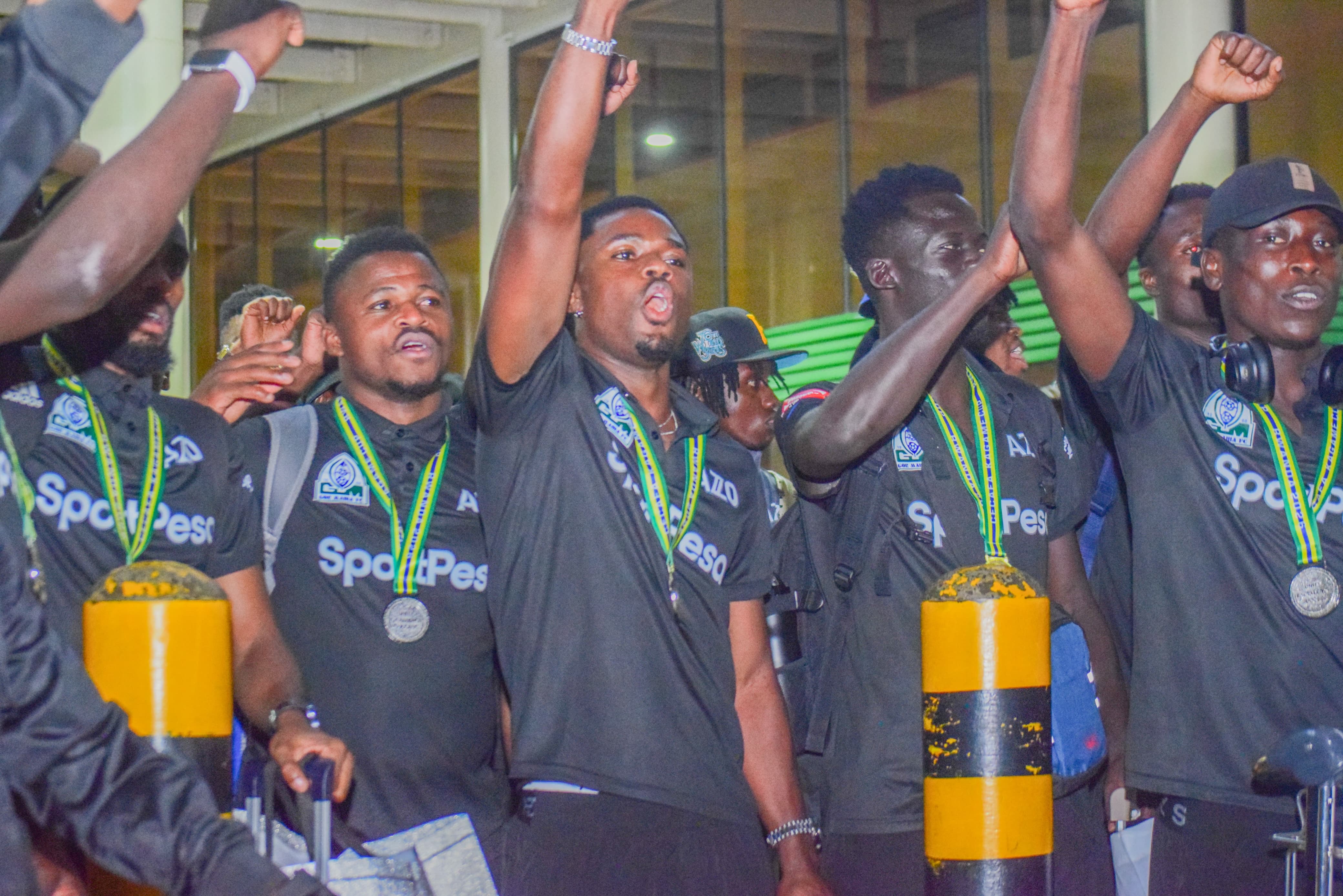
Gor Mahia may have returned from Rwanda without the CECAFA Kagame Cup, but its run to the final has exposed something more important than the disappointment of losing a trophy.
For a club that has spent years oscillating between moments of brilliance and questions over finances, administration and squad stability, the 2026 CECAFA campaign offered an early test of whether Gor Mahia is becoming a more professionally organised football institution.
The answer is not yet complete. But there are signs that something is changing.
Gor Mahia lost 2-1 to Rwanda’s Rayon Sports after extra time in Friday’s final at Amahoro Stadium, ending the Kenyan champions’ attempt to win the regional title for the first time since 1985. Rayon Sports went unbeaten throughout the tournament.

Yet Gor’s journey to the final was significant.
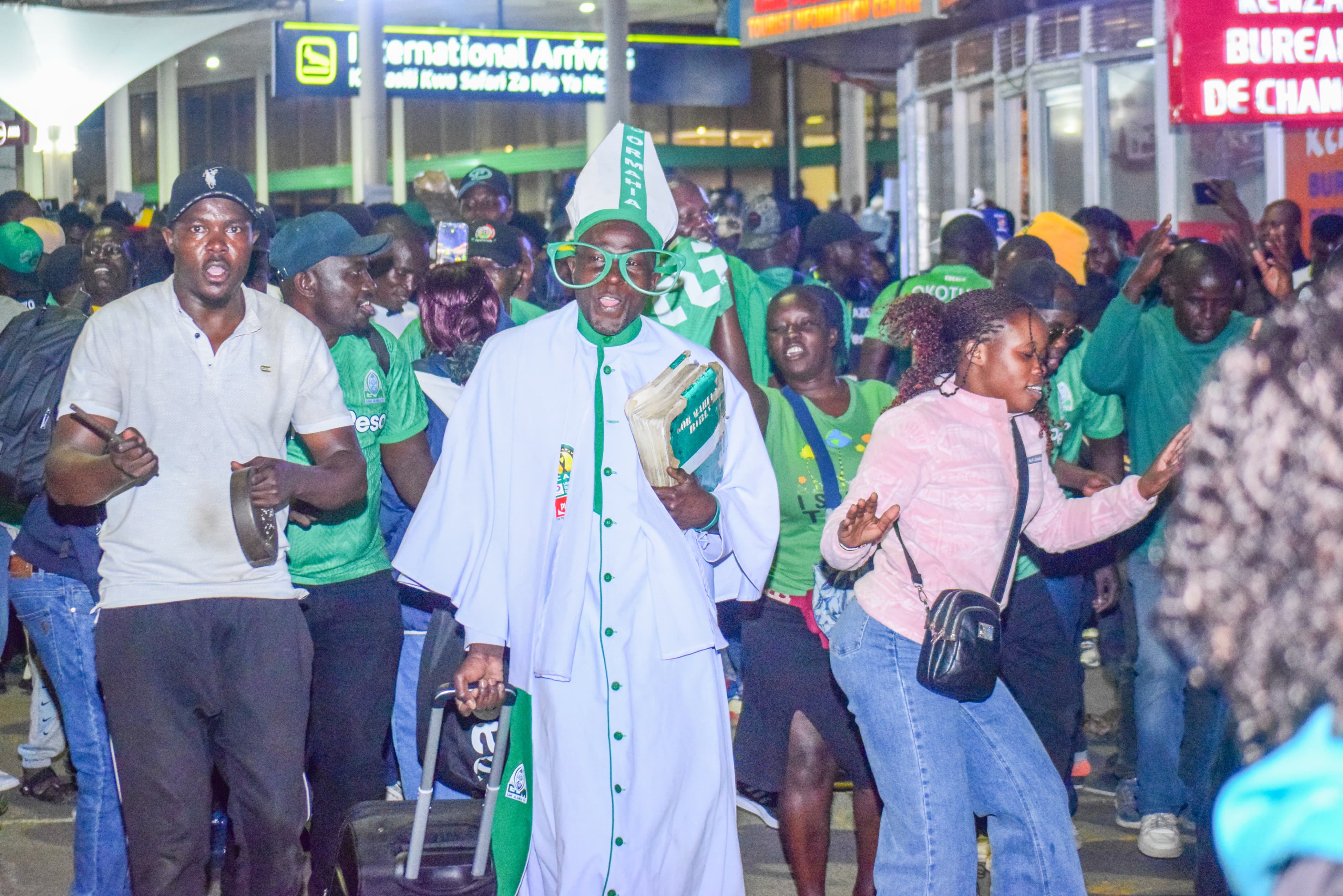
The Kenyan champions opened their campaign with a statement 5-0 victory over Rwanda champions APR FC. They then suffered a narrow 1-0 defeat to Uganda’s Vipers before recovering to beat Djibouti’s Garde Republicaine 1-0 and top their group. In the semi-final, Gor survived a difficult encounter against Sudanese giants Al Hilal, eventually winning 8-7 on penalties after a 0-0 draw.
That sequence tells a bigger story than the final score.
The first change is happening away from the pitch
Gor Mahia entered the tournament as Kenya’s reigning champions after reclaiming the league title for a record-extending 22nd time.
That domestic success did not happen in isolation.
Coach Charles Akonnor was named the 2025/26 Coach of the Season after guiding Gor through 34 league matches, winning 20, drawing nine and losing five. The team scored 50 goals and conceded 22.
The management also introduced financial incentives during the title run. Chairman Ambrose Rachier pledged a KSh5 million bonus for winning the championship and increased the winning allowance for players. The club says those incentives were paid during the final stretch of the campaign.
These details matter because football success is rarely produced by tactics alone.
Players need to believe that the institution behind them can meet its obligations. Coaches need room to build squads. Management needs to plan beyond the next match.
Gor's CECAFA campaign suggests that the club is beginning to operate with that longer view.
The Eliud Owalo factor
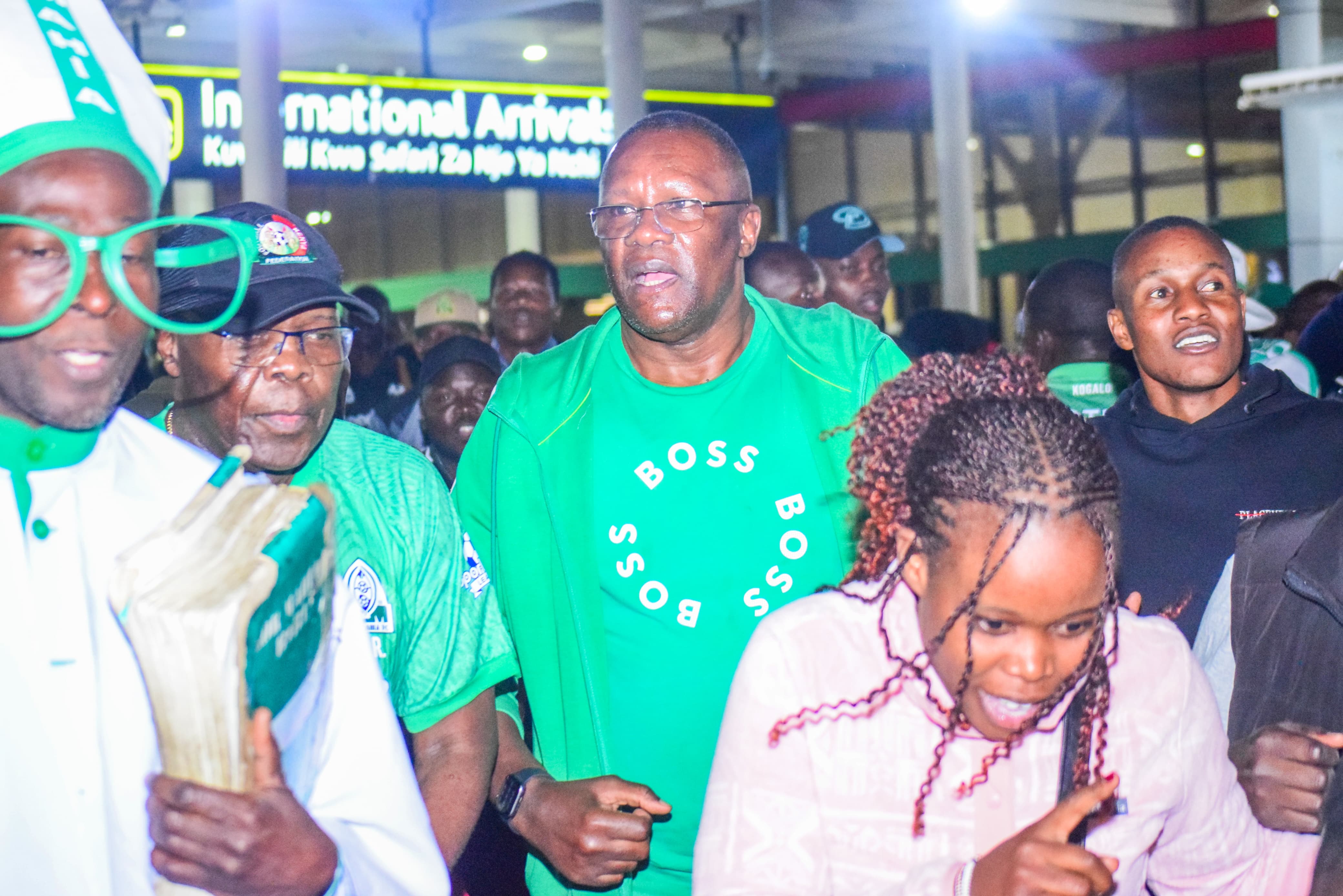
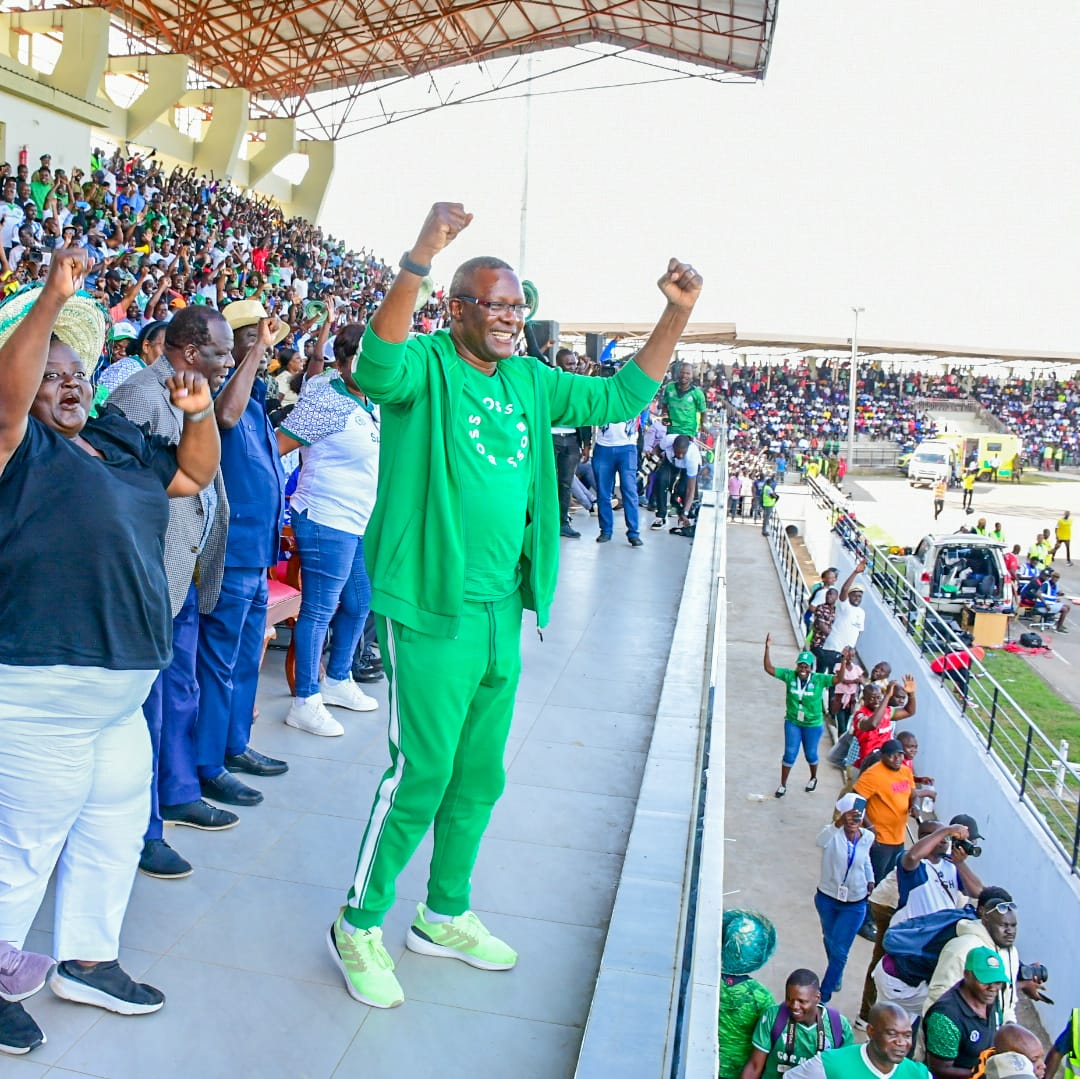
Patron Eliud Owalo's role has also become more visible.
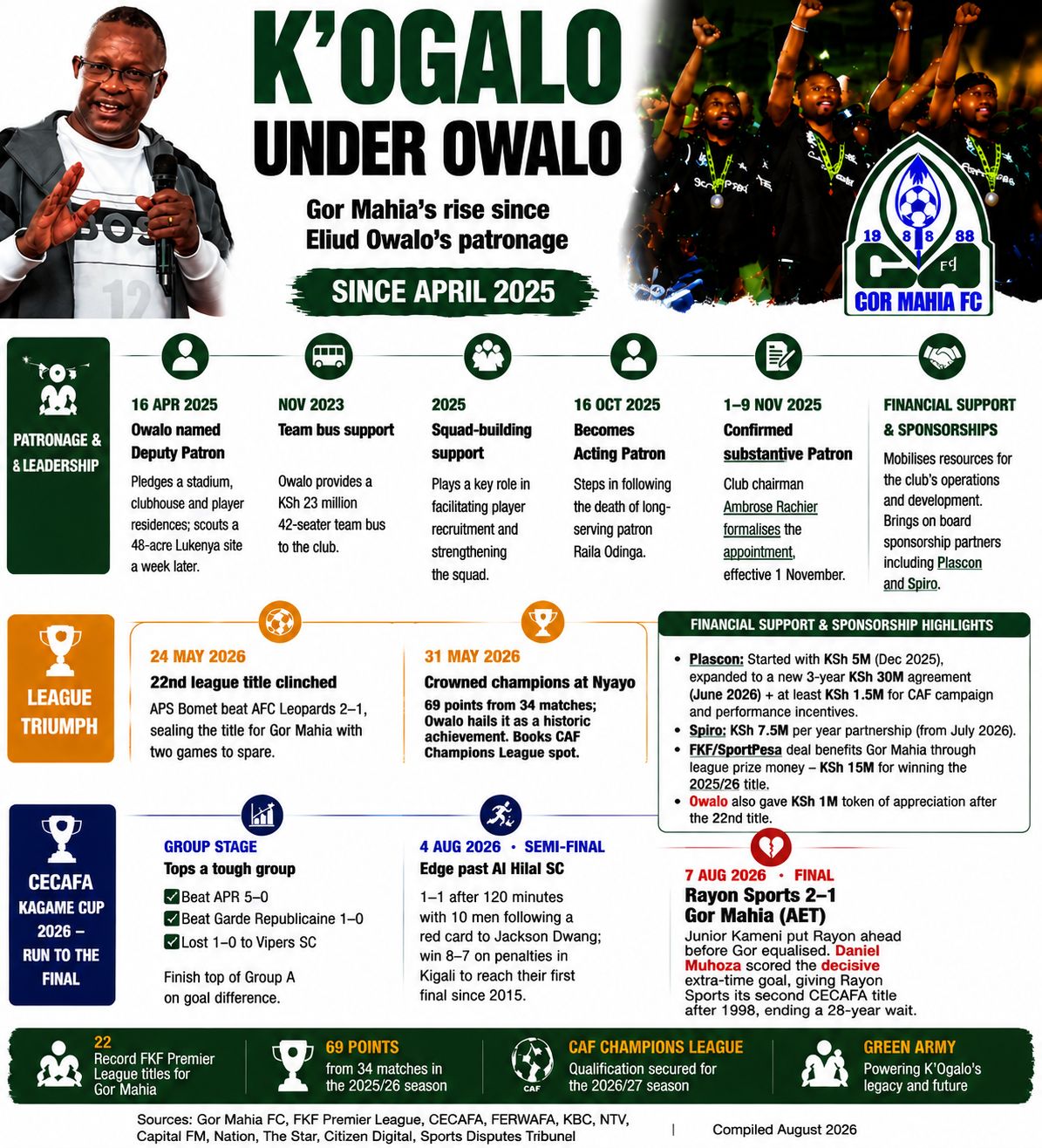
Owalo became Gor Mahia's deputy patron in 2025 and subsequently took over as acting patron following the death of longtime patron Raila Odinga.
His contribution should, however, be understood in the context of the wider club rather than presented as the sole explanation for Gor's resurgence.
Gor's own records and media reports document his financial and logistical support to the club, including assistance around player welfare and operations. Owalo has also been associated with the provision of a team bus and a broader push for improved club structures.
More importantly, his public message has increasingly centred on transforming Gor Mahia from a football team dependent on individual interventions into a stronger commercial and institutional organisation.
That distinction could ultimately prove more important than any single financial contribution.
In December 2025, when Gor Mahia announced its partnership with Plascon Kenya, Owalo spoke about the need for strong policies and structures to sustain the club's success. The club described the partnership as part of its professionalisation and sustainable-growth agenda.
That is the real test now.
Can the club build systems that continue working even when a particular individual is not available?
Partners are becoming part of the equation
The growing involvement of corporate partners is another development worth watching.
Plascon initially entered into a KSh5 million partnership with Gor Mahia in December 2025. By June 2026, the relationship had reportedly been expanded into a new three-year KSh30 million agreement, according to the club's official website.
That matters beyond the value of the sponsorship.
A modern football club needs predictable commercial income to pay players, invest in technical development, improve administration, build its brand and reduce dependence on emergency fundraising.
The bigger question for Gor Mahia is therefore not how much one sponsor gives the club.
It is whether the club can turn its enormous fan base and historic brand into a sustainable commercial machine.
Gor Mahia itself describes the club as one of Kenya's most successful football institutions, with a long history of domestic and regional success.
The opportunity is to convert that history into an economic asset.
The CECAFA final exposed the next challenge
Losing the final should not be dismissed.
Rayon Sports' 2-1 extra-time victory showed that Gor Mahia is not yet operating at a level where regional success can be assumed. The final also came after a demanding tournament that required the squad to manage different opponents, tactical approaches and physical demands.
That is precisely why the tournament could be valuable for Akonnor.
Gor's own preparations reflected the bigger objective. The club arrived in Rwanda early, partly using the tournament as preparation for the season ahead. Akonnor also spoke about giving new players opportunities and understanding the squad because of the number of matches expected during the season, including the CAF Champions League.
The CECAFA campaign therefore functioned as more than a cup competition.
It was a rehearsal.
The next measure of success will be continental
This is where Gor Mahia's progress becomes relevant beyond the Green Army.
Winning Kenya's league is no longer enough for a club with Gor's ambitions.
The 22nd league title has already secured a place in the CAF Champions League.
The real question is whether the structures that helped Gor reclaim the domestic title can survive the much higher demands of continental football.
That means squad depth.
It means player welfare.
It means recruitment.
It means reliable financing.
It means professional administration.
And it means building commercial partnerships that can support the club without turning every financial challenge into an appeal to individuals.
The CECAFA final defeat therefore provides a useful warning.
Gor Mahia has shown that it can compete regionally. The next step is proving that it can do so consistently.
The bigger story for Kenyan football
There is a wider lesson here.
For years, Kenyan football clubs have often depended heavily on individual benefactors, politically connected personalities, short-term sponsorships or passionate supporters.
That model can produce occasional success, but it is difficult to sustain.
Gor Mahia now has an opportunity to demonstrate another model: combine strong management, technical leadership, commercial partnerships, supporter power and strategic patronage into an institution that can eventually finance and govern itself.
Owalo's role will therefore be judged less by the number of cheques associated with his tenure and more by whether the structures he advocates remain effective in the long term.
The same applies to the club's management and corporate partners.
The players can win matches.
The coach can build a team.
But only the institution can build a club that remains competitive for years.
That is why Gor Mahia's CECAFA campaign should not be remembered simply as a final lost to Rayon Sports.
It should be viewed as a progress report.
K’Ogalo has regained the Kenyan league title, reached the regional final and secured another opportunity to test itself against Africa's stronger clubs.
The trophy escaped them in Kigali.
The more important prize may be whether Gor Mahia can use the experience to build a club capable of competing consistently beyond Kenya.
That is the challenge facing the management, the technical team, Owalo, corporate partners and the supporters.
And it is a challenge that will be measured not in one final, but over the next several seasons.
Related Stories
- Arsenal’s perfect pre-season run ends as Real Betis expose midfield and defensive concerns ahead of title defence
- Newcastle United turn to Matthias Jaissle as post-Eddie Howe rebuild begins amid major squad overhaul
- Mohamed Salah joins Trabzonspor: Why Liverpool legend's shock transfer could transform Turkish football
Category: Sports · Related Topic: Eliud Owalo
About the Author
Maureen Onyango is a journalist passionate about storytelling, life coaching and spiritual lessons. She studied at the Kenya Institute of Management and enjoys telling stories that inform, inspire and empower communities.
 Facebook
 Twitter / X
 WhatsApp
 LinkedIn
 Telegram
 Reddit