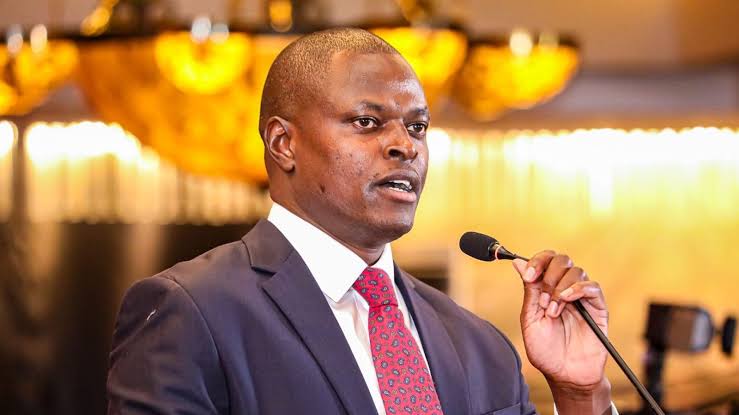
Kiharu MP Ndindi Nyoro has proposed a major overhaul of how Kenyans’ statutory contributions are used, promising to redirect about KSh40 billion a year from NSSF to healthcare if the opposition takes power in 2027.
Kiharu MP Ndindi Nyoro has put healthcare at the centre of his emerging political agenda, proposing that Kenyans contribute 50 per cent less to the National Social Security Fund (NSSF) and that the money saved be channelled into the health system.
Nyoro said the proposal would take effect in January 2028 if the opposition wins the 2027 General Election.
He made the proposal on Tuesday, a day after announcing his departure from the ruling United Democratic Alliance (UDA) and his move to the People’s Party of Kenya (PPK).

The proposal would mark a significant shift in public policy.
Rather than treating retirement savings and healthcare as separate priorities, Nyoro is arguing that part of the money currently set aside for pensions should instead help fund medical care.
“On funding, there is a sticky funding gap. The action is to halve the amount of NSSF contribution and redirect around KSh40 billion to healthcare,” Nyoro said.
What Nyoro wants to change
Nyoro said the additional money would be used to strengthen healthcare facilities, improve the supply of medicines and medical equipment, and expand services for Kenyans suffering from chronic illnesses.
He also proposed a government-owned system for managing healthcare and called for the creation of a Kenyan Doctors and Healthcare Workers Commission to oversee the employment and deployment of health workers.
“Part of the redirected budget [would] handle upgrading of facilities and provision of supplies,” he said.
His proposal comes as Kenya continues to adjust its social protection and healthcare financing systems.
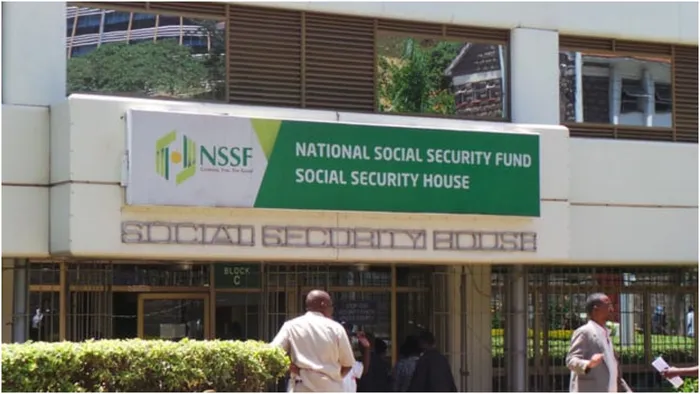
Under the current NSSF structure, contributions are shared equally between employers and employees. From February 2026, the maximum monthly contribution for each side is KSh6,480, meaning an employee earning at or above the applicable upper limit can have KSh6,480 deducted while the employer contributes a matching amount.
That means any decision to halve statutory NSSF contributions would affect both workers and employers.
It would also require changes to the existing legal and policy framework governing retirement savings.
NSSF's core mandate is to provide social security protection to workers and their dependants, particularly in retirement.
The Fund has also recently highlighted the returns being earned by members. In 2026, NSSF reported that it had declared a 17 per cent return on members’ savings for the 2024/25 financial year.
This creates a central question around Nyoro’s proposal: would Kenyans gain more from lower pension deductions today and better-funded healthcare, or could reducing retirement contributions leave workers with less financial protection later in life?
Nyoro did not provide detailed figures showing how the proposed KSh40 billion would be raised or how the reduction would affect individual NSSF accounts.
A wider healthcare blueprint
The NSSF proposal forms part of a broader policy programme Nyoro unveiled as he positions himself outside President William Ruto’s administration.
He has proposed free secondary education from 2028 and an additional KSh80 billion for a new university funding model.
He also wants monthly Inua Jamii payments for senior citizens increased to KSh3,000 initially and KSh4,000 within three years.
On healthcare, his proposals include upgrading facilities, improving the supply of essential commodities and creating specialised institutions that could serve Kenya and the wider region.
He also argued that the management of healthcare workers should be handled nationally rather than largely through the current county-based system.
“Kenya cannot continue to handle this element at the county level,” he said.
The political calculation
The healthcare proposal is also significant because of its timing.
Nyoro announced on Monday that he had left UDA and joined PPK, saying he had spent almost a year consulting opposition leaders and supporters before deciding on his next political path.
He has since outlined a programme that touches on health, education, jobs, manufacturing, agriculture, tourism, energy and social protection.
The former chairman of the National Assembly Budget and Appropriations Committee has not announced a presidential bid.
But his decision to leave the ruling party, join the opposition and unveil a nationwide policy agenda puts him firmly back in the political conversation ahead of 2027.
For voters, however, the NSSF proposal may be judged less by its political symbolism than by its practical consequences.
Healthcare remains a major household concern. So does retirement security.
Nyoro is effectively asking Kenyans to consider whether some of the money they save for tomorrow should instead be spent on making healthcare more affordable today.
That debate is likely to become more important as the 2027 election approaches.
Related Stories
- Sharon Otieno family asks court for compensation after eight-year ordeal
- Obado asks for leniency after Sharon Otieno murder conviction, citing age and health
- Ruto Opens National Health Summit as Kenya Takes Stock of SHA, KEMSA and Primary Healthcare Reforms
Category: News · Related Topic: 2027 Elections
About the Author
Maureen Onyango is a journalist passionate about storytelling, life coaching and spiritual lessons. She studied at the Kenya Institute of Management and enjoys telling stories that inform, inspire and empower communities.
 Facebook
 Twitter / X
 WhatsApp
 LinkedIn
 Telegram
 Reddit