
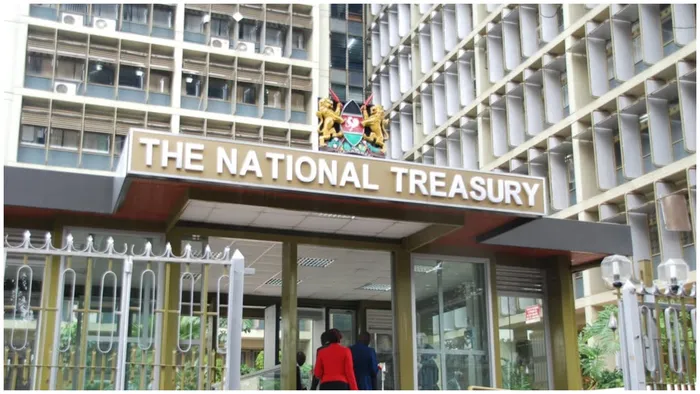
NAIROBI, Kenya — Nine people linked to the National Treasury have been arrested as the Ethics and Anti-Corruption Commission (EACC) investigates the alleged loss of about Sh1.57 billion from a rural financial inclusion programme.
The suspects were being held at the EACC's Integrity Centre in Nairobi as investigators prepared the case for possible prosecution.
The arrests mark a new stage in an investigation into the Programme for Rural Outreach of Financial Innovations and Technologies (PROFIT), a programme supported by the International Fund for Agricultural Development (IFAD) and the Kenyan government.
The programme was designed to expand access to financial services among poor rural households, including smallholder farmers, pastoralists, young people and women. It supported initiatives such as savings, agricultural finance, insurance and rural enterprise development.

The alleged loss therefore goes beyond a dispute over government accounting. Investigators are examining how money intended to improve financial access for rural communities was allegedly moved through an account created after the programme had closed.
How the alleged scheme worked
According to EACC investigations cited in court proceedings, more than Sh1.55 billion was transferred into a bank account that had been opened in PROFIT's name even though the programme's original account had already been closed.
Investigators allege that documents presented to open the new account were forged to make it appear that the account was authorised by the National Treasury.
Once the funds were deposited, investigators traced two major movements of money.
About Sh784.7 million was allegedly transferred to 23 companies.
A further Sh768.2 million was allegedly withdrawn in cash.
The transactions have raised questions over who authorised the payments, how the account was opened and why controls within the programme and Treasury failed to prevent the movement of the money.
The allegations have not been tested through a full criminal trial. Those accused are presumed innocent unless proven guilty.
A programme designed to help rural households
The case has drawn particular attention because of what PROFIT was intended to achieve.
IFAD describes the programme as a rural financial inclusion project aimed at helping poor households gain access to financial services and improve their incomes. It operated particularly in rural and arid and semi-arid areas and targeted groups including farmers, pastoralists, artisanal fishers, women and young people.
The programme had a total project cost of about US$83.2 million, with IFAD providing approximately US$29.9 million in financing.
It was completed in 2019.
The allegations now under investigation concern funds that investigators say were moved years after the programme had formally ended.
That timeline is central to the case.
Why the new arrests matter
The arrests follow earlier investigations that have already triggered efforts to recover assets allegedly linked to the missing money.
Court documents cited in previous reporting show that EACC investigators had sought orders to preserve property and bank accounts connected to people under investigation. Business Daily reported in June that the commission had traced assets as part of its recovery efforts.
The investigation has also attracted international attention.
IFAD confirmed in June that it was taking the allegations seriously and that an audit had been opened in relation to the programme. The agency said it could not comment on ongoing legal proceedings.
That response reflects the wider significance of the case. PROFIT was not simply a domestic Treasury project. It was backed by an international development institution whose funds were intended to support rural communities.
The bigger question: where did the controls fail?
The investigation is also likely to focus attention on the systems that allowed an account to allegedly be opened in the name of a programme that had already ended.
The alleged use of forged documents raises further questions about internal verification procedures.
For anti-corruption investigators, following the money is only one part of the task.
They must establish who created or authorised the documents, who opened and controlled the account, who approved the transfers and withdrawals, and where the money ultimately went.
EACC has said it is pursuing both criminal accountability and recovery of public funds.
The commission has also indicated that the PROFIT case forms part of a wider investigation into suspected corruption and economic crimes involving about Sh1.87 billion across the National Treasury and several county governments.
What happens next?
The nine suspects are expected to face the next stage of the legal process once investigators complete the necessary procedures.
EACC can recommend prosecution, but any criminal charges must ultimately be considered by the Director of Public Prosecutions and determined through the courts.
The recovery process will run alongside the criminal investigation.
For now, the central issue remains unanswered: how did more than Sh1.5 billion end up moving through an allegedly unauthorised account after a programme designed to support Kenya's rural poor had already closed?
That question is likely to remain at the heart of the case as investigators work to establish individual responsibility and trace the money.
Related Stories
- Homa Bay violence sparks outrage as Amnesty, Editors Guild demand accountability
- The Road They Refused to Accept
- Who Was Gloria Sekeiyan Khalwale? A Mother of Eight Remembered After Sudden Death
Category: News
About the Author
Maureen Onyango is a journalist passionate about storytelling, life coaching and spiritual lessons. She studied at the Kenya Institute of Management and enjoys telling stories that inform, inspire and empower communities.
 Facebook
 Twitter / X
 WhatsApp
 LinkedIn
 Telegram
 Reddit